
Types of Car Engines Explained: Petrol, Diesel, Hybrid, Electric — From 3-Cylinder to V12
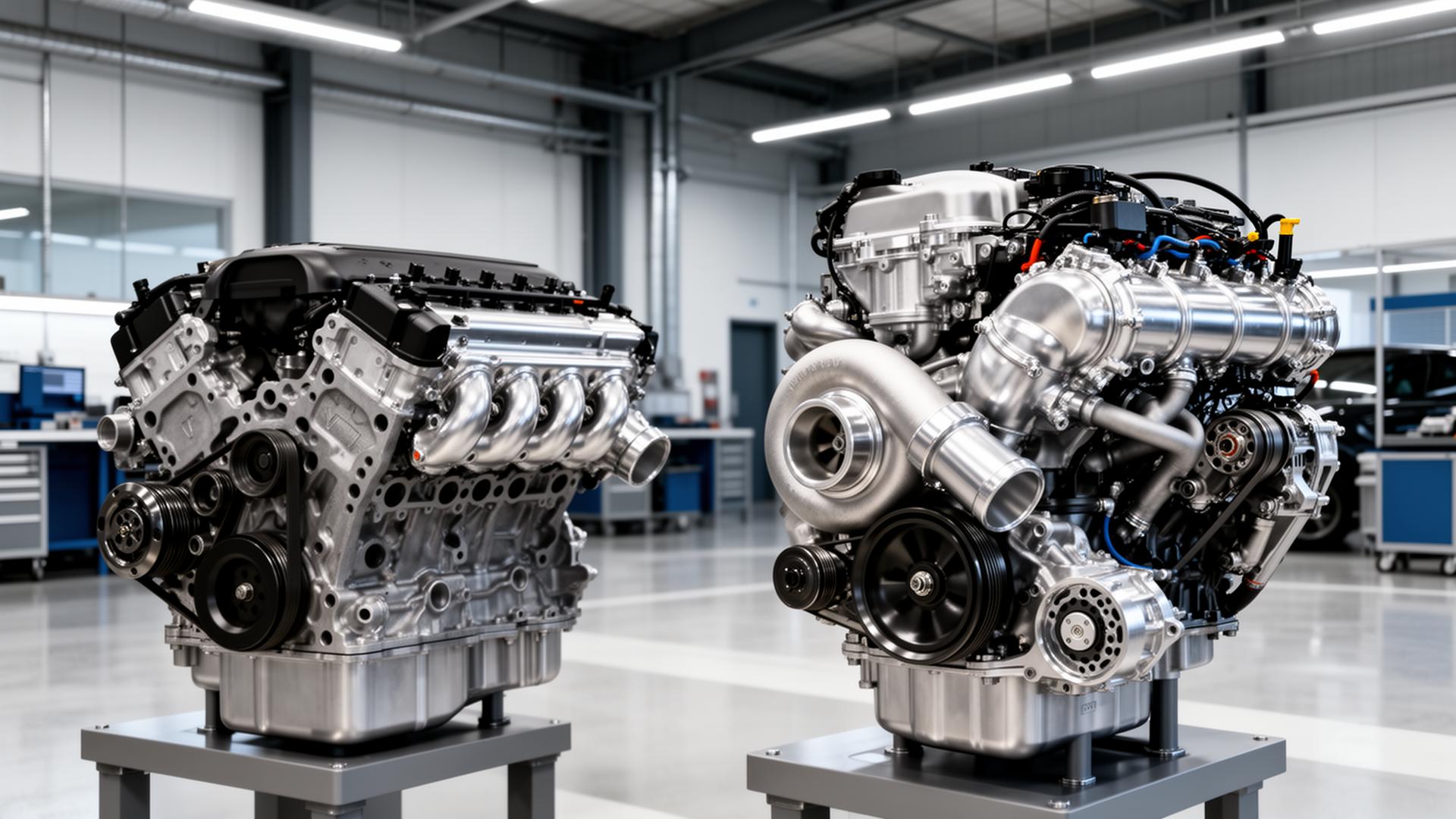
Whether you're buying a used car, replacing a failed engine, or simply curious about what powers your vehicle, understanding the different types of car engines is essential knowledge. From the humble 3-cylinder petrol engine to the mighty V12, and from traditional diesel engines to modern hybrid and electric powertrains — this guide covers everything you need to know about car engine types, configurations, and fuel systems.
Engine Classification by Fuel Type
Petrol Engines (Gasoline / Spark Ignition)
Petrol engines (also called gasoline engines) use a spark plug to ignite a mixture of air and fuel. They are the most common engine type worldwide, known for smooth operation, high RPM capability, and relatively low noise levels. Modern turbocharged petrol engines deliver impressive power from small displacements — like the Ford 1.0 EcoBoost (3-cylinder turbo producing up to 155 HP) or the BMW B48 (2.0L 4-cylinder turbo with up to 306 HP).
Key characteristics of petrol engines:
- Higher RPM range than diesel (typically 6,000–8,000+ RPM)
- Smoother and quieter operation
- Lower torque at low RPM compared to diesel
- Generally cheaper to manufacture and maintain
- Wide availability of fuel worldwide
Diesel Engines (Compression Ignition)
Diesel engines compress air to such high pressure and temperature that injected fuel ignites without a spark plug. They are known for superior fuel efficiency, high torque at low RPM, and excellent durability. Popular diesel engines include the Mercedes OM651 (2.1L 4-cylinder), BMW N47/B47 (2.0L 4-cylinder), and the legendary Volkswagen 1.9 TDI (ALH/AHF) — famous for reaching 500,000+ km with basic maintenance.
Key characteristics of diesel engines:
- 30–35% better fuel economy than equivalent petrol engines
- High torque output at low RPM — ideal for towing and highway cruising
- Longer engine life when properly maintained
- Higher purchase and maintenance costs (injectors, turbo, DPF, EGR)
- Stricter emissions regulations in many European cities
Hybrid Engines (Petrol + Electric Motor)
Hybrid powertrains combine a traditional internal combustion engine (usually petrol) with one or more electric motors and a battery pack. There are several types:
- Mild hybrid (MHEV) — a small electric motor assists the engine but cannot drive the car alone. Example: Audi A6 55 TFSI e
- Full hybrid (HEV) — can drive on electric power alone at low speeds. Example: Toyota Prius with the legendary 1.8L 2ZR-FXE engine
- Plug-in hybrid (PHEV) — larger battery that can be charged externally, offering 30–80 km of pure electric range. Example: BMW 330e, Mercedes C 300 e, Volvo XC60 T8
Hybrids offer the best of both worlds — electric efficiency in city driving and the range confidence of a combustion engine for longer journeys.
Electric Motors (Battery Electric Vehicles — BEV)
Electric vehicles use one or more electric motors powered entirely by a battery pack. There is no combustion engine, exhaust system, or traditional gearbox. Key players include Tesla (Model 3, Model Y), BMW iX/i4, Mercedes EQS/EQE, Volkswagen ID.3/ID.4, and Hyundai Ioniq 5.
Key characteristics:
- Instant torque from 0 RPM — exceptional acceleration
- Zero direct emissions
- Lower running costs (electricity is cheaper than fuel)
- Fewer moving parts — reduced maintenance needs
- Range anxiety and charging infrastructure remain challenges
Engine Classification by Cylinder Configuration
Inline (Straight) Engines
Cylinders are arranged in a single row. The most common configurations:
- 3-cylinder inline (I3) — compact and efficient. Examples: Ford 1.0 EcoBoost, BMW B38 (1.5L turbo used in 1 Series and MINI), Toyota 1KR-FE (1.0L in Aygo/Yaris)
- 4-cylinder inline (I4) — the most popular engine layout worldwide. Examples: VW EA888 (2.0 TSI/TFSI), BMW B48 (2.0L turbo), Mercedes M264 (1.5/2.0L), Toyota 2ZZ-GE (1.8L VVTL-i), Honda K20 (2.0L VTEC)
- 5-cylinder inline (I5) — distinctive sound and smooth power. Examples: Audi 2.5 TFSI (DAZA/DNWA) — multiple International Engine of the Year winner, used in RS 3 and TT RS; Volvo T5 engines
- 6-cylinder inline (I6) — perfectly balanced, silky smooth. Examples: BMW B58 (3.0L turbo — one of the best modern engines), BMW S58 (M3/M4 twin-turbo), Mercedes M256 (3.0L mild hybrid), Toyota 2JZ-GTE (legendary Supra turbo engine)
V-Type Engines
Cylinders are arranged in two banks at an angle (typically 60° or 90°):
- V6 — compact alternative to I6. Examples: Nissan VQ35DE/VQ37VHR (3.5/3.7L — 14 consecutive Ward's Best Engine awards), Alfa Romeo Busso V6 (one of the best-sounding V6 engines ever made), Mercedes M276 (3.0/3.5L)
- V8 — the classic muscle and luxury engine. Examples: BMW S63 (4.4L twin-turbo M5/M8), Mercedes M177/M178 (4.0L twin-turbo AMG), Ford 5.0 Coyote (Mustang GT), Chevrolet LS/LT series (small-block V8 — the most popular performance engine platform in history), Ferrari F154 (3.9L twin-turbo V8 — International Engine of the Year 2016–2019)
- V10 — rare and exotic. Examples: Lamborghini Huracán 5.2L V10, Audi R8 5.2 FSI, BMW S85 (E60 M5 — naturally aspirated V10, 8,250 RPM redline)
- V12 — the pinnacle of automotive engineering. Examples: BMW N73/N74 (6.0/6.6L twin-turbo in 7 Series and Rolls-Royce), Mercedes M275/M279 (6.0L biturbo in S65 AMG and Maybach), Lamborghini L539 (6.5L naturally aspirated in Aventador), Ferrari F140 (6.5L V12 in 812 Superfast — 800 HP from a naturally aspirated engine)
Boxer (Flat) Engines
Cylinders are horizontally opposed, resulting in a low centre of gravity:
- Flat-4 (H4) — Subaru's signature. Examples: Subaru FA20/FA24 (used in BRZ/WRX), Porsche flat-4 (718 Boxster/Cayman 2.0/2.5 turbo)
- Flat-6 (H6) — Porsche 911's iconic powerplant. Examples: Porsche 9A2 (3.0L twin-turbo in 911 Carrera), Subaru EZ36 (3.6L in Outback/Legacy)
Rotary (Wankel) Engine
Instead of pistons, a rotary engine uses a triangular rotor spinning in an epitrochoidal housing. The only major production rotary engine is from Mazda — the legendary 13B-REW (twin-turbo in RX-7) and Renesis (RX-8). Mazda has revived the rotary as a range extender in the MX-30 e-Skyactiv R-EV. Rotary engines are compact, smooth, and rev-happy — but consume more fuel and oil than piston engines.
Most Popular Engine Families by Brand
BMW
- N52/N53 — naturally aspirated inline-6, known for reliability and smooth power delivery
- N55/B58 — turbocharged inline-6 engines, the B58 widely considered one of the best modern engines
- N47/B47 — 2.0L diesel workhorses found in 1/2/3/5 Series and X1/X3
- S55/S58 — high-performance M-division twin-turbo inline-6 engines
Mercedes-Benz
- M271/M274 — 1.8/2.0L turbocharged 4-cylinder petrol engines
- OM651/OM654 — 2.0/2.1L diesel engines used across C/E-Class, Sprinter, Vito
- M177/M178 — 4.0L twin-turbo V8 AMG engines, handcrafted under the "One Man, One Engine" philosophy
- M256 — 3.0L inline-6 with mild hybrid, replacing the V6 in modern Mercedes models
Volkswagen Group (VW, Audi, SEAT, Skoda, Porsche)
- EA888 — 1.8/2.0 TSI/TFSI, the backbone of the VW Group range
- EA211 — 1.0/1.2/1.4/1.5 TSI, efficient small-displacement turbo engines
- EA189/EA288 — TDI diesel engines (1.6/2.0L)
- 2.5 TFSI (DAZA) — Audi's award-winning 5-cylinder turbo engine
Toyota/Lexus
- 2ZR-FXE — the Prius hybrid engine, one of the most fuel-efficient engines ever made
- 2GR-FE/FKS — 3.5L V6 known for bulletproof reliability
- 1GD-FTV — 2.8L diesel used in Land Cruiser and Hilux — legendary durability
Ford
- 1.0 EcoBoost — award-winning 3-cylinder turbo engine
- 2.0 EcoBlue — Ford's modern diesel engine for Transit and passenger cars
- 5.0 Coyote V8 — the heart of the Mustang GT
Exclusive and Legendary Car Engines
Some engines transcend ordinary automotive engineering and become legends:
- Ferrari F140 V12 — 6.5L naturally aspirated V12 producing up to 830 HP (812 Competizione). One of the last pure NA V12 engines
- Porsche Mezger flat-6 — the air/water-cooled engine used in 911 GT3 through 2019, revving to 9,000 RPM
- BMW S85 V10 — 5.0L naturally aspirated V10 in the E60 M5, inspired by Formula 1
- Mercedes-AMG M139 — 2.0L 4-cylinder turbo producing 421 HP, the most powerful series-production 4-cylinder engine in the world (A45 S AMG)
- Bugatti W16 — 8.0L quad-turbocharged W16 engine producing up to 1,600 HP in the Chiron Super Sport
- Honda F20C — 2.0L naturally aspirated engine from the S2000, producing 240 HP (120 HP/litre) — a record for its time
- Toyota 2JZ-GTE — 3.0L twin-turbo inline-6 from the Supra, capable of handling 1,000+ HP with stock internals according to the tuning community
- Chevrolet LS7 — 7.0L naturally aspirated V8, producing 505 HP with a dry-sump system. The ultimate pushrod engine
How to Choose the Right Engine Type
When choosing a replacement engine or buying a vehicle, consider:
- Daily commuting in the city? — A small turbocharged petrol engine (1.0–1.5L) or hybrid offers the best balance of efficiency and practicality
- Long highway journeys and towing? — A diesel engine (2.0L+) provides better fuel economy and torque
- Performance driving? — Look for turbocharged inline-6, V8, or high-revving naturally aspirated engines
- Maximum efficiency and lowest emissions? — Battery electric or plug-in hybrid
- Reliability above all? — Proven engine families like Toyota's 2GR V6, BMW's B58 inline-6, or Honda's K-series
Find Your Replacement Engine at Motuvo.eu
Whether you need a 3-cylinder EcoBoost, a BMW inline-6, a Mercedes diesel, or a V8 for your performance car — Motuvo.eu has thousands of quality used and rebuilt engines in stock. Every engine comes with warranty coverage, is professionally tested, and ships securely across the EU.
Browse our engine catalogue or contact our team with your vehicle details for a personalised quote.