BMW S63B44T0 412 kW Engine: Applications and Buying Guide
Introduction to the BMW S63B44T0 engine
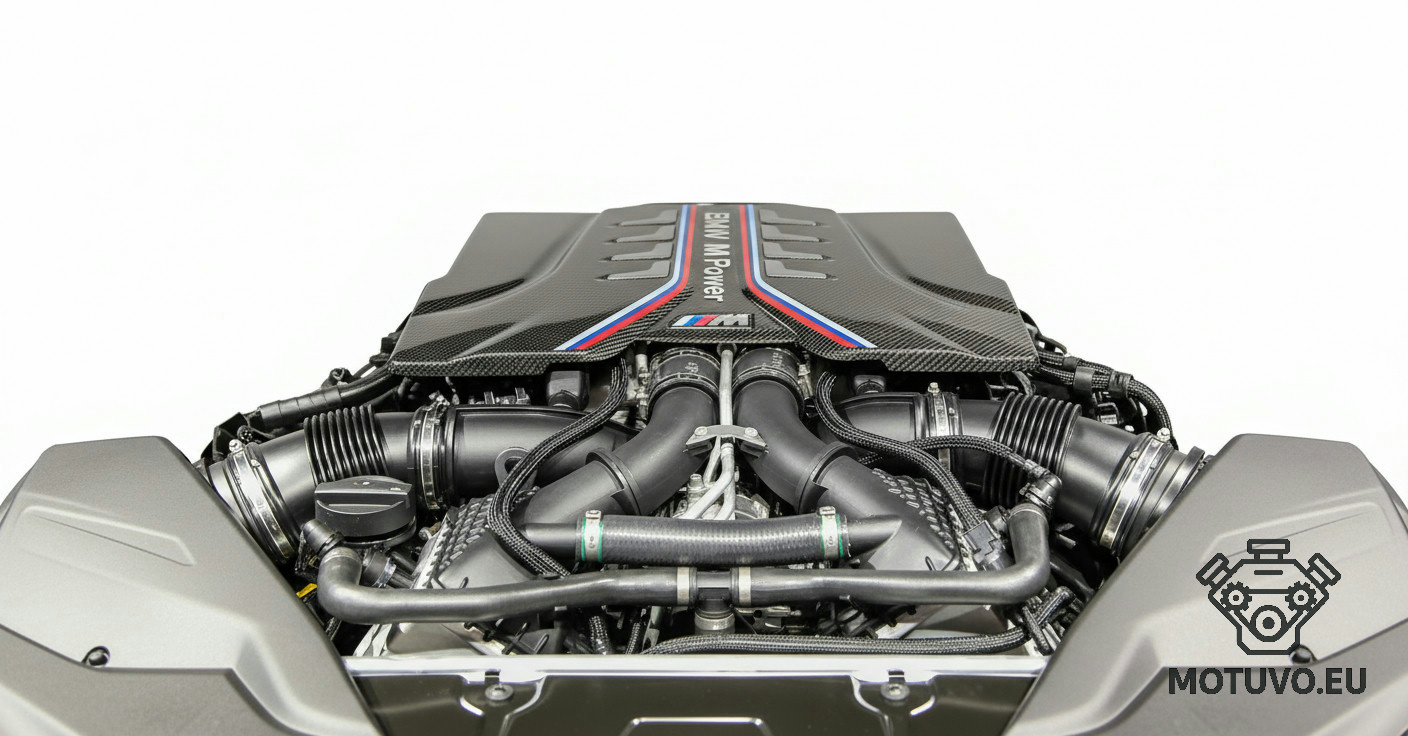
The S63B44T0 is a 4.4-litre, twin-turbocharged petrol V8 from BMW’s high-performance S63 engine family. The Motuvo.eu catalogue lists this engine at 412 kW, equivalent to approximately 560 metric horsepower. It is associated here with the F10 M5 and the specified F-generation M6 models, rather than ordinary BMW 5 Series or 6 Series petrol variants.
This is a technically complex performance engine, combining direct fuel injection, variable valve control and a compact turbocharger arrangement. For replacement buyers, the engine designation is only the starting point: production details, supplied ancillaries, electronics and documented condition all matter. A suitable replacement should be selected against the recipient vehicle’s VIN and original engine specification.
How popular and widely used is the S63B44T0?
The S63B44T0 is well known within the BMW M market, but it is not a mass-market engine used across every model in the manufacturer’s range. Its presence in the M5 and several M6 body styles gives it an established specialist service and replacement market. That recognition should not be confused with universal compatibility between vehicles bearing the same broad engine-family name.
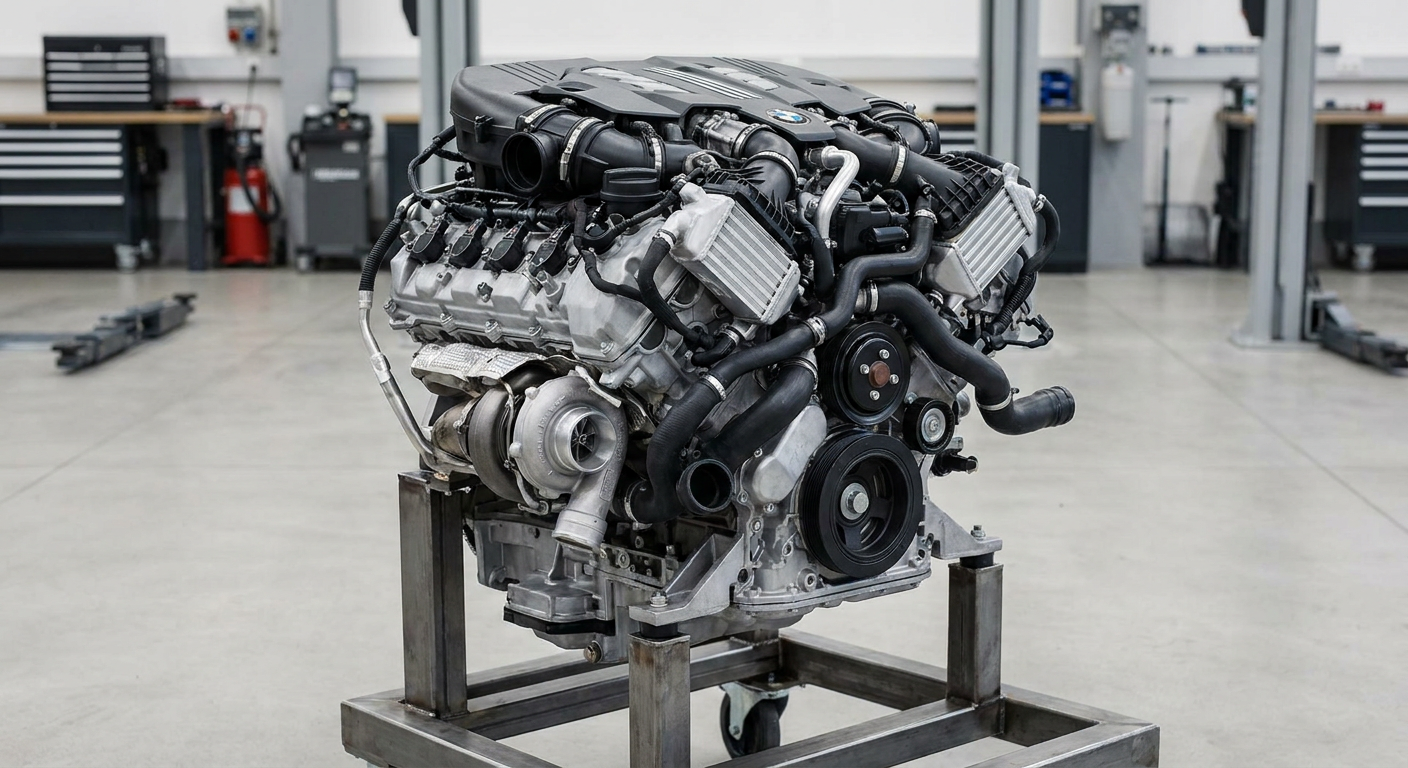
Its appeal comes from the combination of substantial power, strong turbocharged torque and everyday usability in large performance cars. The turbos sit within the engine’s V, an arrangement often called a hot V. This shortens exhaust paths to the turbochargers and helps package the assembly compactly, while concentrating considerable heat around the turbocharging hardware.
Other part numbers and engine variants
The catalogue identifies the engine name as S63B44 and its more specific designation as S63B44T0. The broader S63B44 label is useful for identifying the family, but it does not establish that two engines have identical hardware, calibration or installation requirements. Advertisements using only “BMW 4.4 V8” are particularly insufficient for replacement selection.
BMW developed the S63 family through multiple revisions and output levels. Even within closely related versions, changes to induction, cooling, electrical equipment and vehicle integration can affect interchangeability. The supplied catalogue does not establish any alternative designation as a direct replacement for this unit.
Related engines listed in the catalogue
- S68 (P615/SV): 4.4-litre petrol engine, listed at 452 kW.
- N63 (P530): 4.4-litre petrol engine, listed at 390 kW.
These entries are related catalogue products, not confirmed substitutes for the S63B44T0. Shared displacement does not mean that the engine mounts, engine management, transmission interfaces or emissions equipment match. Any proposed substitution needs a detailed engineering assessment rather than a comparison of capacity and power alone.
BMW model applications
The supplied catalogue places this engine within the BMW 5 Series and BMW 6 Series, with the following specific performance-model applications:
- 2011–2017 BMW F10 M5.
- 2012–2018 BMW F12/F13 M6.
- 2013–2018 BMW F06 M6 Gran Coupe.
These are the catalogue’s listed application windows, not a guarantee that every vehicle registered in those years uses the same engine configuration. Registration year can differ from production date, and market specification or performance-package equipment can affect the required replacement. Confirm the VIN, original engine identification and relevant component numbers before ordering.
Strong points of the S63B44T0
High output and responsive turbocharging
The listed 412 kW output gives this engine substantial performance potential in its intended vehicles. Its twin-turbo architecture delivers strong torque without depending solely on high engine speed. BMW’s S63 design uses carefully managed exhaust routing and twin-scroll turbocharging to make effective use of exhaust pulses and support response.
Advanced combustion and valve control
Direct injection and variable valve control help the engine manage airflow and fuelling across a wide operating range. In sound condition, with the correct calibration and functioning supporting systems, this allows high performance alongside the tractability expected from an executive saloon or grand tourer.
Established specialist knowledge
The engine’s use in recognised M models means experienced BMW specialists are familiar with its diagnostic requirements. This is valuable when assessing a replacement: informed testing can distinguish internal wear from faults in ignition, injection, boost control or cooling. However, familiarity does not make the engine inexpensive to repair, and evidence of maintenance remains important.
Weak points and common failures
The following are useful inspection priorities for this high-output engine family, not a claim that every S63B44T0 develops the same faults. Maintenance quality, previous tuning, operating temperature and driving history can significantly influence condition.
Heat-related leaks and cooling concerns
The hot-V layout places substantial thermal demands on nearby seals, hoses and connections. Inspect for oil and coolant leaks around the turbocharger area, covers and accessible pipework. Cooling-system faults or restricted coolant flow can have expensive consequences, so unexplained coolant loss and evidence of overheating require investigation before installation.
Oil consumption, smoke and crankcase ventilation
Excessive oil use or persistent blue exhaust smoke can have several causes, including crankcase ventilation faults, turbocharger sealing problems, valve-stem seal deterioration or internal wear. Smoke alone cannot identify the failed component. Check the service history, inspect the intake system and use compression, leak-down and borescope testing where appropriate.
Ignition and fuel-system faults
Misfires may originate from spark plugs, ignition coils or injectors rather than the mechanical engine itself. Direct-injection fuel-system faults can also cause rough running, difficult starting or abnormal mixture readings. Diagnose persistent misfires promptly: a leaking injector can dilute the oil with fuel and compromise cylinder lubrication.
Turbocharger and internal wear
Investigate abnormal turbo noise, boost deviations and excessive oil contamination in the intake tract. Internal bearing damage is another serious concern reported in the S63 family, particularly where lubrication history is uncertain. Metallic debris in the oil filter, knocking or abnormal oil-pressure readings demand further examination; a clean exterior is no assurance of internal health.
What to consider when replacing the engine
Confirm compatibility and supply scope
Match the replacement to the vehicle’s VIN, production date and original engine designation. Establish whether the offer covers a bare engine, a long block or a more complete assembly. Ask specifically about turbochargers, injectors, fuel pumps, wiring, sensors, manifolds and accessories: the word “complete” is not a standardised parts list.
Assess condition and documentation
For a used engine, request available mileage evidence, donor information and test results. For a rebuilt engine, ask what was measured, machined and replaced, rather than relying on the rebuild label alone. Confirm warranty terms and installation requirements in writing. None of these details should be assumed from the engine code or listed power output.
Correct the original failure cause
Before installation, determine why the old engine failed. Contaminated oil circuits, defective injectors, cooling faults or damaged turbochargers can threaten the replacement. Follow the applicable repair procedure for cleaning or replacing affected components, and inspect accessible seals and hoses while the engine is out.
A competent BMW specialist should handle lubrication priming, fluid filling, cooling-system bleeding and any required coding or adaptations. Retaining the original electronics does not eliminate the need for diagnostic checks. Finish with leak inspections, fault-code checks and controlled verification of temperature, fuel pressure and boost operation.
Buy an S63B44T0 engine at Motuvo.eu
If you need a replacement for one of the listed M5 or M6 applications, view the S63B44T0 412 kW engine at Motuvo.eu. Before buying, confirm current availability, condition, included components and warranty terms, and provide your VIN to help establish compatibility. Careful selection and professional installation are essential to a successful replacement.