BMW S58B30T0 353 kW Engine: Applications and Buying Guide
Introduction to the BMW S58B30T0 engine
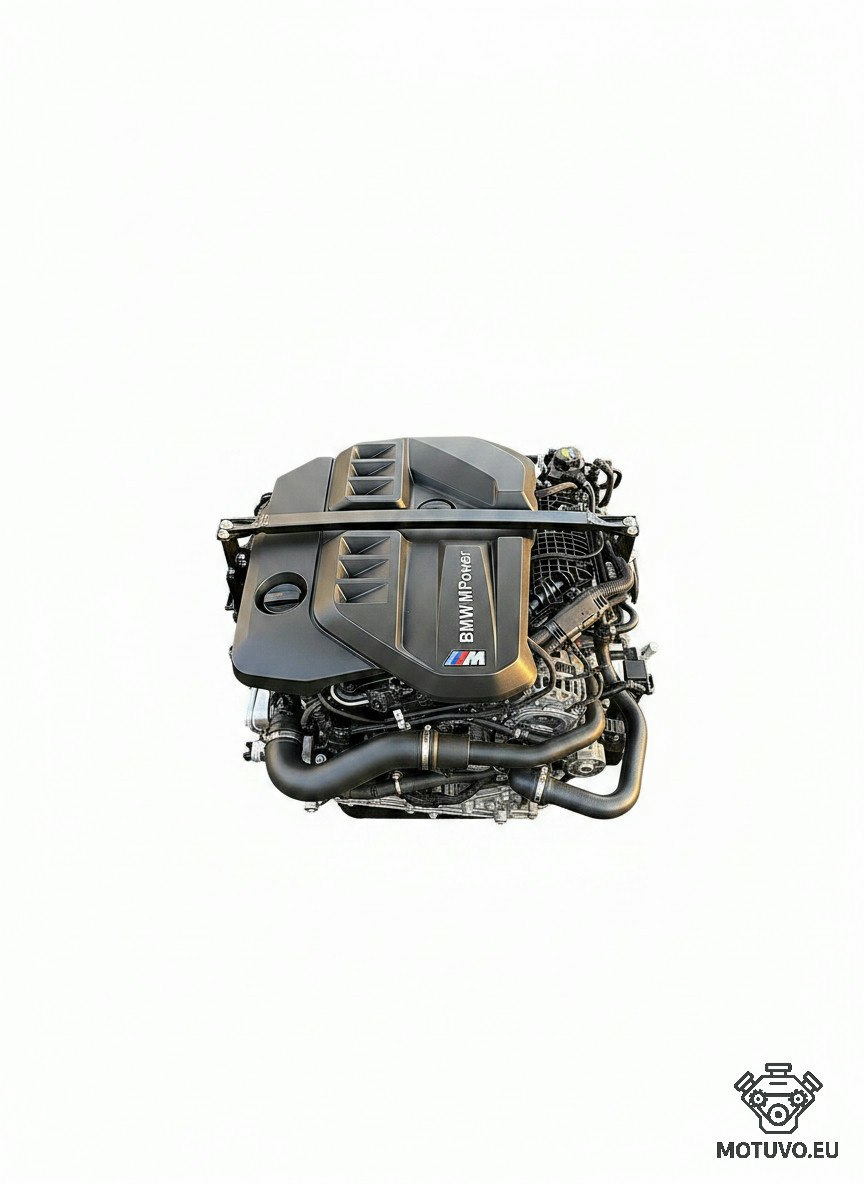
The S58B30T0 is listed in the Motuvo.eu catalogue as an S58B30-family 3.0-litre petrol engine producing 353 kW. That output is approximately 480 metric horsepower. Developed for BMW M vehicles, the S58 combines a turbocharged inline-six layout with engineering intended to support high specific output and demanding operating conditions.
For a replacement buyer, the engine code is an important starting point, but it does not establish complete compatibility on its own. Production date, original vehicle specification, emissions equipment and the components included with the replacement all matter. In particular, an S58 fitted to one M model should not automatically be treated as a direct replacement for every other S58-powered vehicle.
How popular and widely used is the S58?
The S58 is a significant engine within the modern BMW M range, although it is not a high-volume mainstream powerplant. Its presence across performance SUVs, saloons and coupes makes it relevant to both specialist workshops and owners seeking replacement engines for valuable performance vehicles.
The supplied catalogue spans applications beginning in 2019 and extending into later production. This gives the engine a broader service footprint than a powertrain restricted to one body style. However, S58 availability should not be confused with compatibility across ordinary BMW X3, X4, 3 Series, 4 Series or 2 Series models.
Its relationship to BMW's modular six-cylinder engine architecture also makes it familiar to performance-engine specialists. Nevertheless, the S58 has substantial M-specific engineering and is not simply a mainstream B58 with different software.
Other part numbers and variants
S58B30 identifies the engine family in this listing, while S58B30T0 is the catalogue's more specific engine identifier. It should not be confused with an individual BMW service part number for a complete replacement assembly. Confirm the relevant assembly number through vehicle-specific parts information before ordering.
The S58 family exists in multiple output specifications. Differences between versions can involve calibration, installation hardware and supporting systems. A shared family name does not prove that two complete engines have identical ancillaries, electronics or emissions configurations.
Motuvo.eu also lists the B58B30M1, a 3.0-litre 250 kW petrol engine. It is a related BMW six-cylinder option in the broader catalogue, not an interchangeable replacement for this S58. Other catalogue entries include M156B, DCKA / DCJA, DKKA / DKKB, CGWC, DLZA / CWGD, DCHA, DKCA, XFX and 276.821. These are separate engine listings, not alternative S58B30T0 identifiers or confirmed substitutes.
Model applications in the supplied catalogue
The catalogue associates this engine with the following M-model applications:
- 2019–2024 BMW F97 X3 M, within the BMW X3 model range.
- 2019–2024 BMW F98 X4 M, within the BMW X4 model range.
- 2021–present BMW G80 M3, within the BMW 3 Series range.
- 2021–present BMW G82 M4, within the BMW 4 Series range.
- 2025–present BMW G87 M2, described as facelift, within the BMW 2 Series range.
These dates and descriptions reproduce the supplied catalogue coverage; they are not a guarantee that every vehicle in those groups uses the listed 353 kW specification. The G87 entry, including its facelift description, particularly requires production-date and VIN confirmation rather than being accepted as an independently verified fitment statement.
For all five applications, check the original engine identification, output version, market specification and transmission arrangement. The word “present” reflects catalogue wording rather than a fixed production end date.
Strong points of the S58B30T0
Purpose-built performance architecture
The S58 uses a closed-deck aluminium crankcase and a forged crankshaft. These are important foundations for controlling cylinder loads and supporting the demands of a high-output turbocharged engine. Its inline-six configuration also provides inherently smooth mechanical operation.
Two turbochargers and advanced combustion control
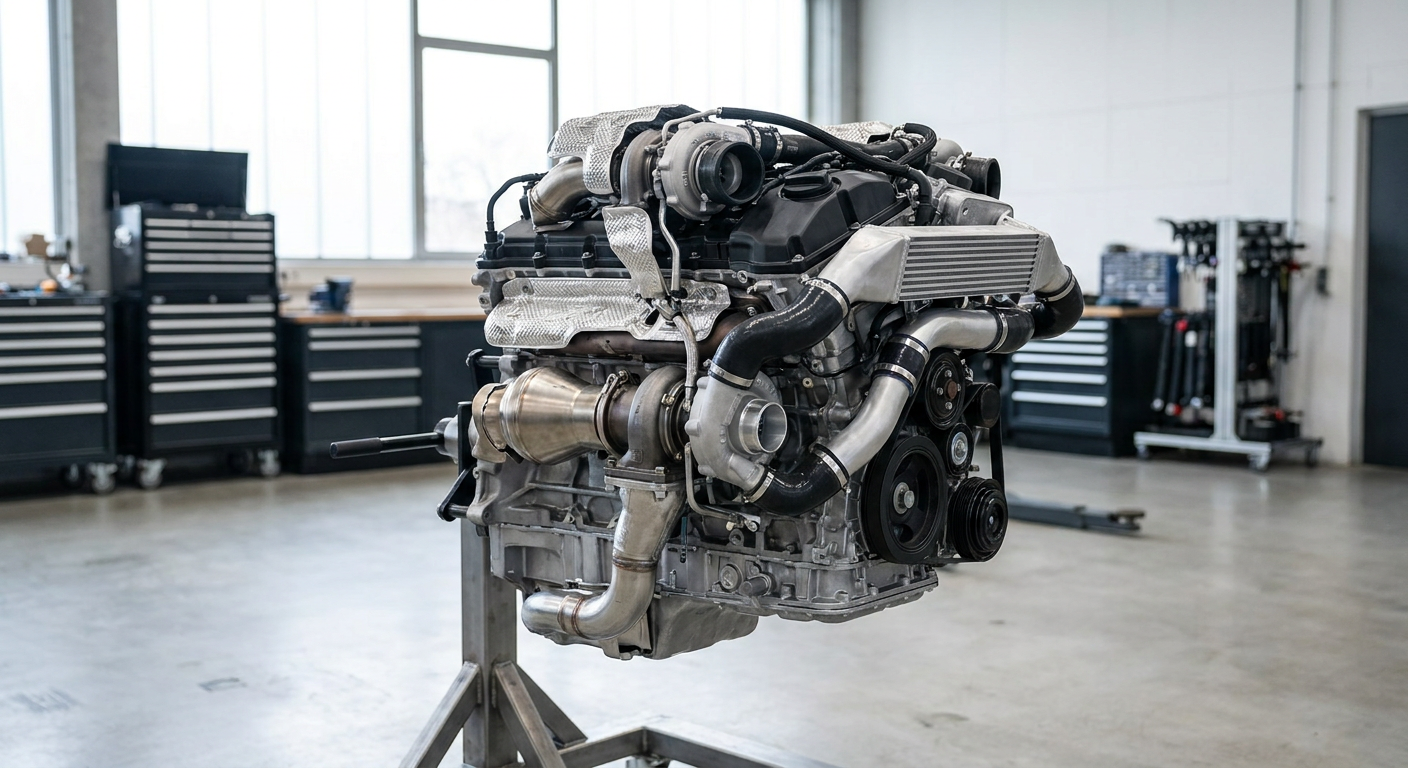
Two mono-scroll turbochargers supply the engine, each serving three cylinders. Direct petrol injection, variable camshaft timing and variable valve lift allow precise control of combustion and engine load. Together, these systems support strong performance without relying solely on very high engine speeds.
Cooling and lubrication designed for demanding use
The S58 family incorporates cooling and oil-management measures developed for M-car operating conditions. Charge-air temperature control and dependable lubrication are especially important during sustained load. These features are strengths, but they depend on correctly functioning pumps, heat exchangers, pipework and appropriate fluids.
Weak points and common failure checks
There is no basis in the supplied catalogue for claiming a particular failure rate or declaring an inevitable internal defect. A more useful approach is to inspect the systems most exposed to heat, pressure and maintenance-related deterioration in a high-output turbocharged petrol engine.
Cooling faults and fluid leaks
Inspect coolant connections, expansion tanks, pumps and heat exchangers for leaks or damage. Oil leaks around seals, housings and turbocharger supply or return connections also deserve attention. Unexplained coolant loss or previous overheating should be investigated before accepting an engine as serviceable.
Ignition, injection and boost-control problems
Worn spark plugs, faulty ignition coils and injector problems can cause misfires, especially under load. Boost leaks, actuator faults and damaged turbocharger components can produce reduced performance or pressure-control errors. Diagnostic codes alone do not establish that the long block is defective; supporting systems must be tested.
Modified or heavily stressed examples
Higher boost, unsuitable fuel and poorly managed thermal loads can increase mechanical stress. Track use is not proof of damage, but undocumented tuning and missing maintenance records increase uncertainty. Check for abnormal noise, persistent exhaust smoke and metallic debris in the oil filter. Compression and leak-down testing can help assess cylinder sealing, although neither test guarantees the condition of every internal component.
What to consider when replacing the engine
Confirm identification and supply scope
Provide the supplier with the vehicle VIN, build date, original engine code and relevant assembly references. Ask whether the offer covers a bare engine, long block or a more complete assembly. Do not assume that turbochargers, injectors, wiring, sensors, starter motor or intake components are included.
Compare installation-specific parts such as the sump, engine mounts, cooling connections and accessory brackets. ECU compatibility, immobiliser authorisation and any required programming must also be planned. Retaining the original vehicle electronics does not automatically eliminate all coding or adaptation work.
Investigate why the original engine failed
Correct the root cause before installing a replacement. Oil contamination, cooling faults, injector malfunction or damaged turbochargers can compromise another engine if left unresolved. Inspect affected oil lines, coolers, intake plumbing and charge-air components, cleaning or replacing them as appropriate to the failure and repair procedure.
Assess condition and installation requirements
For a used engine, request available mileage evidence, donor information and test results. For a rebuilt unit, ask which components were renewed and what machining and measurements were performed. Confirm warranty terms and installation requirements in writing. Use VIN-specific service information for fluid selection, lubrication priming, cooling-system bleeding and commissioning checks.
Buy the S58B30T0 engine at Motuvo.eu
Looking for a replacement BMW M powerplant? Buy the S58B30T0 353 kW engine at Motuvo.eu. Before ordering, confirm availability, engine condition, included components and VIN-specific compatibility so your workshop can plan a technically sound replacement.