Renault / Nissan 1.5 dCi K9K Engine Guide: Common Problems, K9K Variants and Compatibility
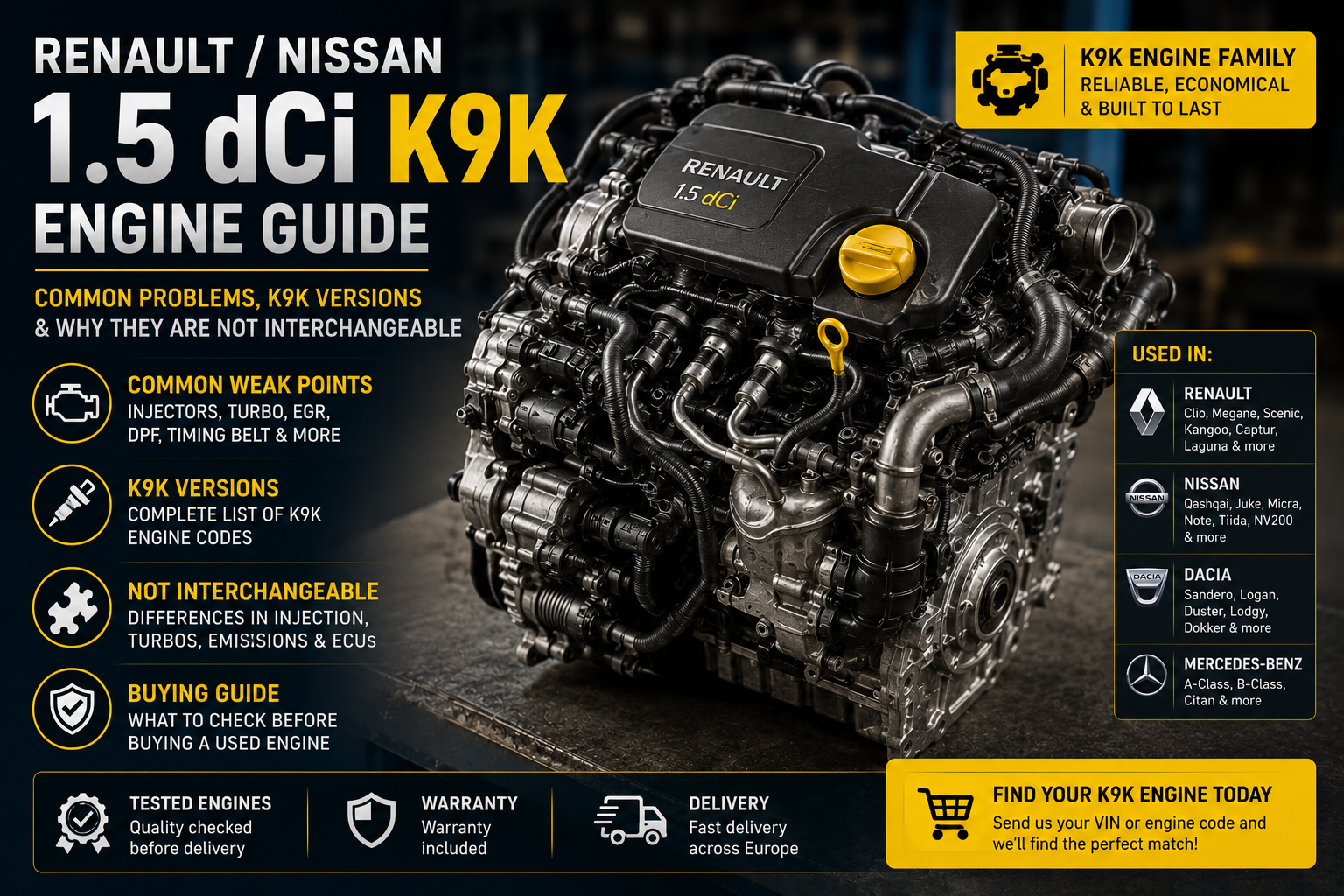
Renault / Nissan 1.5 dCi K9K Engine Guide: Common Problems, K9K Variants and Compatibility
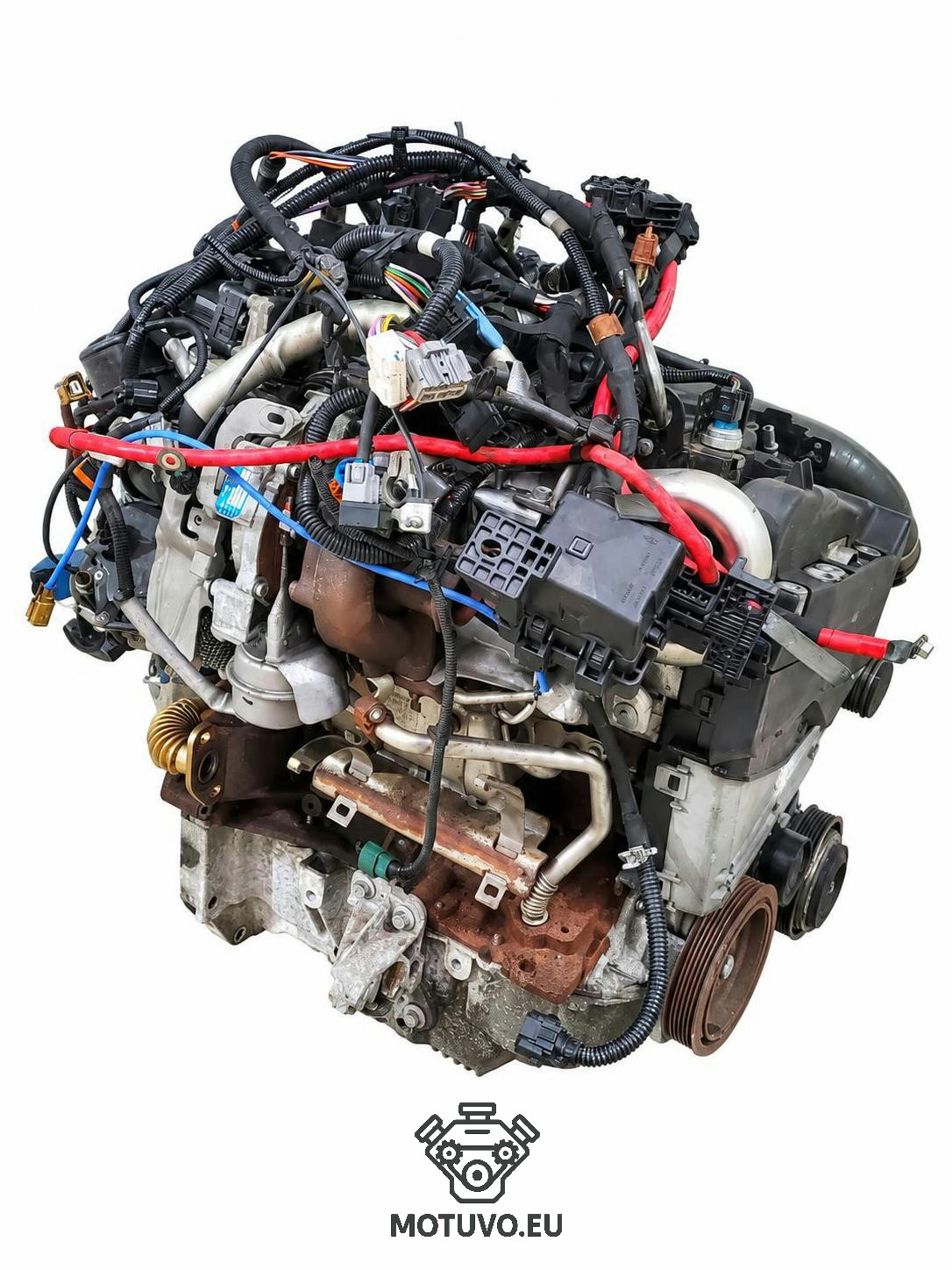
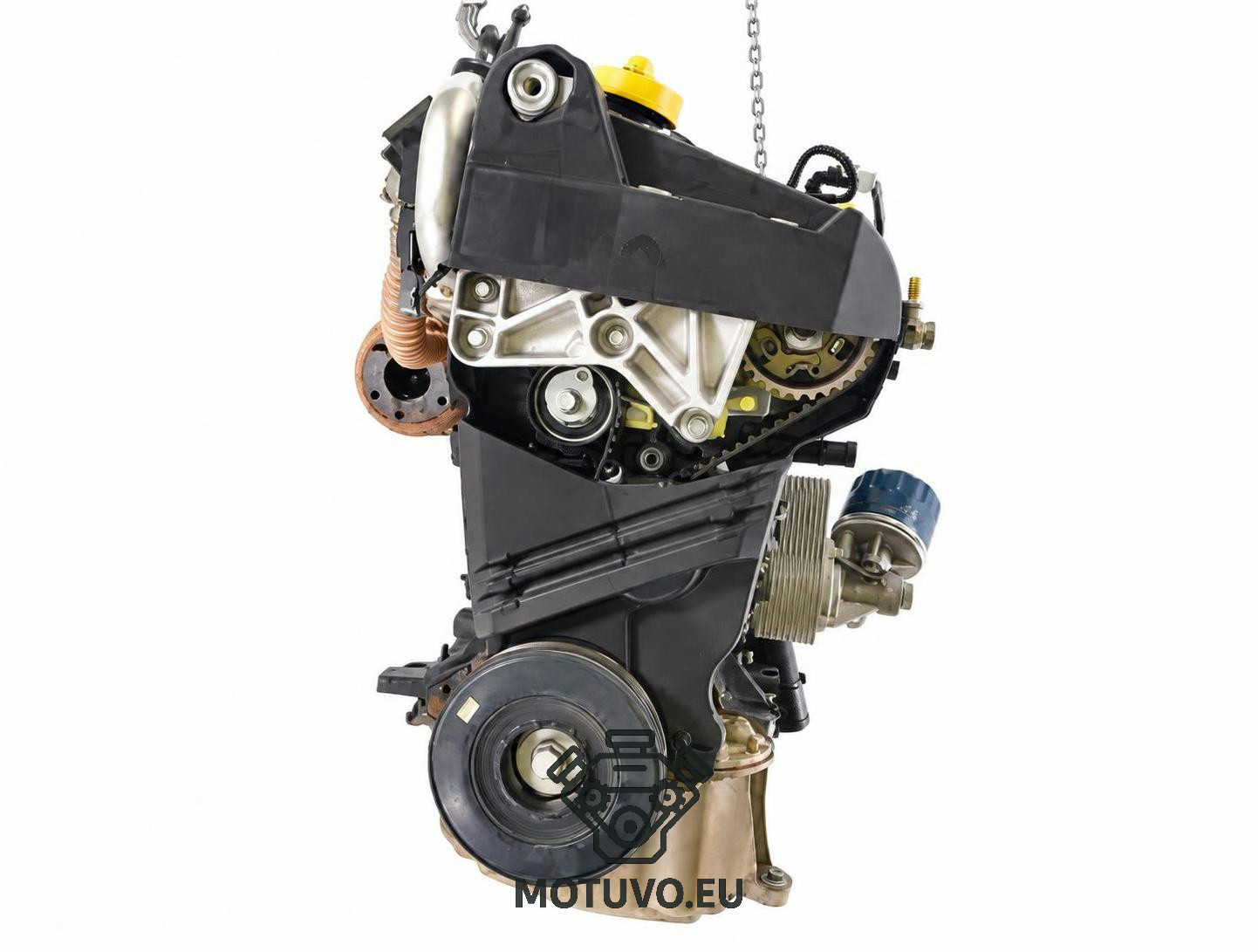
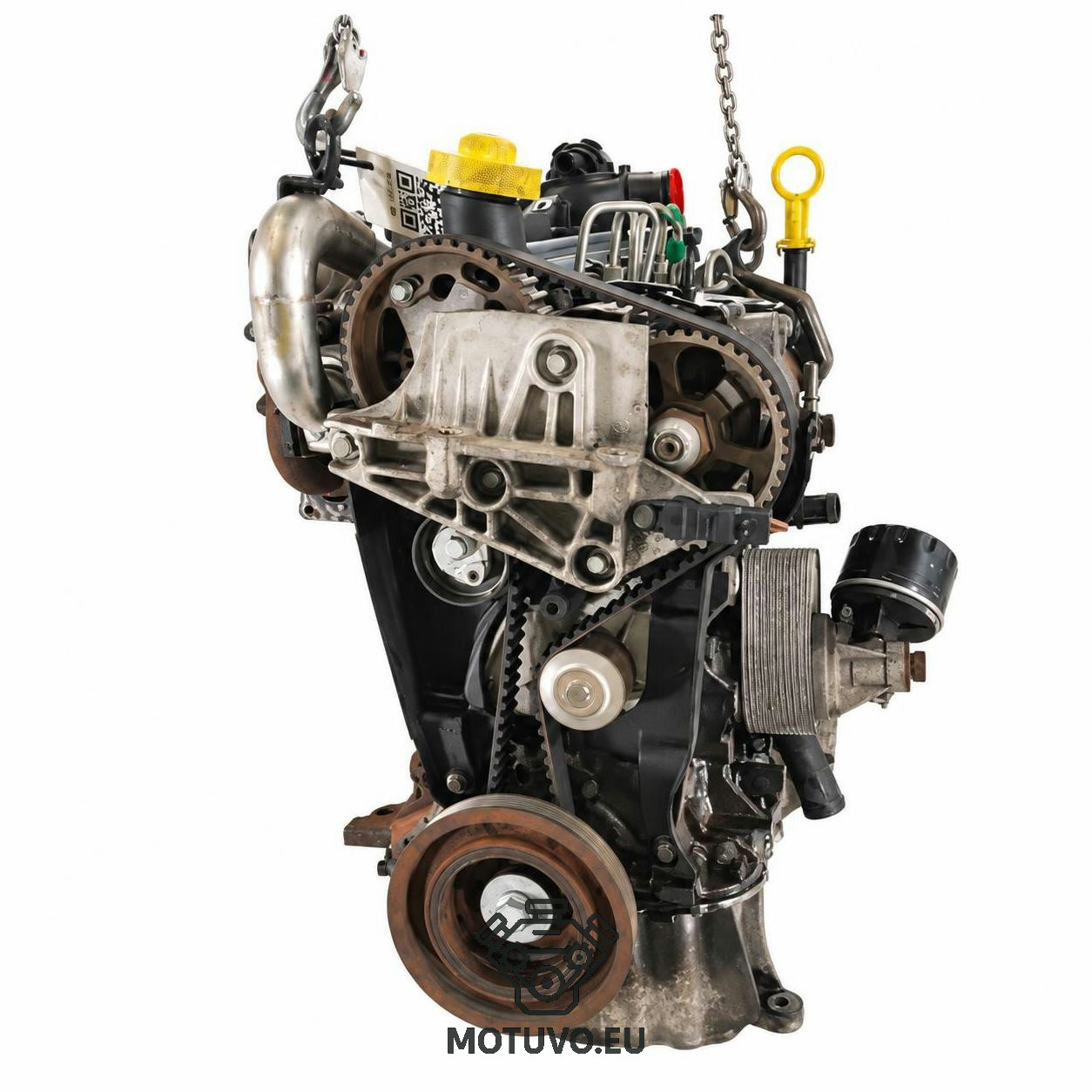
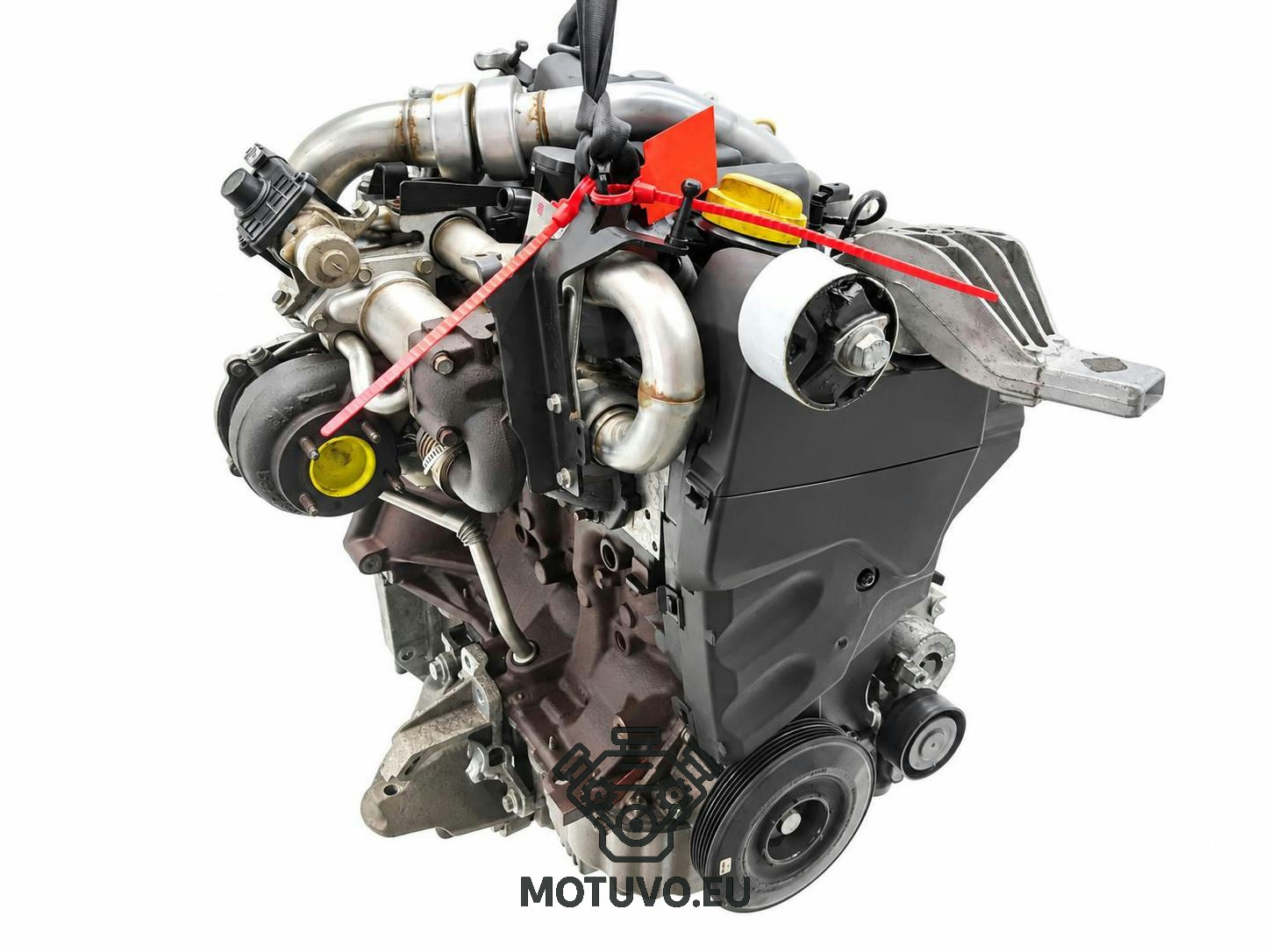
The Renault K9K 1.5 dCi is one of the most successful diesel engines ever produced. Since its introduction in 2001, millions of these engines have been installed not only in Renault vehicles, but also in Nissan, Dacia, Mercedes-Benz and several other manufacturers.
Thanks to its excellent fuel economy, low running costs and impressive durability, the K9K has become one of Europe's most popular small diesel engines. Many examples have covered well over 400,000 km with proper maintenance.
However, the K9K family consists of dozens of different engine variants. Although many share the same 1.5-litre displacement, they are not always interchangeable. Differences in emissions systems, fuel injection equipment, turbochargers, cylinder heads and engine management mean choosing the correct replacement engine is essential.
If you are looking for a replacement Renault or Nissan 1.5 dCi engine, this guide explains the most common problems, differences between K9K variants and what to check before buying.
What is the Renault K9K engine?
The K9K is a four-cylinder common-rail turbo diesel engine with a displacement of 1,461 cc.
Depending on production year and application, it was available in numerous power outputs, including:
- 48 kW
- 50 kW
- 60 kW
- 63 kW
- 65 kW
- 66 kW
- 74 kW
- 78 kW
- 81 kW
- 85 kW
- 86 kW
- 90 kW
Throughout its production life, Renault continuously updated the engine to meet stricter emissions regulations while improving reliability and efficiency.
Which vehicles use the K9K engine?
Renault
- Clio
- Megane
- Scenic
- Captur
- Modus
- Kangoo
- Fluence
- Laguna
Nissan
- Micra
- Note
- Juke
- Qashqai
- Tiida
- NV200
Dacia
- Sandero
- Logan
- Duster
- Lodgy
- Dokker
Mercedes-Benz
- A-Class
- B-Class
- Citan
The K9K has also appeared in selected Suzuki and Infiniti models.
Is the K9K a reliable engine?
Overall, yes.
The K9K has proven itself to be one of the most durable small diesel engines available. Later versions are particularly reliable when serviced regularly using the correct oil and filters.
Most major failures occur because of neglected maintenance, contaminated oil or overdue servicing rather than poor engine design.
Common K9K engine variants
One of the biggest sources of confusion is the large number of K9K engine codes.
Some of the most common variants include:
- K9K 700
- K9K 702
- K9K 704
- K9K 708
- K9K 710
- K9K 712
- K9K 714
- K9K 716
- K9K 722
- K9K 728
- K9K 732
- K9K 760
- K9K 764
- K9K 766
- K9K 768
- K9K 770
- K9K 772
- K9K 780
- K9K 782
- K9K 786
- K9K 796
- K9K 802
- K9K 804
- K9K 806
- K9K 808
- K9K 812
- K9K 830
- K9K 832
- K9K 836
- K9K 838
- K9K 846
- K9K 856
- K9K 872
- K9K 876
- K9K 878
- K9K 884
- K9K 892
- K9K 896
This is not a complete list, as Renault introduced numerous market-specific versions throughout production.
Why K9K engines are not always interchangeable
Many customers assume that because an engine is labelled K9K, any K9K engine will fit.
This is not correct.
Although the basic engine architecture remains similar, there are numerous important differences.
These include:
- Delphi or Siemens fuel injection systems
- Different turbochargers
- Variable-geometry and fixed-geometry turbochargers
- Different cylinder heads
- Different pistons
- Euro 3, Euro 4, Euro 5 and Euro 6 emissions systems
- Different EGR systems
- Different DPF equipment
- Different engine wiring looms
- Different ECUs
- Different engine mounts
- Different flywheels and clutch assemblies
- Different accessory layouts
Because of these changes, a K9K engine from one vehicle may not simply replace another K9K engine.
The safest way to identify a replacement engine is by using the VIN number together with the exact engine code.
The most common K9K problems
1. Connecting rod bearing wear on early engines
Some early K9K engines became known for premature connecting rod bearing wear.
This was mainly associated with extended oil change intervals and insufficient lubrication.
Typical symptoms include:
- Knocking noise
- Low oil pressure
- Metallic particles in the oil
- Engine seizure
Regular oil changes greatly reduce the risk.
2. Injector problems
Depending on the version, Delphi injectors can become problematic over time.
Symptoms include:
- Difficult starting
- Rough idle
- Smoke
- Reduced power
- Increased fuel consumption
Injector failure is generally less common on later versions.
3. Turbocharger wear
Like most turbo diesel engines, turbochargers eventually wear.
Common causes include:
- Oil contamination
- Delayed oil changes
- Oil starvation
- High mileage
Early diagnosis often prevents more expensive engine damage.
4. EGR valve contamination
Carbon deposits can restrict EGR operation.
Common symptoms include:
- Engine warning light
- Reduced power
- Poor fuel economy
- Rough running
Cleaning or replacing the EGR valve usually resolves the issue.
5. DPF blockage
Later Euro 5 and Euro 6 engines use diesel particulate filters.
Vehicles driven mainly on short journeys may eventually experience:
- Failed regenerations
- Reduced performance
- Limp mode
- Increased fuel consumption
Regular motorway driving helps maintain DPF health.
Timing belt maintenance
Unlike some modern engines, the K9K uses a conventional timing belt rather than a timing chain.
The timing belt should always be replaced according to the manufacturer's maintenance schedule.
Failure to replace the timing belt on time can result in:
- Bent valves
- Damaged pistons
- Cylinder head damage
- Complete engine failure
When replacing the timing belt, it is also recommended to replace:
- Water pump
- Tensioners
- Idler pulleys
Fuel system differences
One important compatibility issue involves the fuel injection system.
Some K9K engines use Delphi injection equipment, while others use Siemens or Continental systems.
These systems are not directly interchangeable without changing additional components and engine management.
Turbocharger differences
Not every K9K engine uses the same turbocharger.
Differences include:
- Fixed-geometry turbochargers
- Variable-geometry turbochargers
- Different boost pressures
- Different exhaust manifolds
Using the wrong engine may require extensive modifications.
What should you check before buying a used K9K engine?
Before purchasing a replacement engine, always verify:
- VIN number
- Exact K9K engine code
- Production year
- Power output
- Injection system
- Turbocharger type
- Emissions standard
- Whether the engine is supplied bare or complete
- Warranty conditions
Matching the correct variant saves time and avoids expensive installation problems.
How to maximise K9K engine life
The Renault 1.5 dCi rewards owners who service it regularly.
Recommended maintenance includes:
- Regular oil changes using approved oil
- Quality oil filters
- Fuel filter replacement
- Timing belt replacement on schedule
- Turbocharger inspection
- Prompt repair of injector leaks
- Cooling system maintenance
With proper servicing, the K9K can provide many years of dependable operation.
Need a replacement Renault or Nissan K9K engine?
At MOTUVO, we supply a wide range of Renault and Nissan 1.5 dCi K9K replacement engines for all major variants.
Whether you need a K9K for a Renault Clio, Megane, Scenic, Kangoo, Nissan Qashqai, Juke, Micra, Dacia Duster or Mercedes Citan, we can help identify the correct engine for your vehicle.
Simply send us your VIN number, engine code or vehicle details, and our team will identify the correct compatible replacement engine.
MOTUVO.eu offers tested used engines, rebuilt engines and replacement engines with delivery across Europe.
Before ordering, always verify compatibility. Although every engine may carry the K9K designation, differences in injection systems, turbochargers, emissions equipment and engine management mean they are not always directly interchangeable.