Nissan M9R Engine Guide: Generations, Codes, Problems and Compatibility | Motuvo
MOTUVO ENGINE GUIDE
Nissan M9R engines: generations, differences, common faults and replacement guide
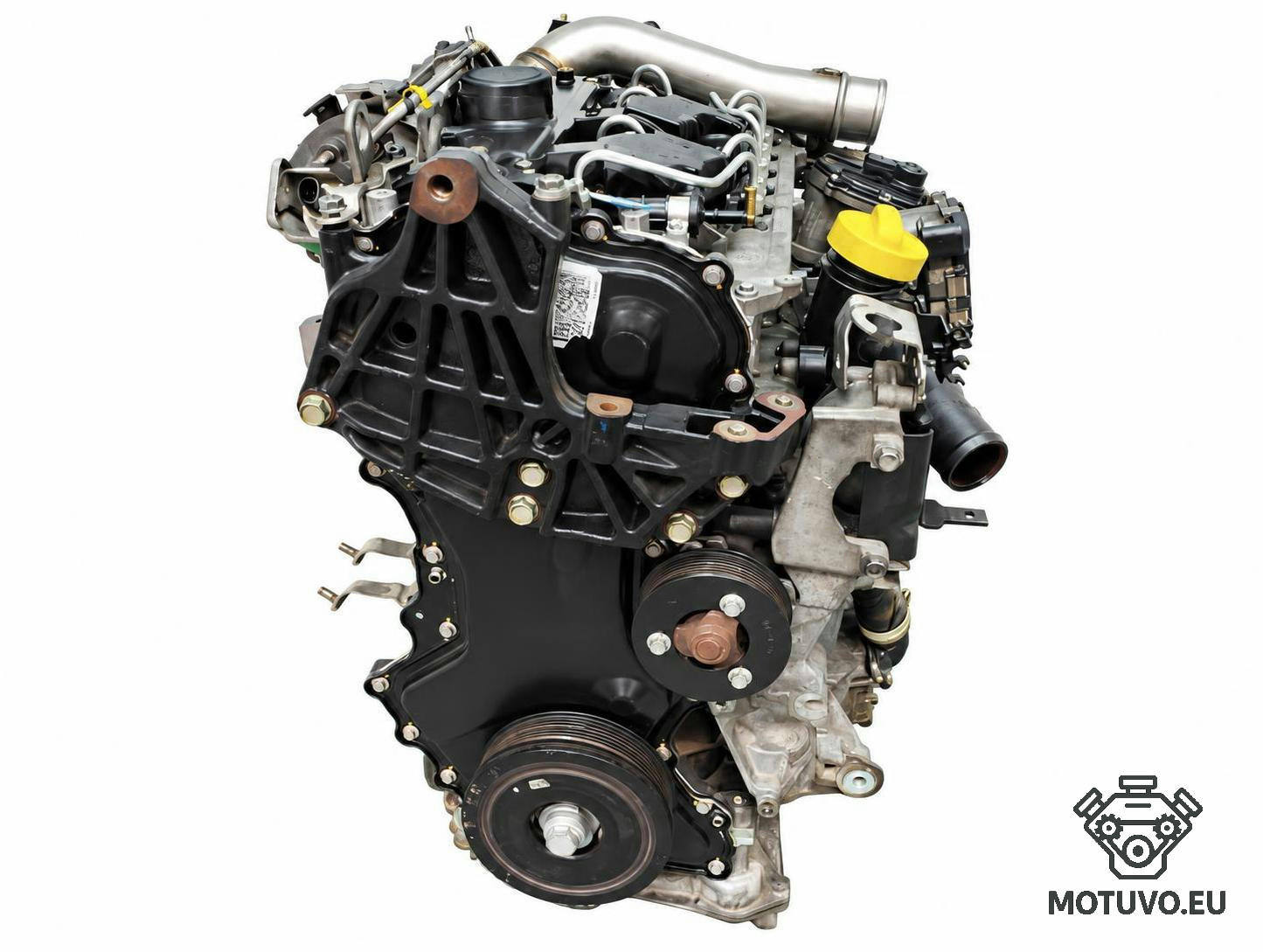
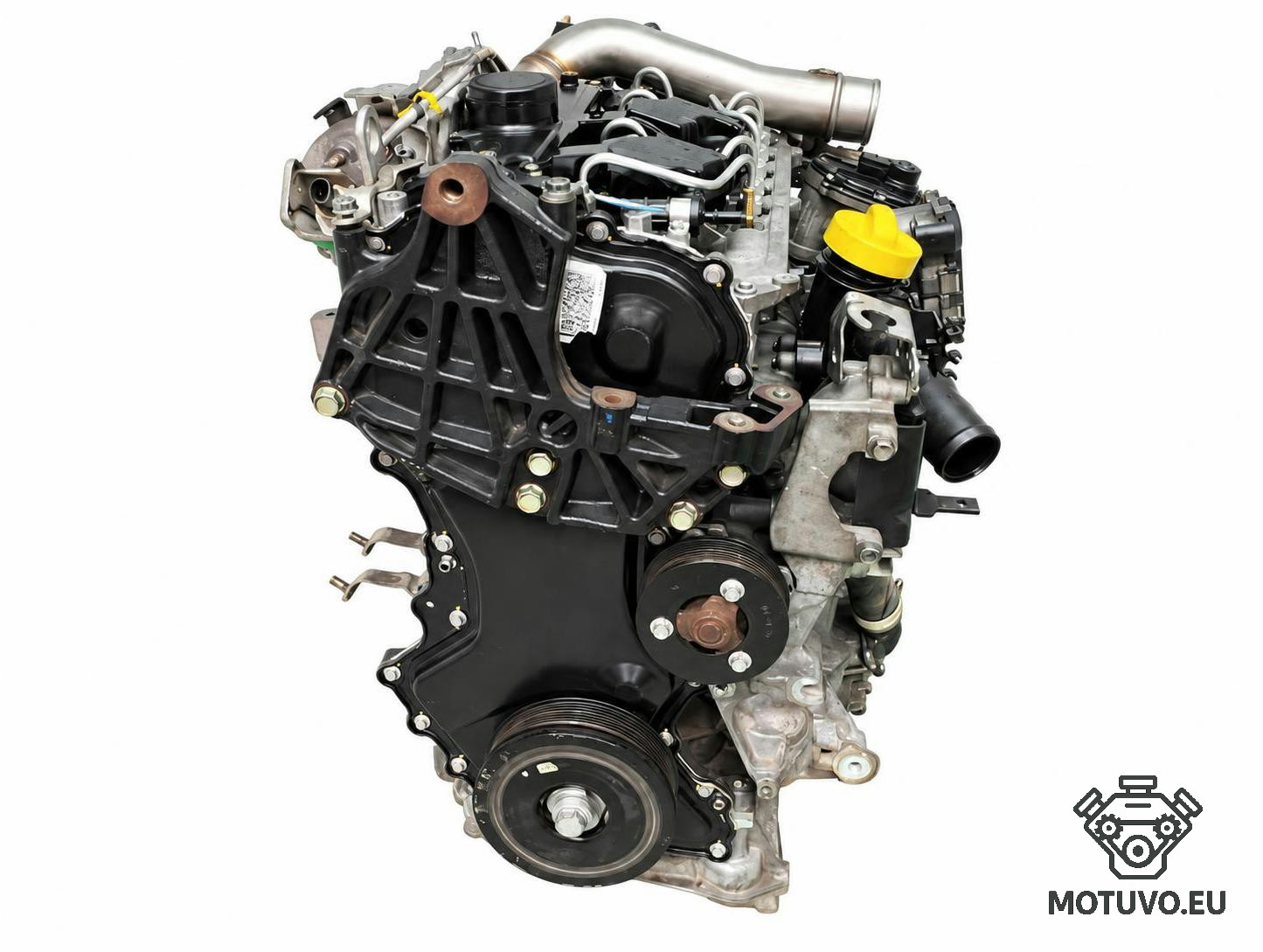
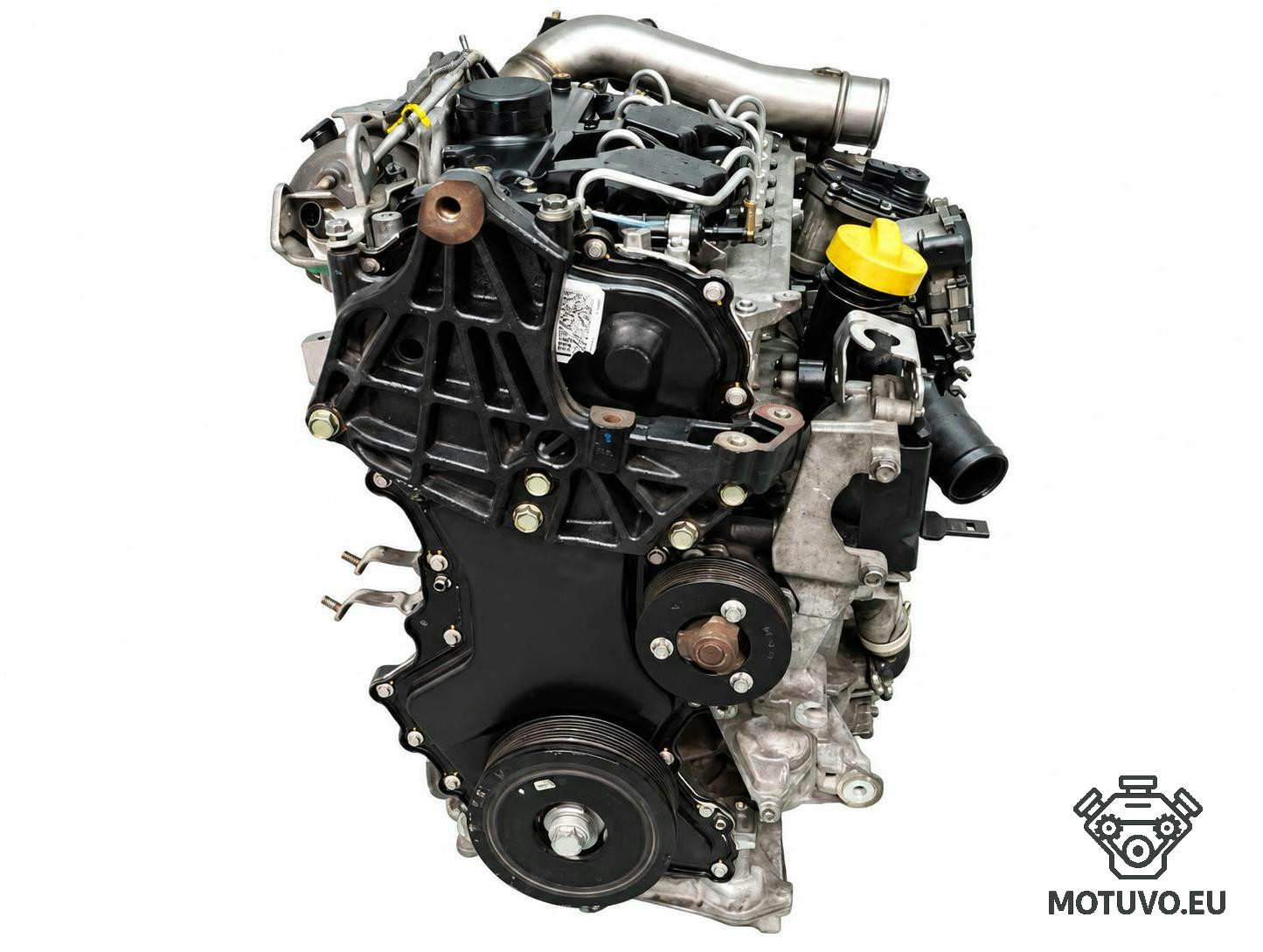
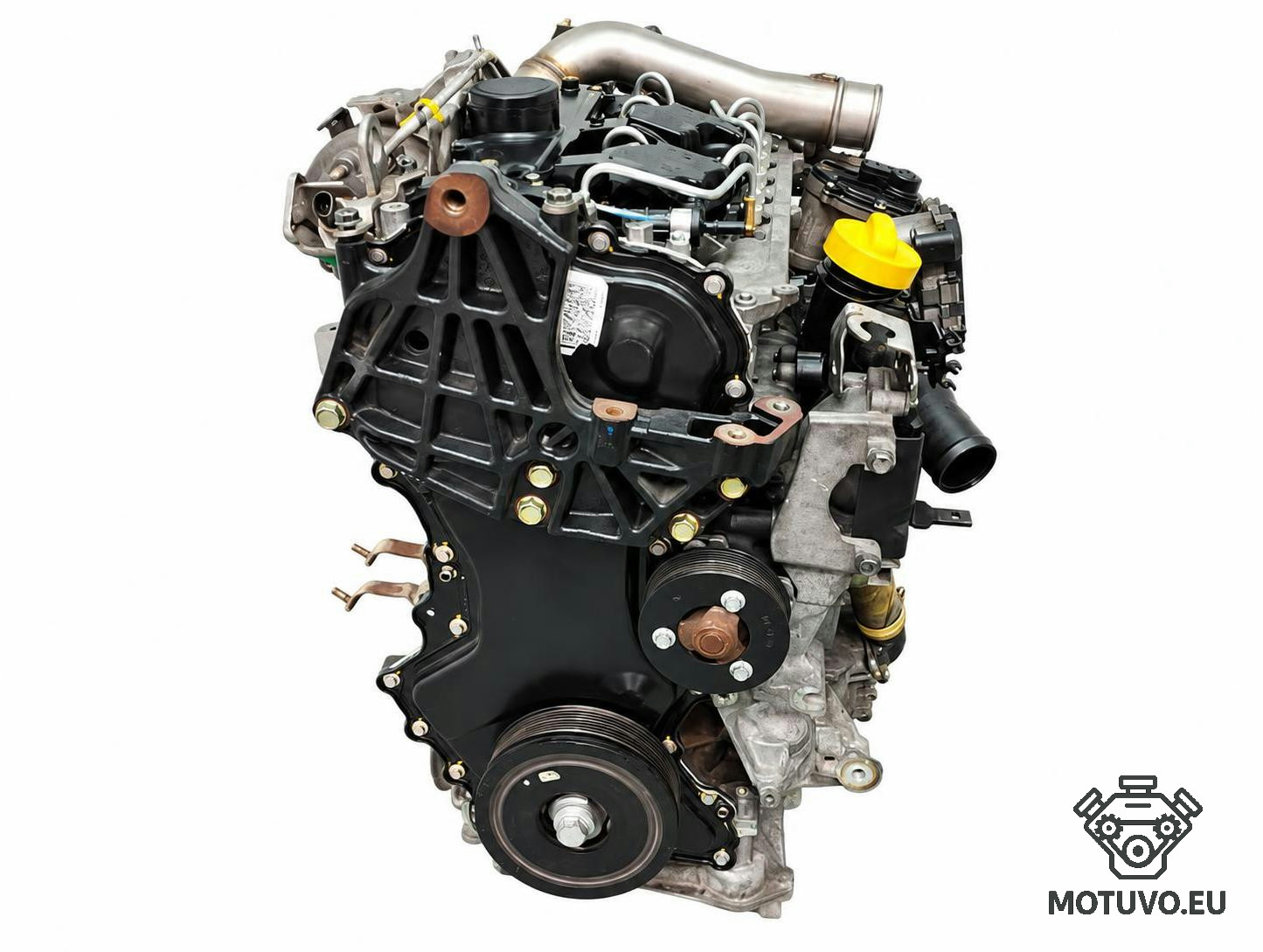
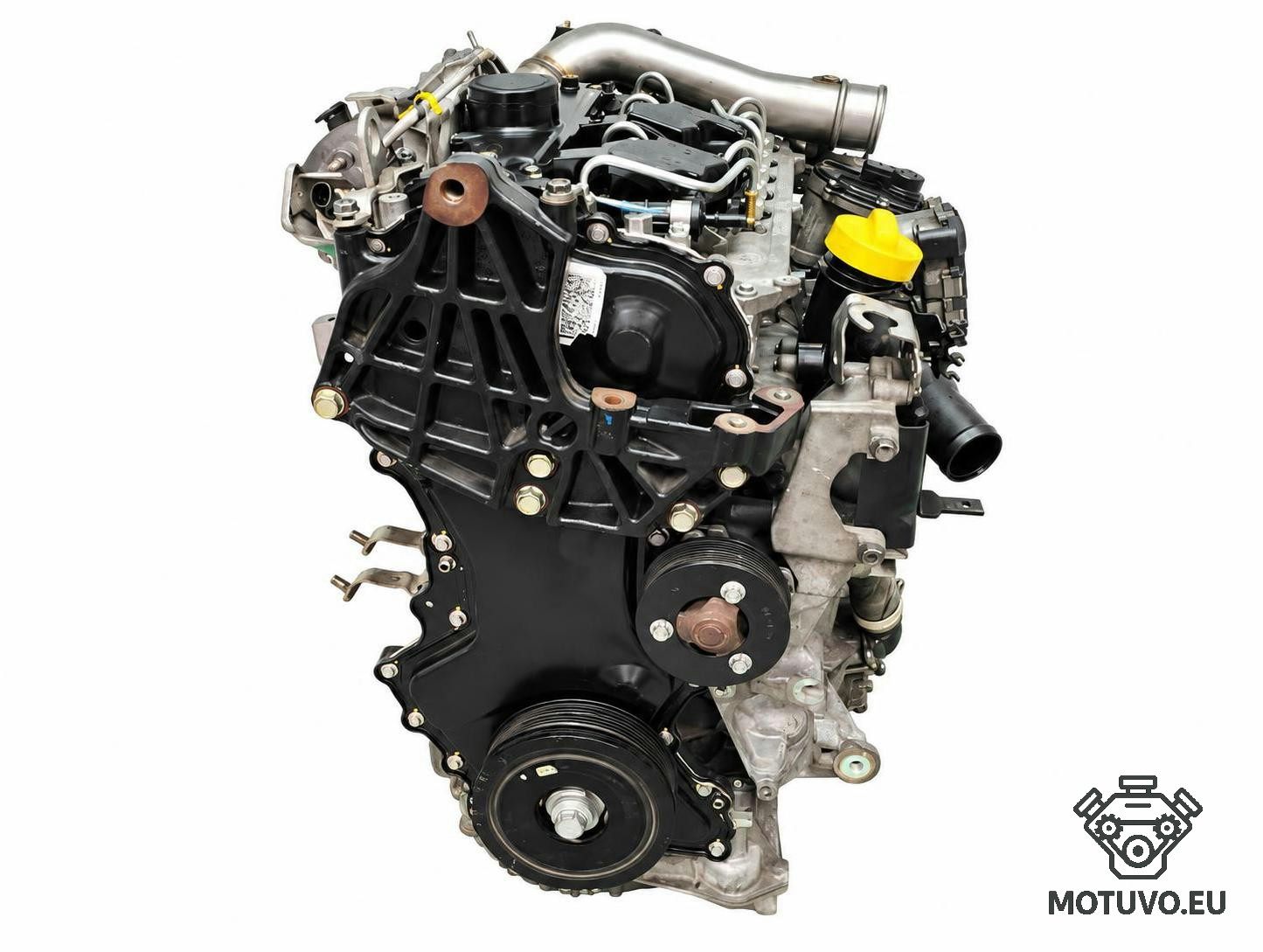
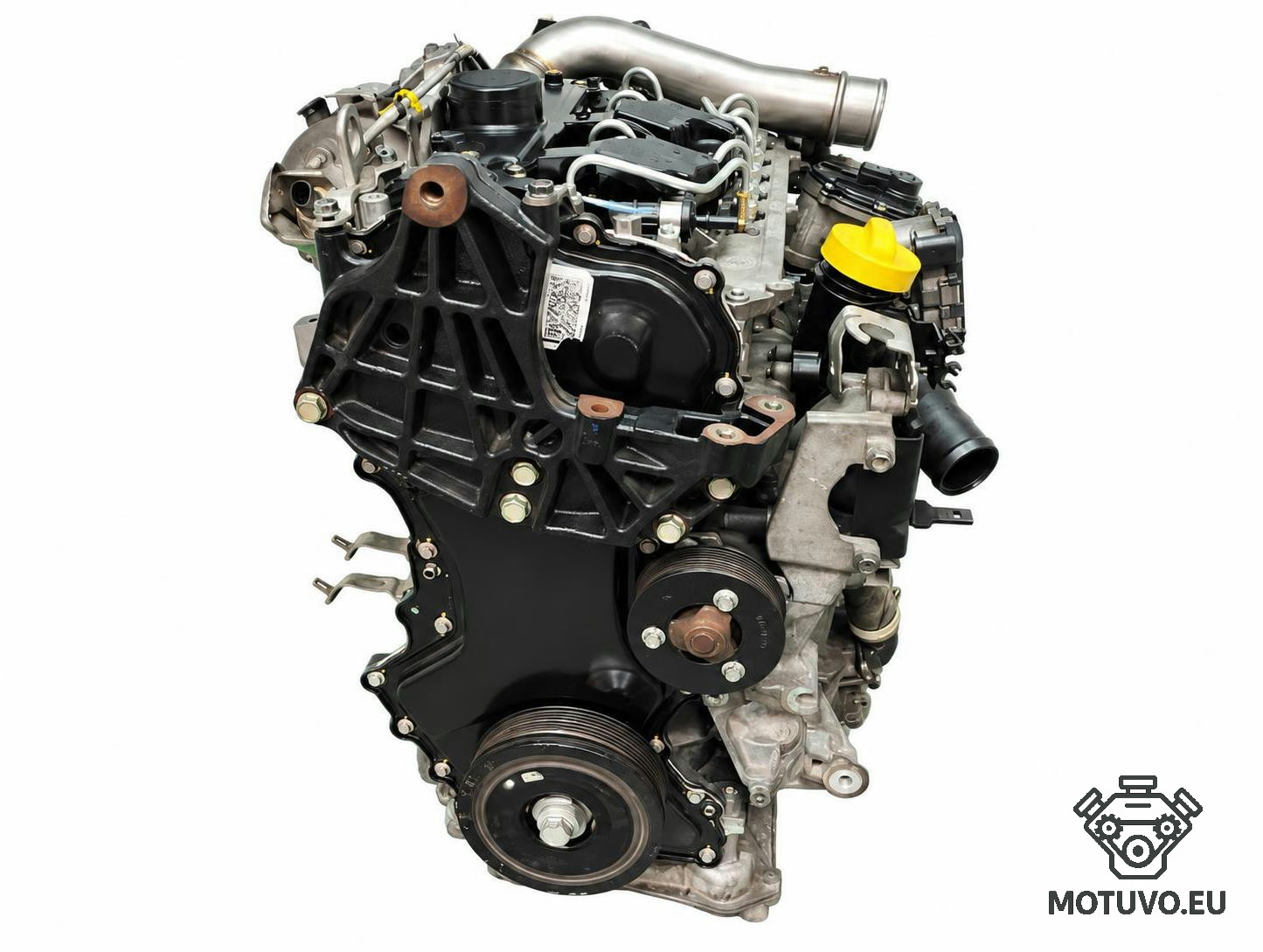
The M9R is one of the best-known 2.0-litre common-rail diesel engines used by Nissan and Renault. It powered everything from the Nissan Qashqai and X-Trail to the Primastar and NV300. However, “M9R” describes an engine family—not one universally interchangeable engine.
An M9R from a Nissan X-Trail can share its basic 1,995 cc architecture with an M9R from a Nissan Primastar while having a different cylinder head, turbocharger, fuel system, sump, mounts, gearbox interface, electronics and emissions equipment. Even two Primastar engines with similar power can require significant conversion if their full suffixes or production generations differ.
This guide explains how the Nissan M9R family evolved, which vehicles used it, its most important engine-code differences, the faults buyers should check and how to identify the correct replacement engine.
What is the Nissan M9R engine?
The M9R was developed jointly by Renault and Nissan and entered European Nissan applications in the second half of the 2000s. The original design is a four-cylinder, 16-valve turbo-diesel with common-rail direct injection and chain-driven camshafts. Depending on the application, it was equipped with a variable-nozzle turbocharger, diesel particulate filter, piezoelectric injectors and balance shafts.
Nissan’s original clean-diesel specification used a 1,600-bar common-rail system, fast piezoelectric injectors and a regenerating DPF. Those features helped the engine combine strong torque with comparatively low noise and emissions for its period. Later versions received revised engine management, injection and exhaust-aftertreatment systems.
- Original displacement: 1,995 cc
- Original bore and stroke: 84 mm × 90 mm
- Layout: inline four-cylinder, DOHC, 16 valves
- Fuel system: common-rail direct injection
- Timing system: chain
- Typical outputs: approximately 66–130 kW, depending on generation and application
Main Nissan M9R generations
| Generation | Typical Nissan applications | Typical output | Key characteristics |
|---|---|---|---|
| Early M9R, Euro 4 approximately 2006–2009 |
Primastar X83; early Qashqai J10 and X-Trail T31 | 66–127 kW 90–173 hp |
Original 1,995 cc architecture; early Bosch management and injection systems; application-specific turbo, head and mounting arrangements. |
| Revised M9R, Euro 5 approximately 2009–2014 |
Later Primastar X83, Qashqai J10 and X-Trail T31 | 66–127 kW 90–173 hp |
Revised injectors, high-pressure pump, camshaft signal and ECU on many versions; updated DPF and EGR systems. |
| Later SUV evolution approximately 2016–2018 |
X-Trail T32 2.0 dCi | 130 kW 177 hp |
Later emissions calibration and transmission integration; not a direct replacement for a T31 or Primastar M9R. |
| Modern LCV M9R from approximately 2019 |
NV300 X82 and later Primastar X82 | Market-dependent 81–125 kW 110–170 hp |
Reworked 1,997 cc Euro 6 generation with SCR/AdBlue; representative codes include M9R 710 and M9R 717. |
Dates and power ratings vary by country, body type, gearbox and homologation. They should be treated as identification guidance, not proof of interchangeability.
Nissan M9R applications
Nissan Qashqai J10
The first-generation Qashqai used the M9R 2.0 dCi in a widely sold 110 kW/150 hp specification. It was offered with different combinations of two- or four-wheel drive and manual or automatic transmission. These engines have passenger-car manifolds, mounts, sump arrangements, electronics and emissions hardware. They are not complete-engine replacements for a Primastar simply because both are called M9R.
Nissan X-Trail T31
The T31 X-Trail received 110 kW/150 hp and 127 kW/173 hp versions. Nissan also developed a clean-diesel version for Japan with advanced DPF and NOx aftertreatment. Transmission type and emissions specification are especially important when sourcing an X-Trail engine: manual, conventional automatic and market-specific clean-diesel versions can use different ancillary equipment and calibration.
Nissan X-Trail T32
A 130 kW/177 hp 2.0 dCi joined the European T32 range later in the model cycle. Although it belongs to the M9R family, it is a later installation with different engine management, aftertreatment and transmission integration. Treat it as a separate generation.
Nissan Primastar X83
The Primastar shares its platform with the Renault Trafic II and Opel/Vauxhall Vivaro A. Its 2.0 dCi M9R engines were commonly rated at 66 kW/90 hp or 84 kW/114 hp, sometimes marketed as dCi 90, dCi 115 or dCi 120. Frequently encountered suffixes include:
- M9R 780 and M9R 782: commonly associated with the early 2006–2009 configuration.
- M9R 784 and M9R 788: additional higher-output/application-specific X83 variants.
- M9R 786: commonly found in the revised late-2009/2010-on configuration.
- M9R 630 and M9R 692: later Euro 5 X83 variants, normally with EDC17 management and revised emissions hardware.
These codes are sometimes written with an extra production or identification letter, for example M9RE782, M9RE786 or M9RA630. Breakers and registration databases do not always format them consistently.
Nissan NV300 and later Primastar X82
The first NV300 versions used 1.6 dCi R9M engines, but the range later returned to a 2.0 dCi M9R. Representative later codes include M9R 710 in NV300 applications and M9R 717 in the newer Primastar. These modern Euro 6 engines use SCR/AdBlue and are fundamentally different replacement units from the older X83 M9R.
Why the complete suffix matters
The last three digits do more than identify horsepower. They can indicate a different vehicle installation, production phase, emissions package, injection system or transmission combination. Power alone is not enough: the same broad suffix may also appear against more than one output in aftermarket databases, while different suffixes can share the same advertised power.
| Component to compare | Why it matters |
|---|---|
| Stamped full engine code | Separates the precise engine index from the broad M9R family name. |
| Injector part number | Different injectors may have different electrical operation, calibration, mounting sleeves and ECU requirements. |
| High-pressure pump and fuel rail | Pump generation, regulator, rail sensor and pipe layout must match the ECU and injectors. |
| Inlet camshaft trigger | A different synchronization pattern can cause a camshaft-sensor fault or a no-start condition. |
| ECU and engine loom | EDC16CP33, EDC16C36 and later EDC17 systems are not interchangeable without extensive conversion and programming. |
| Turbo and manifolds | Boost control, pipe positions and output specification differ between passenger, SUV and van installations. |
| Sump, mounts and gearbox | The basic block may look similar while the installation hardware, flywheel, starter or transfer-case arrangement differs. |
| DPF, EGR and SCR/AdBlue | The donor engine must work with the recipient vehicle’s emissions system and legal type approval. |
Example: M9R 782, M9R 780, M9R 786 and M9R 630
This group causes frequent confusion in Primastar, Trafic and Vivaro repairs:
- M9R 782 to early M9R 780: usually the most practical alternative, but the original fuel system, wiring, sensors, flywheel, brackets and emissions equipment should be retained. The inlet-cam trigger must be checked rather than assumed compatible.
- M9R 782 to M9R 786: the physical base is related, but the later head/injector arrangement, pump, rail, loom and ECU configuration can differ. It is not a dependable plug-and-play complete swap.
- M9R 782 to M9R 630: M9R 630 is a later Euro 5 X83 engine, typically using EDC17 management. It may be usable as a carefully verified base engine, but converting a complete 630 into an early 782 vehicle is normally uneconomical.
- M9R D761: normally an Espace passenger-car engine—not a Primastar replacement. Its output, installation, fuel system, manifolds, electronics and transmission arrangement differ.
Common Nissan M9R problems
The M9R can cover high mileage when serviced correctly, but used engines are often purchased after a lubrication, injection, cooling or emissions-system failure. The cause must be identified before installing the replacement, otherwise the same external fault may damage the new engine.
- Injector failure and seized injectors. Hard starting, uneven idle, diesel knock, smoke and excessive leak-back can point to injector trouble. On X83 vans, water and corrosion around the deep injector wells can make removal extremely difficult. Confirm the Bosch or Nissan number; visually similar early and later injectors should not be mixed.
- High-pressure pump wear or contamination. Low rail pressure can cause difficult starting, limp mode or a no-start condition. If a pump has produced metal particles, replacing only the pump is unsafe: the tank, lines, rail and injectors must be inspected and the complete fuel system cleaned or renewed as required.
- Timing-chain, guide or tensioner wear. A cold-start rattle, synchronization fault or cam/crank correlation code should be investigated immediately. The chain has no simple universal replacement interval, but “chain-driven” does not mean immune to wear—especially after long oil intervals or incorrect oil use.
- DPF loading and unsuccessful regeneration. Repeated short journeys, thermostat faults, injector problems or pressure-sensor faults can prevent regeneration. Symptoms include warning lights, frequent fan operation, rising fuel consumption and limp mode. Repeated failed regeneration can dilute the engine oil with diesel.
- EGR and intake contamination. Soot mixed with oil vapour restricts the EGR valve, cooler, throttle body and intake tract. This can cause hesitation, low boost, smoke and airflow-related faults. Modern Euro 5 and Euro 6 variants have more complex aftertreatment hardware than early engines.
- Turbocharger and oil-feed problems. Whistling, blue smoke, oil consumption or loss of boost requires prompt diagnosis. A failed turbo must not simply be replaced without checking oil pressure, feed and return pipes, crankcase ventilation, intercooler contamination and the reason for the original failure.
- Cooling-system pressure and cylinder-head problems. Coolant loss, hard hoses from cold, expansion-tank bubbling or overheating can indicate EGR-cooler leakage, a head-gasket problem or a damaged cylinder head. Confirm the source before condemning the complete engine.
- Oil leaks and lubrication damage. Inspect the vacuum-pump area, timing cover, sump, turbo pipes and oil-cooler assembly. Low oil level, fuel-diluted oil or extended service intervals can lead to turbo, chain and bearing damage.
What to check before buying a used M9R engine
- Provide the full 17-character VIN.
- Photograph the stamped engine type, suffix and serial number—not only the plastic-cover label.
- Confirm the production date, power in kW and emissions standard.
- Record whether the vehicle is two-wheel drive or four-wheel drive.
- Identify the manual, automatic or CVT gearbox code.
- Compare injector, HP-pump, turbo and ECU numbers.
- Establish whether the engine is supplied bare, as a long block or complete with ancillaries.
- Ask for compression, oil-pressure or running-test information where available.
- Replace service items and investigate the cause of the original failure before installation.
Used, rebuilt or new M9R engine?
A tested used engine is often the most economical solution for an older Primastar, Qashqai or X-Trail. A professionally rebuilt unit may be preferable where injector corrosion, timing damage, overheating or uncertain mileage makes a used unit too risky. New engines offer the clearest provenance but may not be financially sensible for every vehicle.
The right choice depends on the vehicle’s value, required warranty, expected annual mileage and whether reusable ancillaries are available from the original engine.
Find the correct Nissan M9R engine at Motuvo
Motuvo supplies used, rebuilt and new engines through a European partner network. Send us your Nissan VIN, full engine code, power, production date and gearbox information. We will help identify the correct M9R version and clarify what is included before you order.
Do not risk buying an engine that merely looks similar. Let Motuvo match the engine to your vehicle and arrange delivery across Europe.
Browse engines Request an M9R quoteFrequently asked questions
Are all Nissan M9R engines interchangeable?
No. They share a family name, but cylinder heads, cam triggers, injectors, pumps, turbochargers, sumps, mounts, electronics, gearboxes and emissions systems vary.
Can an X-Trail M9R be installed in a Nissan Primastar?
Not as a straightforward complete-engine swap. A specialist may reuse selected internal or base-engine components after careful comparison, but the SUV installation is substantially different from the van installation.
Is M9R 780 the same as M9R 782?
They belong to the same early X83 group and can be closely related, but they should not be treated as automatically identical. Compare the inlet-cam trigger, complete injection system, power specification and donor production date.
Is M9R 630 a direct replacement for M9R 782?
No. M9R 630 is generally a later Euro 5 version with different engine management and injection/emissions equipment. It can sometimes serve as a base for a specialist conversion, but another correct early M9R 782 is the safer replacement.
Where is the M9R engine code located?
The identification is normally found on the engine itself near the gearbox/starter side and may also appear on a label. Because labels and timing covers can be transferred, use the stamped identification together with the VIN and component numbers.