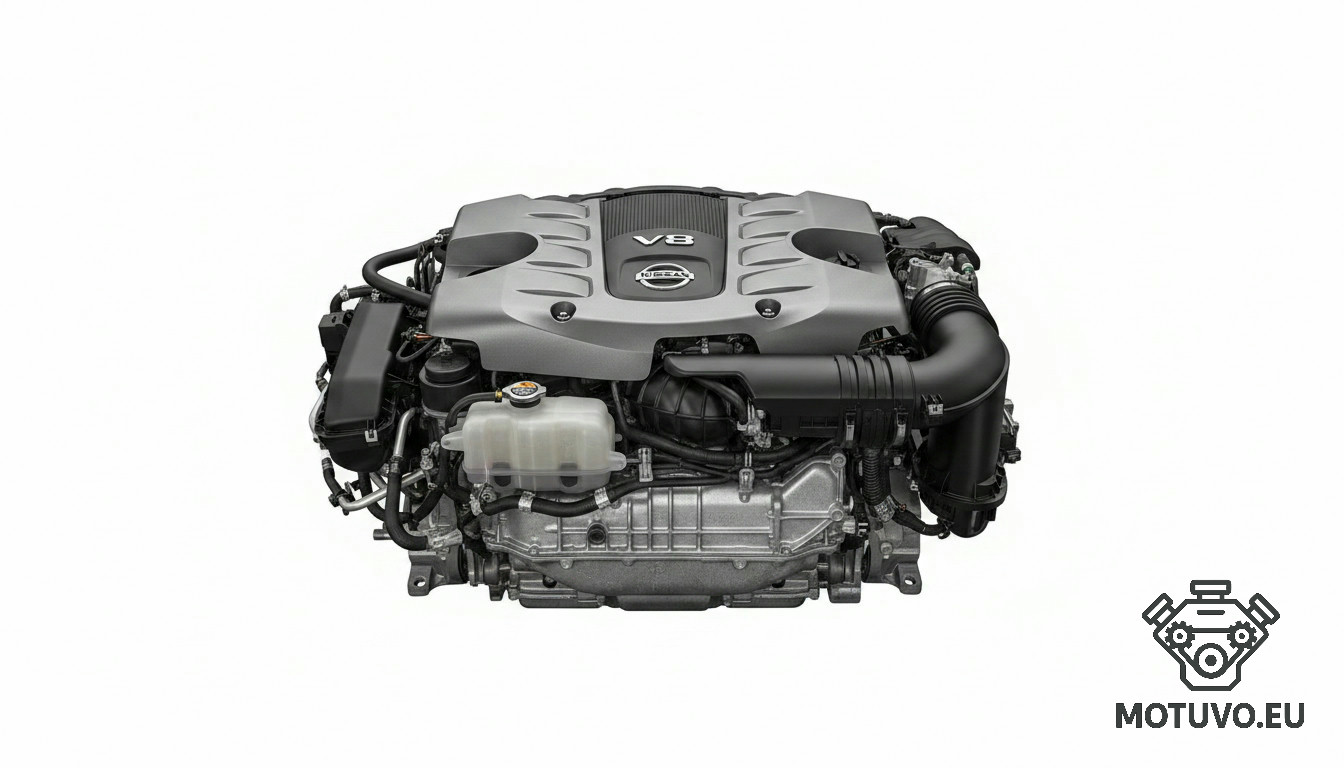
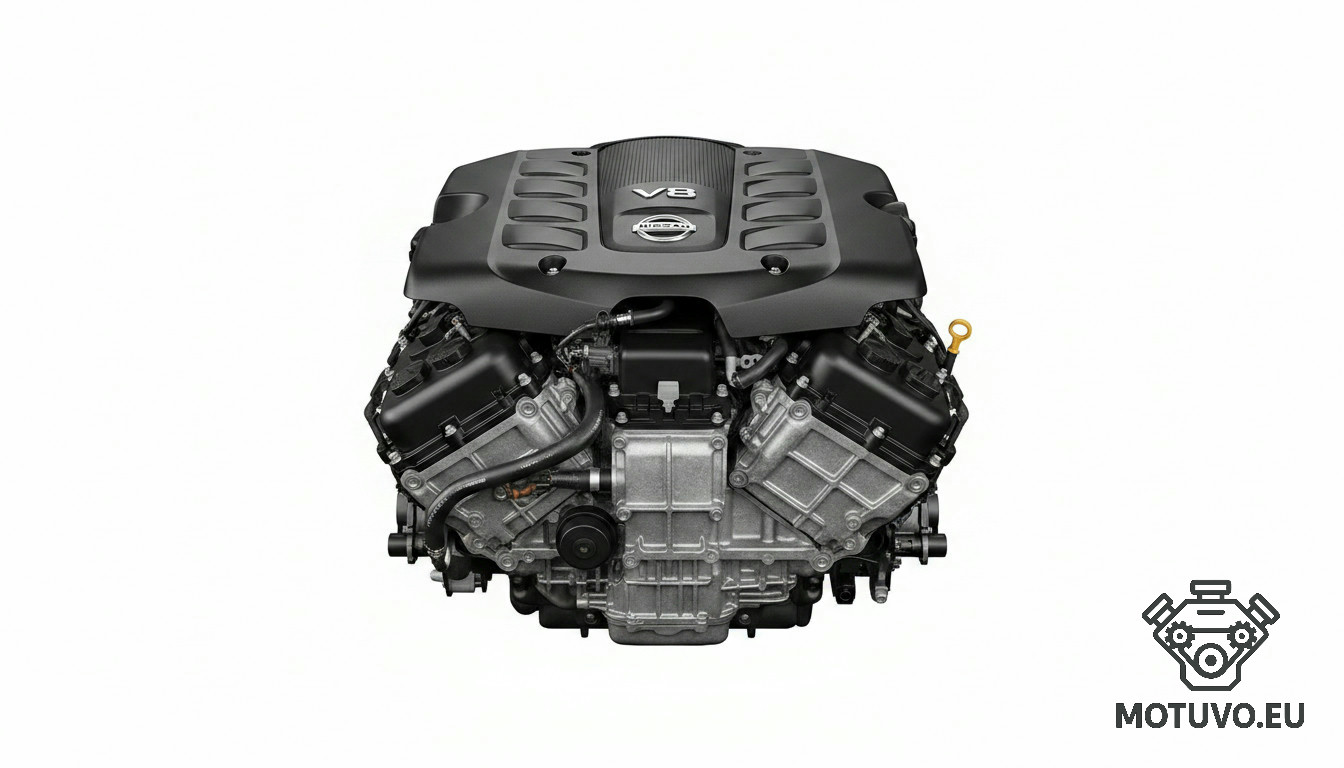
Nissan / Infiniti VK56VD Engine Guide – Applications, Versions, Common Problems, Reliability and Replacement Engines
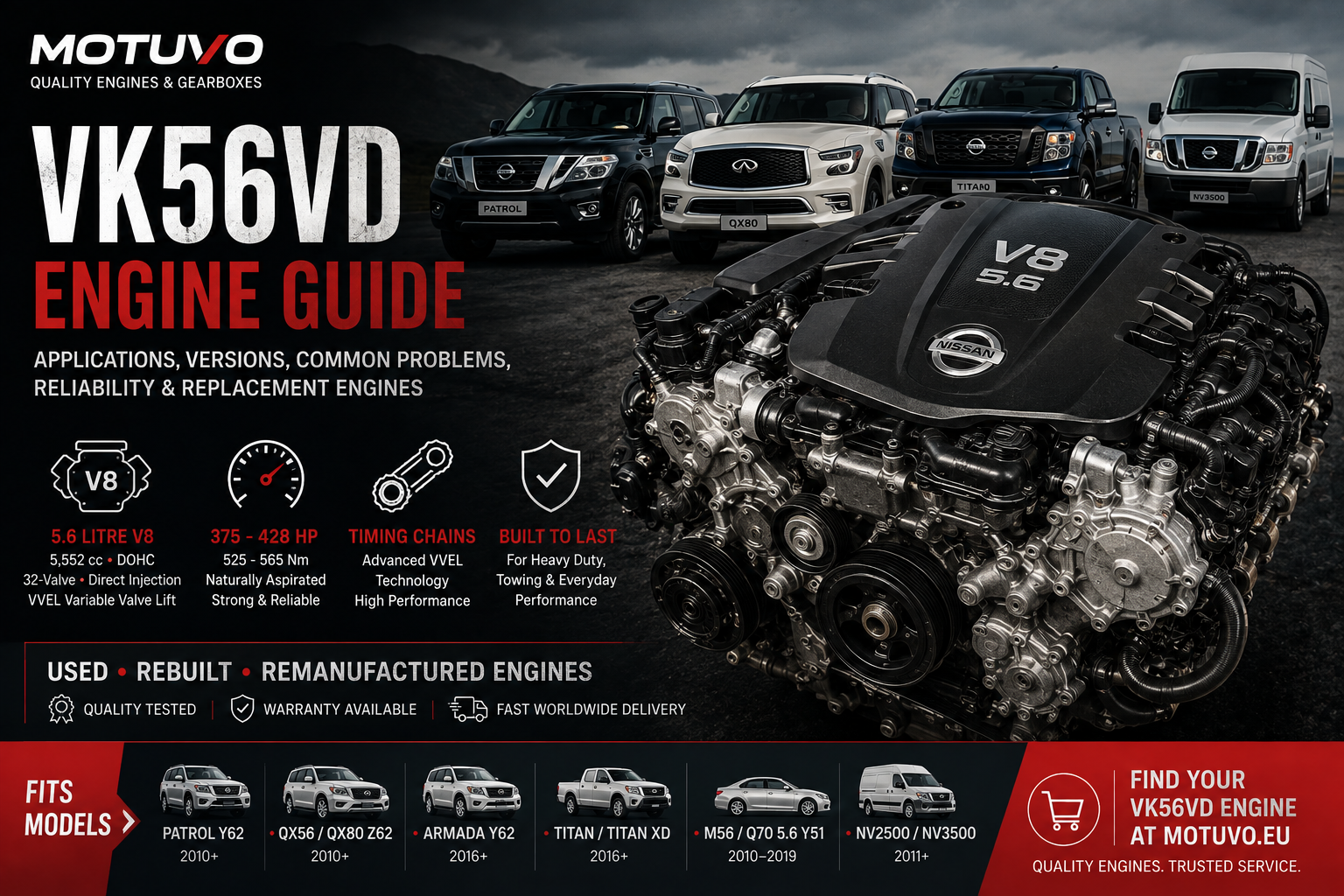
Nissan / Infiniti VK56VD Engine Guide – Applications, Versions, Common Problems, Reliability and Replacement Engines
The VK56VD is Nissan’s later-generation 5.6-litre naturally aspirated V8 petrol engine used in large Nissan and Infiniti SUVs, pickup trucks, commercial vans and luxury sedans.
It replaced or supplemented the earlier VK56DE in many applications and introduced significantly more advanced technology, including:
- Direct petrol injection
- VVEL variable valve lift
- Advanced variable valve timing
- Higher compression ratios
- Higher power output
- Improved combustion efficiency
The VK56VD is best known from models such as:
- Nissan Patrol Y62
- Nissan Armada Y62
- Nissan Titan A61
- Nissan Titan XD
- Infiniti QX56 Z62
- Infiniti QX80 Z62
- Infiniti M56 Y51
- Infiniti Q70 5.6 Y51
- Nissan NV2500 and NV3500
Although these vehicles all use the VK56VD engine code, they do not necessarily use identical complete engines.
There are important differences between SUV, pickup, van and sedan installations, including intake systems, engine mounts, oil sumps, exhaust manifolds, cooling systems, ECU calibration and internal specification.
This guide explains the VK56VD design, major applications, different power versions, common failures, strong points, interchangeability and what to check before buying a replacement engine.
VK56VD Engine Specifications
| Manufacturer | Nissan Motor Co. |
|---|---|
| Engine family | VK |
| Engine code | VK56VD |
| Fuel type | Petrol / gasoline |
| Configuration | 90-degree V8 |
| Displacement | 5,552 cc |
| Cylinder head | DOHC, 32 valves |
| Fuel system | Direct Injection Gasoline – DIG |
| Valve control | VVEL Variable Valve Event & Lift |
| Aspiration | Naturally aspirated |
| Engine block | Aluminium alloy |
| Timing system | Timing chains |
| Common output range | Approximately 375–428 hp depending on application |
| Common torque range | Approximately 525–565 Nm |
| Installation | Longitudinal |
The VK56VD is a 5,552 cc, 32-valve DOHC aluminium V8 using direct petrol injection and Nissan’s VVEL variable valve-lift system.
VK56VD vs VK56DE – Do Not Confuse These Engines
The most important identification issue is the difference between VK56VD and VK56DE.
Both are 5.6-litre Nissan V8 engines, but they are substantially different.
| Feature | VK56DE | VK56VD |
|---|---|---|
| Displacement | 5.6 litres | 5.6 litres |
| Fuel injection | Port injection | Direct injection |
| Variable valve lift | No VVEL | VVEL |
| Fuel pressure | Conventional | High-pressure direct injection |
| Typical output | Lower | Higher |
| Engine management | Earlier architecture | More complex |
| Direct interchangeability | No | |
A VK56DE should not be sold as a replacement VK56VD simply because both engines are described as a Nissan 5.6 V8.
Main VK56VD Applications
| Manufacturer | Model | Platform | Typical output |
|---|---|---|---|
| Nissan | Patrol | Y62 | Approximately 400 hp |
| Nissan | Patrol Nismo | Y62 | Approximately 428 hp |
| Infiniti | QX56 | Z62 | Approximately 400 hp |
| Infiniti | QX80 | Z62 | Approximately 400 hp |
| Nissan | Armada | Y62 | Approximately 390–400 hp |
| Nissan | Titan / Titan XD | A61 | Approximately 390–400 hp |
| Nissan | NV2500 / NV3500 | F80 | Approximately 375 hp |
| Infiniti | M56 | Y51 | Approximately 420 hp |
| Infiniti | Q70 5.6 | Y51 | Approximately 420+ hp depending on market |
Published application data lists the VK56VD in the Patrol, QX80, M56, Q70, Titan, Armada and Nissan NV commercial vehicles, with outputs ranging from approximately 375 hp to more than 420 hp.
Nissan Patrol Y62 VK56VD
The Nissan Patrol Y62 is one of the most important VK56VD applications.
Typical specification:
- 5.6-litre VK56VD
- Approximately 400 hp
- Approximately 560 Nm
- Seven-speed automatic transmission
- Four-wheel drive
The Patrol installation uses vehicle-specific:
- Oil sump
- Engine mounts
- Cooling components
- Intake system
- Exhaust manifolds
- Accessory brackets
- Wiring
A VK56VD from a sedan should therefore not automatically be considered a complete bolt-in Patrol replacement.
Nissan Patrol Nismo VK56VD
The Patrol Nismo uses a higher-output version of the VK56VD.
Published application data places output at approximately:
- 319 kW
- 428 hp
- Approximately 565 Nm
Although the engine still carries the VK56VD family designation, the Nismo specification should not automatically be treated as identical to a regular Patrol engine.
Possible differences include:
- ECU calibration
- Intake system
- Exhaust system
- Cooling specification
- Internal production revisions
Infiniti QX56 and QX80 VK56VD
The second-generation Infiniti QX56, later renamed QX80, uses the VK56VD.
Typical output is approximately:
- 400 hp
- 560 Nm
The QX80 and Patrol are closely related, but that does not mean every complete engine assembly is identical across all years and markets.
Always verify:
- Production date
- VIN
- Emissions specification
- Engine wiring
- Intake and exhaust equipment
- Accessory configuration
Nissan Armada Y62 VK56VD
The second-generation Nissan Armada uses the VK56VD.
Typical outputs include:
- Approximately 390 hp on earlier versions
- Approximately 400 hp on later versions
The Armada is closely related to the Patrol and QX80, making these engines technically similar.
However, emissions specifications and external equipment can differ between North American and Middle Eastern-market vehicles.
Nissan Titan and Titan XD VK56VD
The second-generation Nissan Titan and Titan XD use the VK56VD as their petrol V8.
Typical output:
- Approximately 390 hp on earlier examples
- Approximately 400 hp on later versions
- Approximately 560 Nm
Titan engines can differ significantly from Patrol and QX80 engines in:
- Oil sump
- Engine mounting
- Exhaust system
- Cooling system
- Accessory layout
- ECU calibration
A Titan VK56VD may potentially provide a compatible long block for another application, but this must be verified before purchase.
Nissan NV2500 and NV3500 VK56VD
Later Nissan NV commercial vans also received the direct-injection VK56VD.
Typical output is approximately:
- 375 hp
- 525 Nm
This lower-output commercial calibration is different from the 400 hp SUV and pickup versions.
A van engine should therefore not automatically be advertised as a direct QX80 or Patrol replacement.
Infiniti M56 and Q70 – The High-Output Sedan VK56VD
The Infiniti M56 and later Q70 use one of the most interesting VK56VD versions.
Typical output is approximately:
- 420 hp
- Approximately 565 Nm
The sedan version is not simply the same engine as the Patrol or QX80 with different software.
Technical references indicate that the performance sedan version can differ in:
- Cylinder-block specification
- Compression ratio
- Camshaft control
- Piston cooling
- ECU calibration
This makes the Y51 M56/Q70 engine especially important to identify correctly when sourcing a replacement.
Why the VK56VD Is Popular
The VK56VD is popular because it combines traditional large-displacement V8 characteristics with relatively modern engine technology.
Its strongest characteristics include:
- Strong naturally aspirated torque
- No turbochargers
- Smooth V8 power delivery
- Good towing performance
- Strong acceleration in heavy SUVs
- Large displacement with relatively low specific stress
- Excellent sound and throttle response
- Wide availability in Patrol, Armada, Titan and QX80 markets
For buyers who prefer a large naturally aspirated engine rather than a smaller turbocharged engine, the VK56VD remains particularly attractive.
Strong Points of the VK56VD
1. Naturally Aspirated Design
The lack of turbochargers eliminates:
- Turbocharger bearing failure
- Wastegate problems
- Intercooler leaks
- Turbo oil-feed failures
- Complex boost-control systems
For such a powerful engine, this substantially simplifies the induction system.
2. Strong Low-Speed Torque
The 5.6-litre displacement gives strong torque without relying heavily on boost.
This makes the engine particularly suitable for:
- Large SUVs
- Towing
- Off-road driving
- Pickup trucks
- Heavy commercial vehicles
3. Strong Base Engine
When correctly maintained, the basic crankshaft, block and cylinder-head architecture can provide high mileage.
4. VVEL Technology
Nissan's VVEL system continuously controls valve lift to improve:
- Throttle response
- Fuel efficiency
- Low-speed torque
- High-rpm breathing
The technology is effective, although it also introduces additional components that can fail.
Common VK56VD Problems and Weak Points
The VK56VD is generally strong, but several specific failures are important because some can lead to complete engine replacement.
1. Early Timing-Chain Wear and Whining Noise
Early VK56VD engines are known for timing-chain noise.
Infiniti issued service information relating to a whining noise from the timing-chain area on early VK56VD vehicles. Repairs involved timing-chain components and revised lubrication hardware.
Possible symptoms include:
- Whining noise that rises with engine rpm
- Rattle during cold starting
- Noise near the high-pressure fuel-pump area
- Camshaft timing fault codes
- Reduced performance
The timing system uses multiple chains, guides and tensioners, making repair relatively labour intensive.
Early 2011–2013 QX56 examples deserve particularly careful inspection.
2. Timing-Chain Guides and Tensioners
Even on later engines, high-mileage VK56VD units can develop chain-guide or tensioner wear.
Risk increases with:
- Extended oil-change intervals
- Low oil level
- Contaminated oil
- Low oil pressure
Symptoms include:
- Cold-start rattle
- Persistent chain noise
- Timing-correlation faults
- Rough running
Any timing noise should be investigated before purchase.
3. Cylinder #7 Scuffing and Engine Knock
One of the most important VK56VD faults affects certain later Nissan applications.
Nissan technical bulletin NTB19-057 addresses engine knock or ticking on certain 2017–2019 Armada, Titan, Titan XD and NV vehicles.
The diagnostic procedure includes borescope inspection of cylinder number 7. If severe cylinder-wall scuffing is found, the prescribed repair can involve replacement of the short block.
Symptoms can include:
- Persistent engine knock
- Ticking noise
- Oil consumption
- Low compression
- Metallic debris
- Misfire
A 2017–2019 Titan, Armada or NV donor engine with unexplained knocking should not be purchased without borescope inspection.
4. Cylinder-Wall Scoring
Cylinder scoring is not limited to a simple noise issue.
Severe scoring can damage:
- Piston skirts
- Piston rings
- Cylinder walls
- Compression
- Oil control
Once damage is severe, rebuilding the aluminium block may not be economically sensible.
A replacement short block or complete engine is often the preferred repair.
5. High-Pressure Fuel Pump Failure
Because the VK56VD uses direct injection, it requires a mechanically driven high-pressure fuel pump.
The pump is driven from the engine and operates at substantially higher pressure than a conventional port-injection system.
Symptoms of HPFP problems may include:
- Hard starting
- Long cranking
- Loss of power
- Misfire under load
- Fuel-pressure fault codes
- Rough idle
Some failures can allow fuel contamination of the engine oil.
Fuel-diluted oil loses viscosity and can damage:
- Bearings
- Cylinder walls
- Pistons
- Timing components
Any VK56VD with unusually thin oil or a strong petrol smell in the crankcase should be investigated immediately.
6. Fuel Pressure Sensor Leaks
Certain QX56 and QX80 vehicles were subject to fuel-system campaigns involving the fuel pressure sensor.
An incorrectly tightened sensor could allow a fuel leak, increasing fire risk.
When buying a used vehicle, recall and campaign status should be checked using the VIN.
7. Direct Fuel Injector Problems
The VK56VD uses eight high-pressure direct injectors.
Injector problems may produce:
- Misfires
- Hard starting
- Rough idle
- Fuel smell
- Black exhaust smoke
- High fuel consumption
- Fuel dilution of engine oil
A leaking injector can wash oil from a cylinder wall and contribute to piston and bore damage.
Before buying a replacement engine, checking injector corrections and spark plug condition can reveal useful information about combustion quality.
8. VVEL Actuator Problems
One major difference between VK56VD and VK56DE is the VVEL variable valve-lift system.
The system uses sophisticated actuators and control components.
Possible VVEL symptoms include:
- Reduced engine power
- Uneven idle
- Hesitation
- Poor throttle response
- Check-engine light
- Valve-control fault codes
VVEL actuator and control faults can be expensive because the system is considerably more complex than conventional variable valve timing.
9. Intake-Valve Carbon Deposits
Direct injection means petrol is sprayed directly into the combustion chamber rather than over the backs of the intake valves.
As a result, oil vapour from the crankcase ventilation system can gradually form deposits.
Possible symptoms include:
- Rough idle
- Cold-start misfires
- Hesitation
- Reduced performance
- Higher fuel consumption
Heavy carbon deposits can require mechanical or chemical intake cleaning.
10. Ignition Coil and Spark Plug Problems
Not every VK56VD misfire means the engine is mechanically damaged.
Ignition problems are relatively straightforward causes of:
- Misfires
- Rough idle
- Poor acceleration
- Flashing engine warning light
- High fuel consumption
The engine uses eight spark plugs and eight ignition coils.
Driving for long periods with a misfire can overheat and destroy expensive catalytic converters.
11. Catalytic Converter Problems
Catalytic converters are expensive components on a large V8.
Catalyst damage can result from:
- Persistent misfire
- Leaking injector
- Excessively rich mixture
- Oil consumption
- Physical catalyst deterioration
Possible symptoms include:
- Catalyst-efficiency fault codes
- Rattling from the exhaust
- Reduced power
- Excessive exhaust backpressure
- Sulphur smell
A replacement engine should not be installed without inspecting damaged or restricted catalysts.
12. Oil Consumption
Higher-mileage VK56VD engines can begin consuming oil.
Possible causes include:
- Piston-ring wear
- Cylinder-wall damage
- Valve-stem seals
- Crankcase ventilation problems
- External oil leaks
Symptoms include:
- Frequent oil top-ups
- Blue smoke
- Oil-fouled spark plugs
- Catalyst faults
Unexplained oil consumption should be investigated with compression testing, leak-down testing and borescope inspection.
13. PCV / Crankcase-Ventilation Problems
A faulty crankcase-ventilation system can cause:
- Oil consumption
- Oil leaks
- Intake-system oil contamination
- Excessive crankcase pressure
- Whistling noises
- Unstable idle
Crankcase pressure should be checked before assuming the piston rings or valve seals are worn.
14. Oil Leaks
Higher-mileage engines may leak around:
- Valve covers
- Front timing covers
- Oil cooler connections
- Crankshaft seals
- Oil sump
Small leaks can become significant because the large engine bay and undertrays may hide oil loss.
15. Cooling-System Problems
The VK56VD produces substantial heat, especially in heavy vehicles and hot climates.
Cooling problems may involve:
- Water pump
- Thermostat
- Radiator
- Fan clutch or fan control
- Coolant hoses
- Expansion tank
Overheating an aluminium V8 can lead to cylinder-head distortion and head-gasket damage.
Is the VK56VD Reliable?
Overall, the VK56VD can be a very durable engine.
Its strong points include:
- Large displacement
- Naturally aspirated design
- Strong crankshaft and bottom end
- No turbochargers
- Excellent towing performance
- Good longevity when serviced correctly
However, its complexity means that poor maintenance can become very expensive.
The most important areas to monitor are:
- Timing-chain noise
- Fuel-system health
- VVEL operation
- Engine-oil quality
- Cylinder condition
- Cooling system
Which VK56VD Version Is the Most Reliable?
There is no single version that is automatically the best.
Early QX56 engines have known timing-chain concerns, while certain later North American Titan, Armada and NV engines deserve particular attention for cylinder-wall scuffing.
A well-maintained engine with:
- Documented oil changes
- No timing noise
- Good compression
- Clean cylinder walls
- Healthy fuel pressure
is generally preferable to choosing solely by model year.
Are All VK56VD Engines Interchangeable?
No.
The VK56VD engine code covers several significantly different installations.
Differences can include:
- Internal engine specification
- Compression ratio
- Camshaft configuration
- Oil sump
- Engine mounts
- Intake manifold
- Exhaust manifolds
- Fuel-system components
- Cooling system
- Wiring harness
- ECU calibration
- Accessory brackets
- Transmission interface components
A matching engine code is therefore only the first step in compatibility verification.
Can a Patrol VK56VD Fit a QX80?
The Patrol Y62 and QX80 Z62 are closely related vehicles and their engines are often very similar.
However, differences can exist because of:
- Market emissions standards
- Production year
- Intake system
- Exhaust components
- Wiring
- Accessory configuration
In many cases a compatible long block may work after transferring original components, but VIN verification is still recommended.
Can an Armada VK56VD Fit a QX80?
Possibly.
The Armada and QX80 share closely related Y62/Z62 architecture.
For a complete swap, compare:
- Engine production year
- Engine number
- Fuel-system components
- Wiring
- Intake manifold
- Exhaust manifolds
- Emissions equipment
Can a Titan VK56VD Fit an Armada or Patrol?
A Titan engine may provide a compatible long block, but it should not automatically be treated as a complete bolt-in replacement.
Truck-specific differences may include:
- Sump
- Engine mounts
- Cooling equipment
- Exhaust manifolds
- Accessory brackets
- ECU calibration
Can an Infiniti M56 / Q70 VK56VD Fit a Patrol or QX80?
This substitution deserves particular caution.
The M56/Q70 version is a higher-output sedan specification and differs more substantially from SUV versions.
Differences can include:
- Block specification
- Compression ratio
- Camshaft control
- Piston cooling
- Intake equipment
- Exhaust equipment
- ECU calibration
It should not be marketed as a direct Patrol/QX80 replacement without detailed parts comparison.
What to Check Before Buying a Used VK56VD Engine
Before purchasing a replacement engine, request:
- Complete engine code
- Engine serial number
- Donor VIN
- Donor model
- Production year
- Recorded mileage
- Service history
- Cold-start video
- Oil-pressure information
- Compression-test results
- Leak-down-test results
- Borescope images of the cylinders
- Fuel-pressure data
- Timing-chain condition
- VVEL fault history
- Injector condition
- Warranty terms
For 2017–2019 Titan, Armada and NV engines, cylinder inspection is especially important because of the documented cylinder-scuffing bulletin.
Used, Rebuilt or Remanufactured VK56VD?
Used VK56VD Engine
Advantages:
- Lower purchase cost
- Original Nissan components
- Faster availability
- Good choice when donor mileage and history are verified
Disadvantages:
- Possible hidden cylinder scoring
- Unknown timing-chain condition
- Unknown HPFP condition
- Potential VVEL faults
- Limited warranty
Rebuilt VK56VD Engine
A proper rebuild may include:
- Main bearings
- Connecting-rod bearings
- Piston rings
- Pistons where required
- Cylinder inspection
- Cylinder-head overhaul
- Timing chains
- Guides and tensioners
- Oil-pump inspection
- Fuel-system testing
- VVEL inspection
Cylinder-wall condition must be carefully measured before deciding whether a damaged block is economically rebuildable.
Remanufactured VK56VD Engine
A professionally remanufactured engine should be restored to documented tolerances and may include:
- Full disassembly
- Crack testing
- Crankshaft measurement
- Cylinder measurement
- New bearings
- New piston rings
- Reconditioned cylinder heads
- New timing components
- Oil-pressure testing
- Compression testing
- Extended warranty
VK56VD Maintenance Recommendations
To maximise engine life:
- Change engine oil regularly
- Use the correct Nissan-approved oil specification
- Avoid excessively extended oil intervals
- Check oil level frequently
- Investigate any fuel smell in the engine oil
- Repair timing-chain noise early
- Use high-quality petrol
- Replace spark plugs on schedule
- Investigate misfires immediately
- Maintain the cooling system
- Check crankcase ventilation
- Inspect fuel pressure if starting becomes difficult
- Do not ignore engine knocking
- Perform cylinder borescope inspection when unusual knock is present
Frequently Asked Questions
Is VK56VD a 5.6-litre engine?
Yes. It has a displacement of 5,552 cc.
Is the VK56VD turbocharged?
No. It is naturally aspirated.
Does the VK56VD use direct injection?
Yes. It uses Nissan DIG direct petrol injection.
Does the VK56VD have VVEL?
Yes. VVEL variable valve event and lift is one of the key differences from the earlier VK56DE.
Does the VK56VD use a timing belt?
No. It uses timing chains.
Which vehicles use VK56VD?
Common applications include:
- Nissan Patrol Y62
- Nissan Armada Y62
- Nissan Titan and Titan XD
- Nissan NV2500 / NV3500
- Infiniti QX56
- Infiniti QX80
- Infiniti M56
- Infiniti Q70 5.6
Is VK56VD the same as VK56DE?
No. The VK56VD uses direct injection and VVEL and has significantly different fuel, valve-control and engine-management systems.
Which VK56VD has 400 hp?
The Patrol, QX80, later Armada and later Titan commonly use approximately 400 hp versions.
Which VK56VD has 420 hp?
The Infiniti M56 and Q70 use higher-output versions producing approximately 420 hp or more depending on market.
Which VK56VD has 428 hp?
The Patrol Nismo uses a higher-output version rated at approximately 428 hp.
What is the VK56VD cylinder 7 problem?
Nissan issued technical guidance for certain 2017–2019 Armada, Titan, Titan XD and NV vehicles with engine knock. Inspection includes checking cylinder number 7 for wall scuffing; severe damage can require short-block replacement.
Can a QX80 engine fit a Patrol?
Often the base engines are closely related, but production year, emissions equipment and external components must still be checked.
Can a Titan VK56VD fit a QX80?
Potentially as a long block in some applications, but complete bolt-in compatibility is not guaranteed.
Is the VK56VD reliable?
Generally yes when maintained correctly. The most important weaknesses to check are timing-chain condition, fuel-system health, VVEL operation and cylinder-wall condition.
Find the Correct Nissan or Infiniti VK56VD Replacement Engine at MOTUVO
If your Nissan or Infiniti requires a replacement VK56VD 5.6 V8 engine, MOTUVO can help identify the correct version.
The same VK56VD code appears in multiple vehicles with substantially different specifications, including:
- Nissan Patrol Y62
- Nissan Patrol Nismo
- Nissan Armada
- Nissan Titan
- Nissan Titan XD
- Nissan NV2500 and NV3500
- Infiniti QX56
- Infiniti QX80
- Infiniti M56
- Infiniti Q70
Depending on the application, VK56VD engines can produce approximately:
- 375 hp
- 390 hp
- 400 hp
- 420 hp
- 428 hp
Choosing an engine based only on the description “VK56VD” or “Nissan 5.6 V8” can result in receiving the wrong sump, intake system, engine mounts, wiring, emissions components or internal specification.
MOTUVO checks compatibility using:
- Vehicle VIN
- VK56VD engine code
- Engine serial number
- Donor model
- Production year
- Power output
- Market specification
- Transmission
- Original engine equipment
MOTUVO can help source:
- Tested used VK56VD engines
- Rebuilt VK56VD engines
- Remanufactured VK56VD engines
- VK56VD short blocks
- VK56VD long blocks
- Complete replacement engines with selected accessories
Send MOTUVO your VIN, model, year and original engine number and we can identify the correct VK56VD version before you order.
Find your Nissan or Infiniti VK56VD replacement engine at MOTUVO.EU.