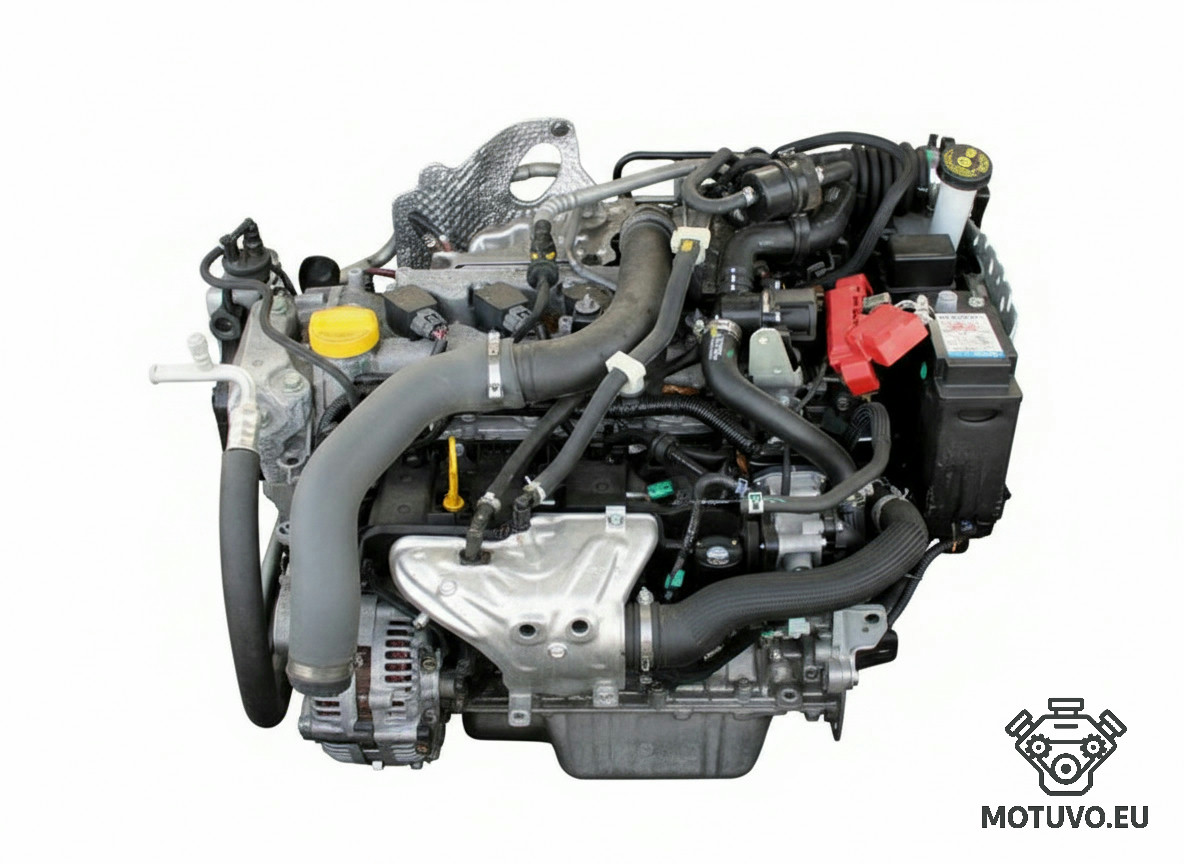
Nissan HR12DDT / HRA2DDT Engine Guide – Models, Common Problems, Oil Consumption, Timing Chain and Replacement Engines
Nissan HR12DDT / HRA2DDT Engine Guide – Models, Common Problems, Oil Consumption, Timing Chain and Replacement Engines
The Nissan HR12DDT, more commonly identified in European Nissan documentation as HRA2DDT, is a 1.2-litre turbocharged direct-injection petrol engine used in several popular Nissan models.
It is best known as the engine fitted to the:
- Nissan Qashqai J11 1.2 DIG-T
- Nissan Juke F15 1.2 DIG-T
- Nissan Pulsar C13 1.2 DIG-T
In standard European specification, the engine usually produces 115 PS and 190 Nm. Nissan offered it with a six-speed manual transmission in all three models, while the Qashqai and Pulsar were also available with an Xtronic automatic transmission in certain markets.
The HRA2DDT is closely related to the Renault H5Ft, sold under the 1.2 TCe name. However, Nissan and Renault applications can differ in engine management, turbocharger installation, wiring, intake and exhaust equipment, engine mounts and ancillary components.
The engine has become particularly well known in the replacement-engine market because of reports of:
- Excessive engine-oil consumption
- Piston-ring wear
- Low oil pressure
- Timing-chain and tensioner damage
- Intake-valve carbon deposits
- Piston and cylinder damage
- Turbocharger problems
- Complete engine failure
Nissan issued technical guidance for high oil consumption affecting HRA2DDT engines in the J11 Qashqai, C13 Pulsar and F15 Juke. The guidance explains that piston-ring wear can allow engine oil to enter the combustion chambers and burn, reducing the oil level. A low oil level can then affect lubrication of the timing-chain tensioner and contribute to chain rattling or further engine damage.
This guide explains the HR12DDT and HRA2DDT naming, technical specifications, model applications, common problems, interchangeability and what to check when purchasing a replacement engine.
HR12DDT or HRA2DDT – Which Engine Code Is Correct?
Both names are used for the Nissan 1.2 DIG-T engine.
The most common European workshop and parts-catalogue designation is:
HRA2DDT
The engine is also frequently advertised as:
- HR12DDT
- HR12 DDT
- HRA2 DDT
- Nissan 1.2 DIG-T
- Renault-Nissan 1.2 turbo
- H5Ft-compatible engine
The naming causes confusion because Nissan also produced the HR12DE and HR12DDR, which are different three-cylinder engines.
The HRA2DDT is a four-cylinder turbocharged direct-injection engine. By comparison, the HR12DDR is a three-cylinder supercharged engine. They should not be confused or treated as interchangeable.
When sourcing a replacement engine, use the complete engine code, original engine number and vehicle VIN rather than relying only on the description “Nissan 1.2 engine.”
Nissan HRA2DDT Engine Specifications
| Manufacturer | Renault-Nissan Alliance |
|---|---|
| Nissan engine code | HRA2DDT / HR12DDT |
| Renault-related code | H5Ft |
| Fuel type | Petrol |
| Configuration | Inline four-cylinder |
| Displacement | 1,197 cc |
| Aspiration | Turbocharged |
| Fuel system | Direct petrol injection |
| Cylinder head | DOHC, 16 valves |
| Timing system | Timing chain |
| Variable valve timing | Used on intake and exhaust camshafts |
| Standard Nissan output | Approximately 115 PS / 85 kW |
| Standard torque | Approximately 190 Nm |
| Installation | Transverse |
| Drive layout | Primarily front-wheel drive |
| Emissions standards | Euro 5 and Euro 6, depending on vehicle and year |
| Common transmissions | Six-speed manual and selected Xtronic versions |
The engine uses aluminium construction, direct injection, turbocharging, intercooling and a chain-driven valve train. The related Renault H5Ft shares the same general 1,197 cc four-cylinder architecture.
Which Nissan Models Use the HRA2DDT?
Nissan Qashqai J11 1.2 DIG-T
The Qashqai J11 is the most common HRA2DDT application.
- Model: Nissan Qashqai J11
- Engine: 1.2 DIG-T
- Output: 115 PS
- Torque: 190 Nm
- Drive: Front-wheel drive
- Transmission: Six-speed manual or Xtronic automatic, depending on version
The Qashqai’s greater vehicle weight places a relatively high load on the small 1.2-litre engine, particularly during motorway driving, towing, steep climbs or repeated acceleration at low engine speed.
When purchasing a used Qashqai with this engine, checking the oil-consumption history is especially important.
Nissan Juke F15 1.2 DIG-T
- Model: Nissan Juke F15
- Engine: 1.2 DIG-T
- Output: 115 PS
- Torque: 190 Nm
- Transmission: Six-speed manual
- Drive: Front-wheel drive
The Juke is lighter than the Qashqai, but the same engine-related oil-consumption and timing-chain concerns can still occur.
Nissan Pulsar C13 1.2 DIG-T
- Model: Nissan Pulsar C13
- Engine: 1.2 DIG-T
- Output: 115 PS
- Torque: Approximately 190 Nm with the manual transmission
- Transmission: Six-speed manual or Xtronic automatic
The C13 Pulsar is less common than the Qashqai but uses the same basic engine family and is included in Nissan’s oil-consumption guidance.
HRA2DDT vs Renault H5Ft
The Nissan HRA2DDT and Renault H5Ft belong to the same Renault-Nissan 1.2-litre turbo petrol engine family.
Renault used the H5Ft in several 1.2 TCe models, including different versions of:
- Renault Mégane
- Renault Scénic
- Renault Clio
- Renault Captur
- Renault Kadjar
- Renault Kangoo
- Renault Grand Scénic
Application depends on model year, market, power output and complete H5Ft suffix.
Although the engines share their basic architecture, a Renault H5Ft engine should not automatically be advertised as a direct replacement for a Nissan HRA2DDT.
Possible differences include:
- Engine-code suffix
- ECU calibration
- Wiring harness
- Sensors and connectors
- Turbocharger specification
- Intake manifold
- Exhaust manifold
- Catalytic converter
- Engine mounts
- Oil sump
- Air-conditioning compressor brackets
- Alternator
- Flywheel or flexplate
- Transmission interface
- Cooling pipes
- Fuel-system components
In some cases, a compatible bare engine or long block can be used after transferring the original Nissan components. This must be confirmed before purchase.
The Main HRA2DDT Problem: Excessive Oil Consumption
Excessive oil consumption is the best-known HRA2DDT issue.
Piston-ring wear can allow engine oil to enter the cylinders and burn. Because the oil is consumed during combustion, the driver may not see an obvious external leak.
Possible signs include:
- Oil level falling between services
- Repeated low-oil warnings
- Need to top up oil frequently
- Blue exhaust smoke
- Oil smell from the exhaust
- Spark plugs contaminated with oil deposits
- Reduced compression
- Uneven idle
- Increased crankcase pressure
- Timing-chain rattle caused by low oil level
- Complete engine failure
The rate of consumption can vary considerably. Some engines may use only a small amount, while others can lose enough oil to create a serious lubrication problem over a relatively short distance.
Why Does the HRA2DDT Consume Oil?
Piston-Ring Wear
Worn or ineffective oil-control rings allow excessive oil to remain on the cylinder walls and enter the combustion chamber.
Stuck Oil-Control Rings
Carbon deposits can restrict the movement of the oil-control rings. Once the rings stop moving freely, they can no longer scrape oil effectively from the cylinder walls.
Cylinder-Wall Wear
Prolonged operation with damaged rings, poor lubrication, excessive fuel dilution or contaminated oil can damage the cylinder surfaces.
Excessive Crankcase Pressure
A crankcase-ventilation fault can push oil vapour into the intake system or force oil past seals and piston rings.
Turbocharger Oil Leakage
A worn turbocharger may allow oil to enter the intake or exhaust system. However, replacing the turbocharger will not solve oil consumption caused by piston rings or cylinder wear.
Incorrect Oil Level or Specification
Using the wrong oil, overfilling the engine or extending oil-change intervals can worsen deposits and lubrication problems.
Accurate diagnosis should separate internal engine wear from turbocharger, breather and external leakage problems.
Timing-Chain and Tensioner Problems
The HRA2DDT uses a timing chain rather than a timing belt.
When the engine-oil level falls, the hydraulic chain tensioner may not receive sufficient oil pressure. This can allow the chain to run loose and produce rattling or tapping noises.
Common symptoms include:
- Rattle during cold starting
- Rattle after the engine has been parked
- Metallic noise at idle
- Tapping from the timing side
- Extended cranking
- Camshaft and crankshaft correlation fault codes
- Engine warning light
- Misfire
- Reduced power
A timing-chain rattle should never be dismissed as normal.
If the chain stretches or jumps timing, the pistons may contact the valves. This can result in:
- Bent valves
- Damaged valve guides
- Broken rocker components
- Damaged pistons
- Cylinder-head damage
- Complete engine failure
Simply replacing the chain may not provide a lasting repair if the engine still has severe oil consumption or low oil pressure.
Intake-Valve Carbon Deposits
The HRA2DDT uses direct petrol injection.
In a direct-injection engine, petrol is sprayed directly into the combustion chamber rather than passing over the intake valves. Because the fuel does not wash the rear of the valves, oil vapour and crankcase deposits can accumulate on them.
Possible symptoms include:
- Rough idle
- Hesitation
- Poor cold starting
- Misfire
- Reduced power
- Uneven acceleration
- Increased fuel consumption
- Intake-airflow-related faults
Cleaning the intake valves may improve running quality, but it will not repair worn piston rings or damaged cylinders.
Piston and Cylinder Damage
Continued operation with excessive oil consumption can eventually damage the engine mechanically.
Possible damage includes:
- Worn piston rings
- Broken ring lands
- Scored cylinder walls
- Damaged piston skirts
- Cracked pistons
- Low compression
- Excessive blow-by
- Oil-fouled spark plugs
- Catalytic-converter contamination
Piston or cylinder damage may be suspected when the engine has:
- Constant misfire
- Low compression on one or more cylinders
- Heavy crankcase pressure
- Blue smoke
- Very high oil consumption
- Oil on the spark plugs
- Metallic particles in the oil
- Knocking noise
A compression test alone may not reveal the full problem. A cylinder-leakage test and borescope inspection provide more useful information.
Turbocharger Problems
Possible causes of turbocharger damage include:
- Low engine-oil level
- Contaminated oil
- Extended oil-change intervals
- Restricted oil feed
- Blocked oil return
- Excessive crankcase pressure
- Foreign-object damage
- Intake leaks
- Excessive exhaust temperature
Possible symptoms include:
- Whistling or siren noise
- Loss of boost
- Reduced acceleration
- Underboost fault codes
- Blue smoke
- Black smoke
- Oil inside the intercooler pipes
- High oil consumption
- Limp-home mode
Before installing a replacement turbocharger, inspect:
- Engine oil pressure
- Oil-feed pipe
- Oil-return pipe
- Crankcase ventilation
- Air filter
- Intake hoses
- Intercooler
- Catalytic converter
- Internal engine condition
A new turbocharger fitted to an engine with low oil pressure or severe blow-by may fail again quickly.
Direct-Injector Problems
The HRA2DDT uses high-pressure direct petrol injection.
Injector problems may cause:
- Hard starting
- Rough idle
- Misfire
- Fuel smell
- Black smoke
- Increased fuel consumption
- Poor acceleration
- Spark-plug fouling
- Engine-oil dilution with petrol
- Piston damage in severe cases
A leaking injector can wash lubricating oil from the cylinder wall. This increases the risk of ring, piston and cylinder damage.
Diagnosis may include:
- Fuel-pressure testing
- Injector balance testing
- Spark-plug inspection
- Borescope examination
- Checking the engine oil for petrol dilution
Replacing injectors without confirming fuel pressure, ignition condition and compression can lead to unnecessary expense.
Ignition-Coil and Spark-Plug Problems
Not every HRA2DDT misfire indicates engine failure.
Ignition coils and spark plugs can produce similar symptoms, including:
- Misfire under acceleration
- Shaking at idle
- Check-engine light
- Poor starting
- Reduced power
- Increased fuel consumption
Before condemning the engine, check:
- Spark-plug condition
- Correct spark-plug type and gap
- Ignition-coil output
- Injector operation
- Compression
- Intake leakage
Oil-fouled spark plugs may indicate internal oil consumption rather than a simple ignition fault.
Cooling-System Problems
Cooling-system faults can include:
- Thermostat failure
- Water-pump leakage
- Coolant-hose leakage
- Plastic housing damage
- Expansion-tank problems
- Radiator leakage
- Cooling-fan faults
Possible symptoms include:
- Coolant loss
- Overheating
- Engine running below operating temperature
- Weak cabin heating
- Temperature warning
- Coolant smell
- White deposits around hose connections
Overheating can distort the aluminium cylinder head and worsen piston, ring and cylinder damage.
Any unexplained coolant loss should be investigated before purchasing or installing a replacement engine.
Crankcase-Ventilation Problems
The crankcase-ventilation system controls internal pressure and routes oil vapour back into the intake.
A fault may cause:
- Excessive oil consumption
- Oil in intake pipes
- Oil leaks
- Whistling noises
- Unstable idle
- Excessive crankcase pressure
- Turbocharger oil leakage
Testing crankcase pressure is especially important before blaming the piston rings or turbocharger.
Catalytic-Converter Damage
An engine that burns large quantities of oil may contaminate or damage the catalytic converter.
Possible symptoms include:
- Reduced performance
- Exhaust restriction
- Catalyst-efficiency fault codes
- Sulphur or burning smell
- Excessive heat under the vehicle
- Rattling from the catalyst
- Turbocharger performance problems
Installing a replacement engine without checking the catalyst can cause the new engine to operate against excessive exhaust backpressure.
Is the HRA2DDT Reliable?
The answer depends heavily on the individual engine.
A properly maintained example that does not consume excessive oil can provide acceptable service. However, the engine family has a significant reputation for oil-consumption and timing-related failures.
Reliability depends on:
- Oil-consumption history
- Frequency of oil-level checks
- Oil-change intervals
- Correct oil specification
- Whether the engine has ever run with low oil
- Timing-chain condition
- Piston-ring and cylinder condition
- Injector operation
- Turbocharger lubrication
- Cooling-system maintenance
- Driving pattern
An engine that has repeatedly been operated below the minimum oil level may have hidden damage even if it still runs quietly.
How to Check a Used HRA2DDT Vehicle
Ask How Much Oil It Uses
Do not accept “they all use some oil” without further information.
Ask:
- How often is oil added?
- How much oil is added?
- Over what distance?
- Has the low-oil warning appeared?
- Has the engine ever run below the dipstick minimum?
- Has Nissan or another workshop performed an oil-consumption test?
Start the Engine from Cold
Listen for:
- Chain rattle
- Tapping
- Piston noise
- Irregular idle
- Turbo whistle
A warm engine may hide cold-start noise.
Inspect the Exhaust
Look for:
- Blue smoke
- Grey smoke
- Strong oil smell
- Excessive soot
Remove and Inspect the Spark Plugs
Oil deposits can indicate internal oil consumption.
Check Crankcase Pressure
Excessive pressure may suggest piston-ring, cylinder or crankcase-ventilation problems.
Perform Compression and Leakage Tests
All cylinders should be compared. A leak-down test may reveal ring or valve problems more clearly than compression testing alone.
Inspect the Cylinders with a Borescope
Look for:
- Vertical scoring
- Oil deposits
- Piston damage
- Heavy carbon
- Washed cylinder surfaces
HRA2DDT Replacement-Engine Compatibility
Not every HRA2DDT engine is a direct plug-and-play replacement.
Compatibility can depend on:
- Donor vehicle
- Engine-production date
- Manual or Xtronic transmission
- Flywheel or flexplate
- Engine-code suffix
- Turbocharger
- Intake manifold
- Exhaust manifold
- Wiring harness
- Engine mounts
- Oil sump
- Starter motor
- Alternator
- Air-conditioning compressor
- Sensors
- ECU calibration
- Emissions standard
A Qashqai engine may be usable in a Juke or Pulsar, but external parts may need to be transferred.
The safest replacement is normally an engine with:
- The same complete engine code
- A compatible donor platform
- Matching transmission type
- Matching emissions specification
- Verified production revision
Can a Renault H5Ft Replace a Nissan HRA2DDT?
Sometimes a Renault H5Ft long block may be technically related enough to use as a replacement base engine.
However, it should not be treated as a direct swap without comparison.
Components that may need to be transferred include:
- Nissan engine mounts
- Oil sump
- Intake manifold
- Exhaust manifold
- Turbocharger
- Wiring harness
- Sensors
- Fuel rail and injectors
- Flywheel or flexplate
- Starter motor
- Alternator
- Air-conditioning bracket
- Cooling connections
- Crankcase-ventilation components
The original Nissan VIN and engine number should be checked before purchasing a Renault donor engine.
What to Check Before Buying a Used HRA2DDT Engine
Request:
- Complete engine code
- Engine serial number
- Donor VIN
- Donor model
- Production year
- Recorded mileage
- Service history
- Oil-consumption history
- Cold-start video
- Compression-test results
- Cylinder-leakage results
- Borescope images
- Oil-pressure measurement
- Timing-chain condition
- Turbocharger condition
- Warranty terms
Also confirm what is included.
A seller may describe the unit as:
- Bare engine
- Short block
- Long block
- Complete engine
- Engine with turbocharger
- Engine with injectors
- Engine with wiring
- Engine with flywheel
- Engine with ancillaries
The term complete engine is not standardised.
Used, Rebuilt or Remanufactured HRA2DDT?
Used HRA2DDT Engine
Advantages:
- Lower purchase price
- Faster availability
- Original components
- Can be suitable if mileage and history are verified
Disadvantages:
- May already consume oil
- Hidden piston-ring wear
- Unknown timing-chain condition
- Limited warranty
- Uncertain oil-pressure history
A low-mileage engine is not automatically good if it was operated with low oil.
Rebuilt HRA2DDT Engine
A proper rebuild may include:
- New or revised pistons
- New piston rings
- Cylinder measurement
- Cylinder-wall repair
- Main and connecting-rod bearings
- Timing chain
- Chain guides
- Chain tensioner
- Oil-pump inspection
- Cylinder-head overhaul
- Valve cleaning
- Injector testing
- Turbocharger inspection
Ask for a written list of parts and machining work.
An engine described as rebuilt because it received only a new timing chain is not a fully rebuilt engine.
Remanufactured HRA2DDT Engine
A remanufactured engine should be restored to documented tolerances.
It may offer:
- Full disassembly
- Crack testing
- Cylinder measurement
- Revised pistons and rings
- Reconditioned cylinder head
- New bearings
- New timing components
- Oil-pressure testing
- Compression testing
- Longer warranty
The quality of the remanufacturer is more important than the label used in the advertisement.
HRA2DDT Maintenance Recommendations
- Check the oil level frequently
- Do not wait for the warning light
- Use the correct manufacturer-approved oil
- Change the oil more frequently than the maximum extended interval
- Replace the oil filter with every oil change
- Investigate any increase in oil consumption
- Do not ignore cold-start rattle
- Avoid heavy load when the engine is cold
- Allow the turbocharger to cool after sustained high-load driving
- Replace spark plugs at the correct interval
- Use quality petrol
- Maintain the cooling system
- Check crankcase ventilation
- Repair injector faults promptly
- Inspect the catalytic converter after major oil burning
- Stop driving if oil pressure is lost
Because the engine may consume oil without producing obvious smoke, manual oil-level checks are essential.
Frequently Asked Questions
Is HR12DDT the same as HRA2DDT?
They are commonly used as alternative names for Nissan’s 1.2 DIG-T four-cylinder turbo engine. HRA2DDT is the more common European Nissan workshop designation.
Is HRA2DDT a three-cylinder engine?
No. It is a four-cylinder engine.
The HR12DE and HR12DDR are three-cylinder engines and are different designs.
What power does the HRA2DDT produce?
In common Nissan European applications, it produces approximately 115 PS and 190 Nm.
Which Nissan models use the HRA2DDT?
- Nissan Qashqai J11
- Nissan Juke F15
- Nissan Pulsar C13
Does the HRA2DDT use a timing belt?
No. It uses a timing chain.
Why does the HRA2DDT timing chain rattle?
Possible causes include chain wear, tensioner failure, low oil level or insufficient oil pressure. Excessive oil consumption can lower the oil level and reduce lubrication of the hydraulic chain tensioner.
Why does the HRA2DDT consume oil?
Piston-ring wear and sticking oil-control rings are important causes. Oil can pass into the cylinders and burn, reducing the engine-oil level.
Can I replace only the timing chain?
Possibly, but the root cause must be established.
If the chain problem resulted from oil consumption, replacing only the chain may not solve the piston-ring or oil-pressure problem.
Is a Renault H5Ft engine the same?
It is closely related and shares the same basic engine family. However, external parts, wiring, turbocharger, sump, mounts and engine management may differ.
Can a Qashqai HRA2DDT engine fit a Juke?
The basic engine may be compatible, but direct interchangeability depends on the complete engine code, transmission, external components and production specification.
Is the HRA2DDT worth rebuilding?
It can be, provided the cylinder block and cylinder head are repairable and the rebuild addresses pistons, rings, timing components, oil pressure and any cylinder damage.
Find the Correct HR12DDT / HRA2DDT Replacement Engine at MOTUVO
If your Nissan requires a replacement HR12DDT or HRA2DDT engine, MOTUVO can help identify the correct version.
This engine was used in the:
- Nissan Qashqai J11 1.2 DIG-T
- Nissan Juke F15 1.2 DIG-T
- Nissan Pulsar C13 1.2 DIG-T
The related Renault H5Ft engine may share the same basic architecture, but differences in turbochargers, wiring, sumps, mounts, transmissions and emissions equipment mean that compatibility must be checked carefully.
MOTUVO matches replacement engines using:
- Vehicle VIN
- Complete engine code
- Engine serial number
- Model and production date
- Manual or Xtronic transmission
- Original engine equipment
- Emissions specification
We can help source:
- Tested used HRA2DDT engines
- Rebuilt HR12DDT engines
- Remanufactured 1.2 DIG-T engines
- Compatible bare engines and long blocks
- Complete replacement engines with selected accessories
Send MOTUVO your VIN and original engine number to receive a quote for the correct engine.
Find your Nissan HR12DDT / HRA2DDT replacement engine at MOTUVO.EU.