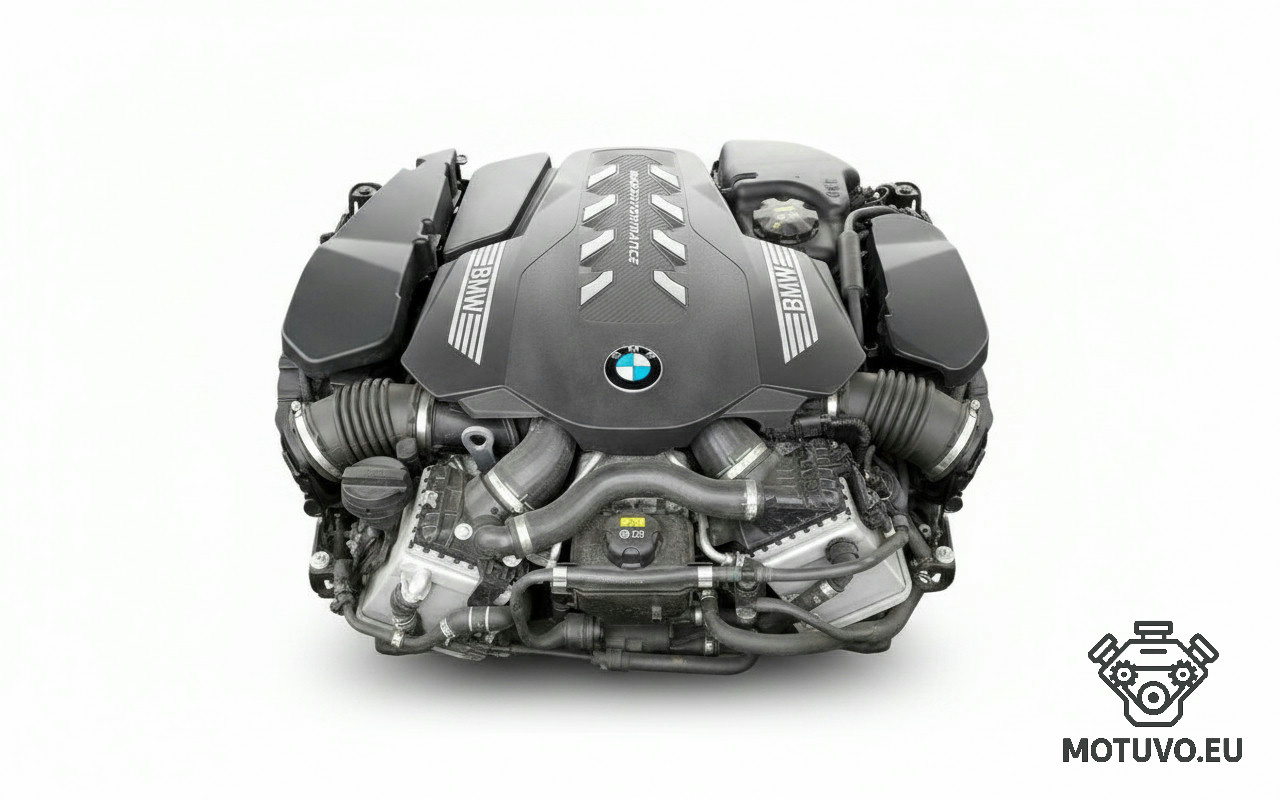
N63B44T3 390 kW Engine: Applications and Replacement Guide
Introduction to the N63B44T3 engine
The N63B44T3 is a 4.4-litre petrol V8 from BMW’s N63 engine family. The Motuvo.eu listing identifies this engine as N63TU3, rated at 390 kW, equivalent to approximately 530 metric horsepower. It belongs to the third technical update of a family developed to deliver strong turbocharged performance in premium passenger cars and SUVs.
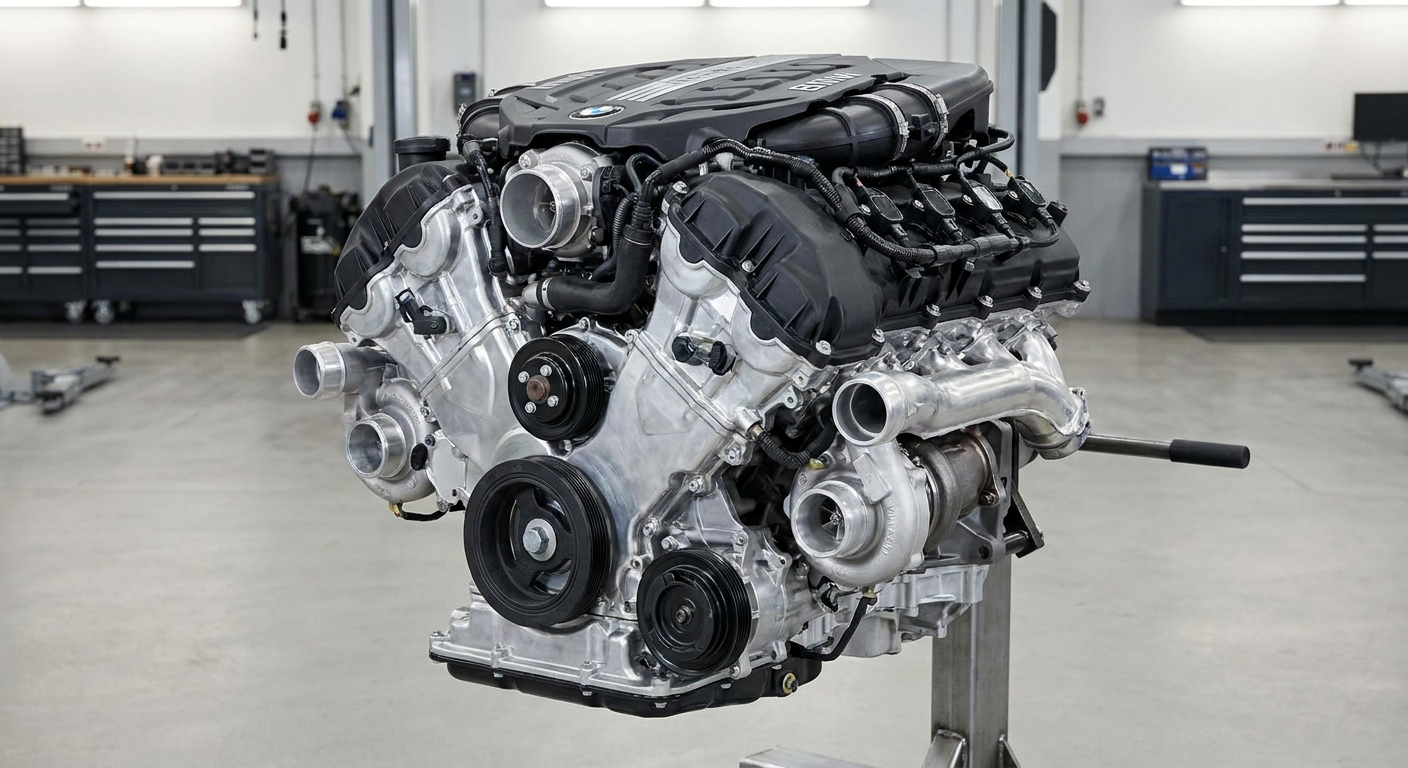
The N63 uses direct petrol injection and a twin-turbocharged layout with the turbochargers positioned between the cylinder banks. This arrangement, commonly called a hot-V, provides short exhaust paths to the turbines and compact packaging. It also concentrates heat around the centre of the engine, making cooling, lubrication and correct servicing particularly important.
For a replacement purchase, the N63B44T3 designation is a starting point, not a complete compatibility guarantee. Vehicle specification, engine equipment and electronic integration must also match.
How popular and widely used is the N63B44T3?
The N63 family has a substantial presence in BMW’s high-performance luxury range. The supplied catalogue description places the TU3 generation across executive saloons, grand tourers and large SUVs, with entries beginning in 2018. Its breadth of use makes it relevant to workshops handling premium petrol-engine replacements.
However, a widely used engine family does not mean every installation uses an identical engine assembly. Different vehicles can require different sumps, mounting arrangements, cooling connections, turbocharger equipment and control software. Market specifications and production changes add further complexity.
The catalogue also references Alpina and Land Rover applications. These entries should be treated as related application information requiring individual verification, rather than proof that the advertised 390 kW engine directly replaces every version listed.
Other part numbers and variants
N63B44 is the broader engine designation supplied for this product, while N63B44T3 identifies the advertised version more precisely. N63TU3 describes the technical-update generation. These identifiers are useful when sourcing an engine, but they do not replace a VIN-based check of the applicable engine assembly and associated components.
Motuvo.eu also lists the following related petrol V8 engines:
- M62B44: 4.4 litres, 210 kW. An older, naturally aspirated V8 generation, not a direct replacement for the N63B44T3.
- N62B44: 4.4 litres, 245 kW. Another earlier naturally aspirated BMW V8 with different mechanical and electronic architecture.
- N63B44O1: 4.4 litres, 331 kW. A different N63 version that should not be assumed interchangeable with the T3.
- S63B44T4: 4.4 litres, 441 kW. A related high-performance engine with significant specification differences.
Shared displacement or similar engine codes do not establish compatibility. Buying an earlier N63 or an S63 as a substitute can introduce substantial hardware, wiring and software requirements.
Model applications in the catalogue
The detailed catalogue description supplies the following applications. Dates are reproduced as listed; open-ended entries do not establish compatibility with every later production vehicle.
- BMW M850i xDrive: G14/G15/G16, 2018 onwards.
- BMW 750i/750Li sDrive/xDrive: G11/G12, 2019–2022.
- BMW M550i xDrive: G30/G31, 2020–2023.
- BMW X5 M50i: G05, 2020–2023.
- BMW X6 M50i: G06, 2020–2023.
- BMW X7 M50i: G07, 2020–2022.
- Alpina XB7: G07, 2021–2022.
- Alpina B8 Gran Coupe: 2021 onwards; the catalogue groups this entry under G14/G15/G16, so the exact chassis entry needs verification.
- Land Rover Range Rover: L460, 2022–2023.
- Land Rover Range Rover Sport: L461, 2022–2023.
Alpina and Land Rover entries must not be interpreted as confirmation of identical output, accessories or engine-management systems. Their suitability requires checks against the original vehicle specification.
The broader catalogue application tags include BMW X7, 7 Series, X5, 5 Series, 6 Series and X6. The BMW 6 Series tag has no corresponding detailed application in the supplied description, so it should not be used alone to approve a replacement.
Strong points of the N63B44T3
High output with flexible delivery
At 390 kW, this engine offers substantial performance from its 4.4-litre displacement. Twin turbocharging supports strong pulling power across a useful operating range, making the architecture well suited to heavy luxury vehicles as well as performance-focused passenger cars.
Compact turbocharger packaging
The hot-V arrangement shortens the route between the exhaust ports and turbochargers. Combined with direct injection and sophisticated engine management, it supports responsive operation and precise control of combustion and boost.
Later-generation development
The TU3 is a later development of the N63 platform, not simply the original engine with a different power rating. Nevertheless, later development should not be treated as proof that a particular used engine is fault-free. Maintenance history and measured condition remain more valuable than assumptions based on generation alone.
Weak points and common failures to investigate
The N63 family has a complex thermal and lubrication environment. Earlier N63 reliability reports should not automatically be applied to the TU3, and the supplied catalogue provides no failure-rate data. The following are practical inspection priorities rather than claims that every N63B44T3 develops these faults.
Oil leaks and oil consumption
Inspect covers, sealing joints and accessible oil connections for leakage. Excessive oil consumption or blue exhaust smoke warrants investigation of crankcase ventilation, turbocharger sealing, valve-stem seals and internal wear. Smoke alone does not identify which component is responsible.
Cooling-system and heat-related problems
Check coolant lines, reservoirs, pumps and connections for leakage or deterioration. Pressure-test the relevant cooling circuits and investigate any overheating history. Restricted airflow or poor coolant circulation can threaten both the engine and its turbocharger system.
Ignition, injection and boost faults
Misfires may originate from spark plugs, ignition coils, injectors or mechanical compression loss. Rough running therefore needs proper diagnosis before condemning the engine. Boost complaints can also arise from leaking charge-air connections, control faults or turbocharger problems rather than damage to the core engine.
Abnormal mechanical noise
Persistent rattling, knocking or unusual valvetrain noise requires investigation. Review oil-pressure measurements, camshaft-related fault codes and oil-filter debris where available. Do not dismiss abnormal sounds simply because the engine still starts and runs.
What to consider when replacing it
Begin with the vehicle VIN, production date, original engine identification and relevant assembly references. Confirm the donor engine’s identity and compare its specification with the receiving vehicle before arranging installation.
- Clarify the supply scope: establish whether the purchase is a bare engine, long block or assembly with turbochargers, injectors and accessories.
- Check installation hardware: compare the sump, mounts, brackets, cooling connections and intake and exhaust interfaces.
- Confirm electronic requirements: determine which original modules, sensors and wiring must be retained, and what programming or adaptations are required.
- Request condition evidence: ask for available mileage records, running-test results, compression or leak-down measurements and inspection documentation.
- Review purchase terms: confirm warranty conditions, installation requirements and any exchange-engine obligations before ordering.
Identify why the original engine failed. Oil contamination, a defective injector, cooling faults or damaged turbochargers can compromise a replacement if left unresolved. Inspect affected lubrication and charge-air components, and clean or replace contaminated parts according to the repair procedure.
Installation should follow the applicable manufacturer instructions for lubrication priming, coolant filling, bleeding and initial startup. Use the specified oil approval and coolant, then verify oil pressure, operating temperatures, fault memory and leak-free operation before sustained load testing.
Buy the N63B44T3 engine at Motuvo.eu
Looking for a 4.4L N63B44T3 390 kW petrol engine? Visit the N63B44T3 engine product page at Motuvo.eu to enquire about buying this engine. Provide your VIN and original engine details so compatibility, available condition, included components and purchase terms can be confirmed before you order.