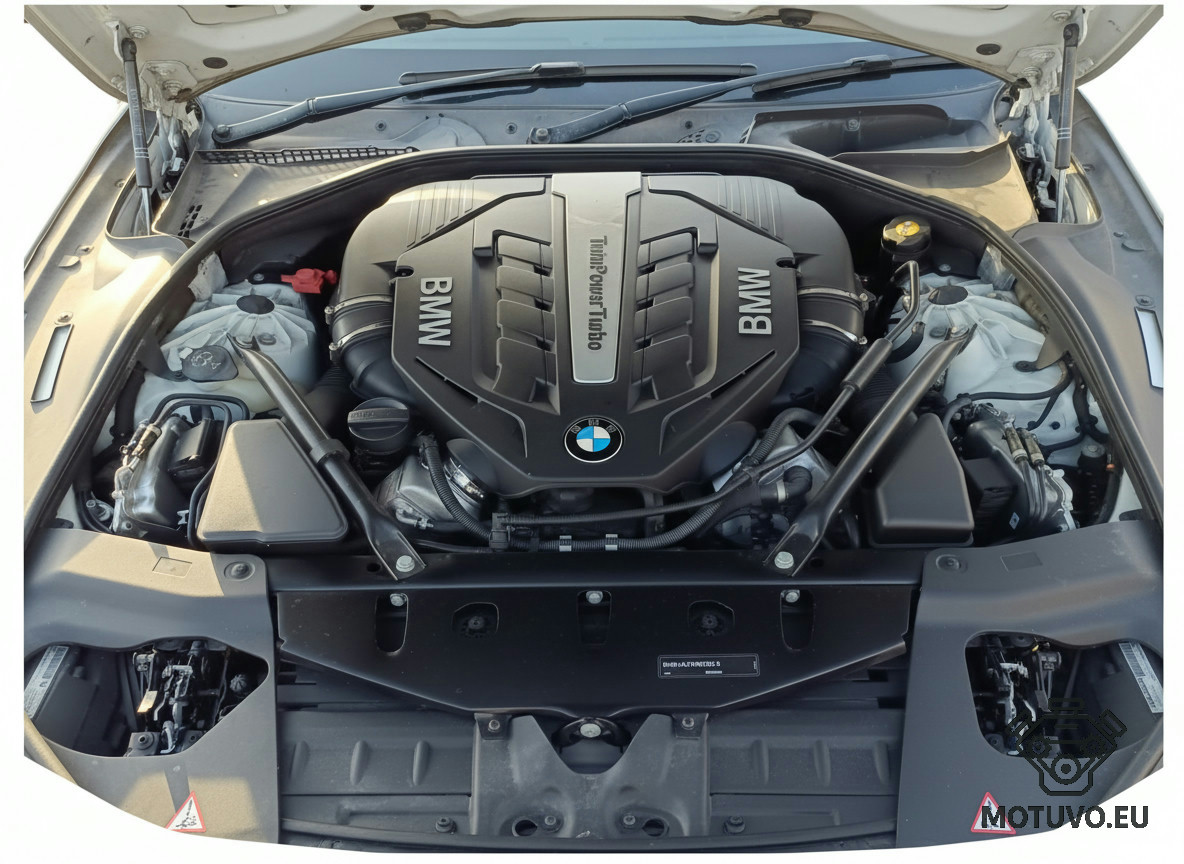
BMW N63B44O1 331 kW Engine: Applications and Buying Guide
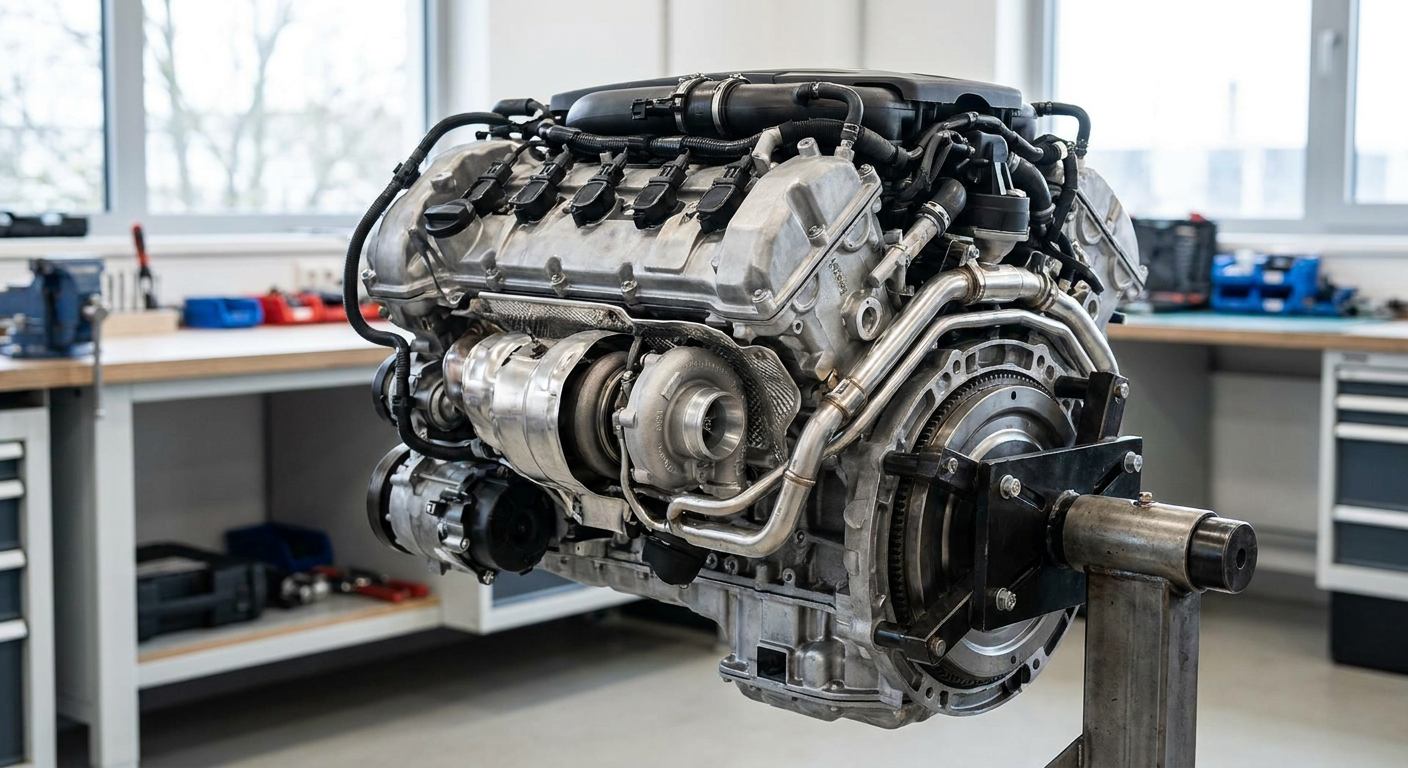
Introduction to the BMW N63B44O1 engine
The BMW N63B44O1 is a 4.4-litre twin-turbocharged petrol V8, listed in the Motuvo.eu catalogue with an output of 331 kW. It belongs to BMW’s N63 family, which brought turbocharged V8 performance to several of the brand’s larger passenger cars and SUVs. Its combination of substantial torque and smooth power delivery suits vehicles designed for both comfortable cruising and strong acceleration.
The N63 uses a distinctive hot-V layout, placing the turbochargers between the cylinder banks rather than outside them. This shortens the exhaust path to the turbines but concentrates considerable heat in the engine valley. For anyone buying a replacement, understanding the exact engine designation, maintenance history and installation requirements is just as important as matching displacement and power.
How popular and widely used is the N63B44O1?
This engine appears across a broad selection of BMW’s premium model ranges. The supplied catalogue covers applications in the 5 Series, 6 Series, 7 Series, X5 and X6, with listed production periods extending from 2013 to 2019. That makes it relevant to executive cars, luxury saloons, grand tourers and large SUVs, rather than a single specialist model.
Its spread across these ranges has created an established market for replacement engines and specialist repair services. However, broad use does not mean universal interchangeability. Installation hardware, wiring, ancillary components and vehicle software can differ between applications. A unit advertised simply as an N63 4.4 V8 should not be assumed suitable without checking its full identification against the receiving vehicle.
Other part numbers and engine variants
N63B44 identifies the broader engine designation used in the catalogue, while N63B44O1 distinguishes the version discussed here. This designation is generally associated with the first technical-update generation of the N63, often called N63TU. Compared with the original N63, that generation introduced significant revisions, including Valvetronic variable intake-valve lift. These changes matter when selecting mechanical parts and engine-management components.
Motuvo.eu also lists the following related BMW V8 engines:
- M62B44 — 4.4L, 210 kW, petrol: an earlier naturally aspirated V8 family with a substantially different architecture.
- N62B44 — 4.4L, 245 kW, petrol: another naturally aspirated predecessor, not a direct substitute for an N63 installation.
- N63B44T3 — 4.4L, 390 kW, petrol: a later N63 variant whose shared family name does not establish compatibility.
- S63B44T4 — 4.4L, 441 kW, petrol: a high-performance BMW V8 variant with important mechanical and control-system differences.
These are related catalogue entries, not alternative part numbers guaranteeing a direct replacement. Confirm the complete engine code, vehicle identification number and relevant BMW parts references before ordering.
Model applications listed in the catalogue
The supplied catalogue identifies the following applications for the N63B44O1 331 kW engine. Dates should be treated as catalogue guidance, not as proof that every vehicle within a model range uses this engine.
- 2013–2015 BMW F01/F02 750i/750Li — 7 Series.
- 2013–2017 BMW F07 550i GT — 5 Series Gran Turismo.
- 2014–2016 BMW F10/F11 550i — 5 Series.
- 2014–2018 BMW F15 X5.
- 2014–2019 BMW F16 X6.
- 2013–2018 BMW F12/F13 650i — 6 Series.
- 2013–2019 BMW F06 650i — 6 Series Gran Coupé.
For the X5 and X6, the supplied listing specifies chassis codes and years without a trim designation. Verify the original engine rather than inferring compatibility from the model name. Production date, market specification and previous engine replacements can also affect identification.
Strong points of the N63B44O1
Strong performance with refined delivery
The engine’s 4.4-litre capacity and twin turbochargers provide the performance expected of a large BMW V8. Its 331 kW output supports rapid acceleration, while the turbocharged layout provides useful pulling power without requiring high engine speeds for every manoeuvre. The V8 configuration also contributes to smooth operation when the engine and its supporting systems are healthy.
Advanced breathing and compact turbo packaging
Direct petrol injection, variable camshaft timing and Valvetronic give this generation sophisticated control over combustion and cylinder filling. The hot-V arrangement places the turbochargers close to the exhaust outlets, helping responsiveness. These are genuine engineering advantages, although they come with more complex servicing requirements than those of an older naturally aspirated engine.
Weak points and common failures
Condition varies considerably with maintenance, mileage and operating history. Problems associated with the N63 family should be used as inspection priorities, not as a claim that every N63B44O1 will suffer the same failures.
Oil consumption and leaks
Excessive oil consumption deserves careful diagnosis. Valve stem seal wear, crankcase ventilation faults, turbocharger oil leakage and internal wear can produce overlapping symptoms. Blue exhaust smoke after prolonged idling or on acceleration warrants investigation, but does not identify the cause by itself. Inspect cam-cover areas and other sealing surfaces for leaks, particularly where escaping oil could reach hot components.
Heat-related cooling and turbocharger issues
The hot-V layout makes cooling-system health particularly important. Ageing hoses, seals and turbocharger coolant or oil connections can become leak points. Check for coolant residue, oil contamination, damaged heat shielding and evidence of previous overheating. Turbocharger noise, smoke or boost faults require checks of the charge-air system and control hardware as well as the turbochargers themselves.
Timing, injection and ignition concerns
Timing-chain wear is an inspection consideration within the N63 family, although revisions and individual service histories affect risk. Investigate abnormal startup rattles and camshaft-correlation faults rather than assuming a chain replacement is automatically required. Direct-injection fuel-system faults, worn spark plugs and failing ignition coils can cause rough running or misfires. Unresolved fuelling problems may damage cylinders or catalytic converters, making proper diagnosis essential.
What to consider when replacing this engine
Start by establishing why the original engine failed. A replacement can be damaged by an unresolved cooling fault, contaminated oil circuit, defective injector or failing turbocharger. The workshop should assess retained components and inspect connected systems before installation.
- Confirm compatibility: match the N63B44O1 designation, VIN, build date and applicable parts references.
- Define the supplied assembly: establish whether turbochargers, injectors, pumps, wiring and ancillary equipment are included or must be transferred.
- Request condition evidence: ask about documented mileage, inspection findings, available test results and warranty terms.
- Clarify rebuilding work: for a rebuilt unit, request the actual machining, measurements and parts-replacement scope rather than relying on the label alone.
- Plan preventive work: assess accessible seals, hoses, mounts and service items while the engine is out.
- Allow for commissioning: use the correct fluids, lubrication-priming and cooling-system bleeding procedures, followed by diagnostic checks and any required adaptations.
Budget for the complete installation, not just the engine purchase. Specialist labour, replacement peripheral parts and vehicle-specific setup can materially affect the final cost. After installation, verify oil pressure, operating temperatures, leak-free operation and fault-free running before demanding full performance.
Buy your N63B44O1 engine at Motuvo.eu
If you need a replacement BMW 4.4-litre petrol V8, explore the N63B44O1 331 kW engine at Motuvo.eu. Before buying, confirm compatibility, current availability, engine condition, included components and warranty terms. Providing your VIN and original engine identification helps establish whether the listed unit is the right choice for your repair.