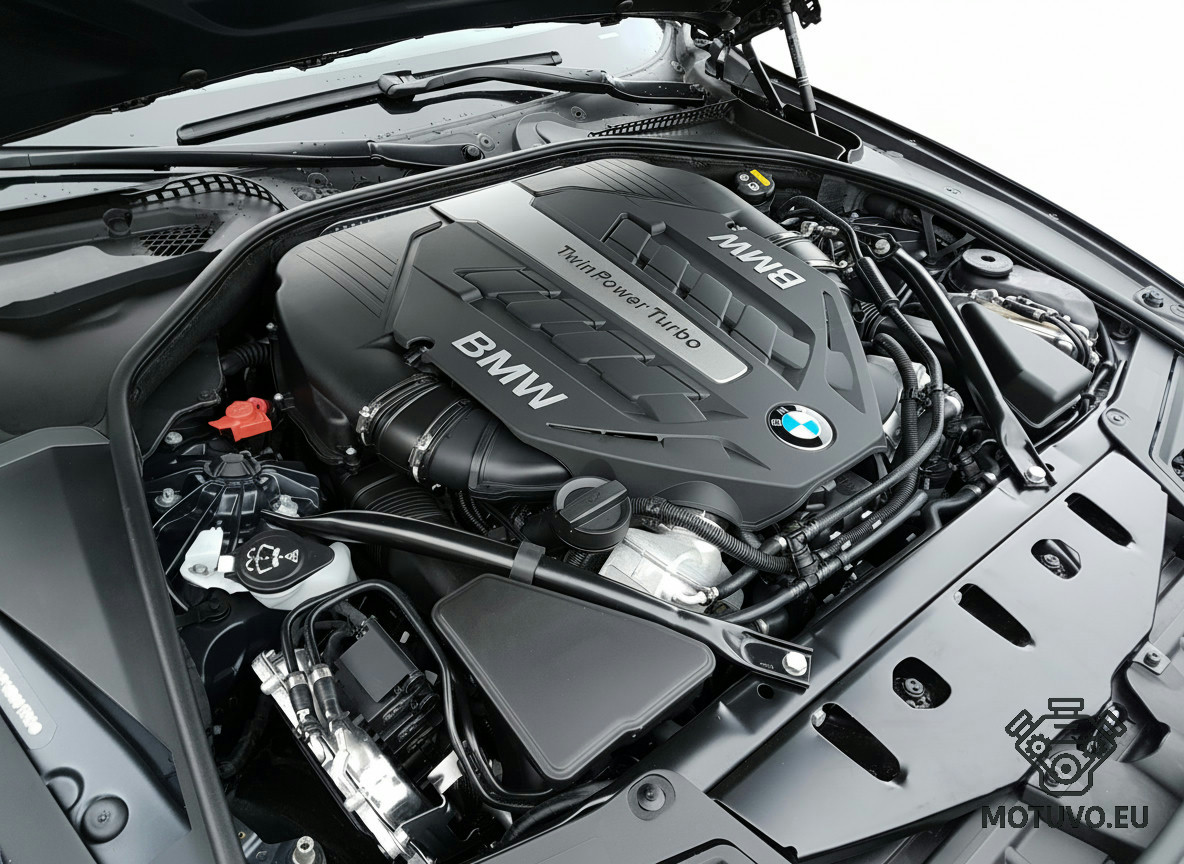
BMW N63B44O0 Engine: Specifications and Replacement Guide
Introduction to the BMW N63B44O0 Engine
The N63B44O0 engine is listed at Motuvo.eu under the engine name N63B40A, with a catalogue displacement of 4.0 litres, petrol fuel and an output of 300 kW. It belongs to a listing associated with BMW's N63 twin-turbocharged V8 family, used in luxury saloons, SUVs and grand touring models.
Before ordering, there is an important identification issue to resolve. The N63B44O0 designation is generally associated with the original 4.4-litre N63, whereas the supplied catalogue specifies N63B40A and 4.0 litres. These details should not be treated as interchangeable specifications. Confirm the engine stamping, donor information and vehicle VIN with the supplier before deciding that this unit suits your car.
This guide explains the N63 family's characteristics, the applications recorded in the catalogue and the checks that matter when sourcing a replacement. Family-level information is not a substitute for identifying the actual engine offered.
How Popular and Widely Used Is This Engine?
The N63 became an important engine family in BMW's higher-output petrol range from the late 2000s. Its combination of V8 refinement and turbocharged torque suited both heavy SUVs and executive passenger cars. The supplied application list spans the BMW 5 Series, 6 Series, 7 Series, X5 and X6.
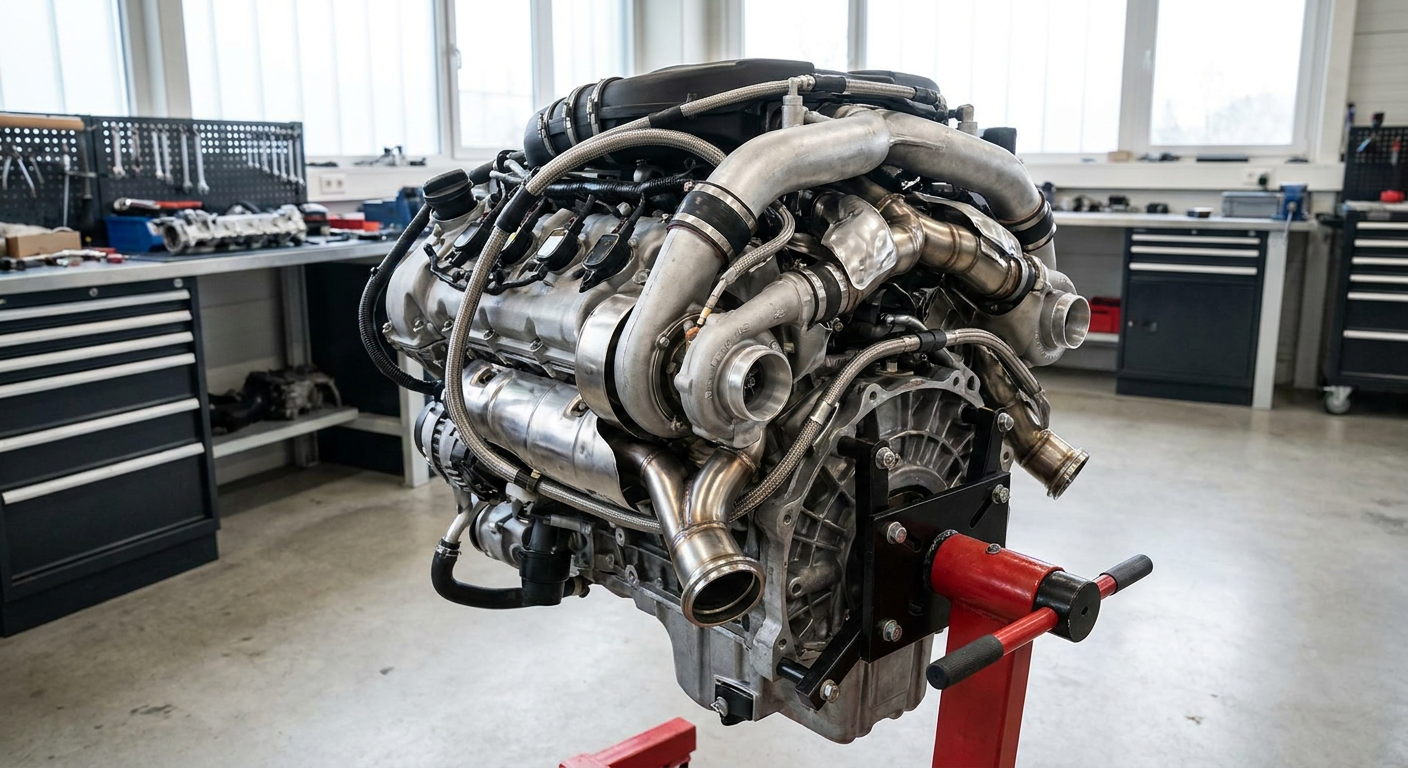
A defining feature is the hot-V layout, with the turbochargers positioned between the cylinder banks. This shortens the exhaust path to the turbines and provides compact packaging for the turbocharging system. Direct petrol injection is another central feature of the family.
However, widespread use does not mean universal interchangeability. BMW revised the N63 substantially during its production life. Engines that look similar can differ in their cylinder heads, fuel systems, controls, ancillaries and emissions equipment. Buyers should distinguish the early engine from later technical updates rather than relying on the N63 family name alone.
Other Part Numbers and Variants
The two identifiers supplied for this product are N63B44O0 and N63B40A. Because they indicate a specification discrepancy, neither should be used as a confirmed alternative number for the other without documentary evidence. Ask for photographs of the identification markings and an explanation of how the advertised unit has been classified.
Later N63 technical-update engines are related designs, not automatically direct replacements. A matching advertised power output also does not establish compatibility. Mechanical configuration, electronics and the receiving vehicle's original specification all matter.
The catalogue additionally lists other 4.0-litre petrol engines: DCUA / MDC.UA, MCV.DA / CVD, DWHB, DXYA, MA2.75 (DKD), 177.980 and N62B40A. These are related catalogue products, not verified N63 substitutes. In particular, the naturally aspirated BMW N62 is a different engine family. Shared displacement or brand is insufficient evidence for an engine swap.
Model Applications in the Catalogue
The following entries reproduce the scope of the supplied application data. They should be treated as catalogue references requiring VIN verification, rather than a guarantee that one engine configuration fits every listed vehicle:
- BMW X5 F15 50i: 2014–2017, described in the catalogue as “Facelift”.
- BMW X6 F16 50i: 2015–2017, described in the catalogue as “Facelift”.
- BMW X6 E71: 2008–2014.
- BMW 7 Series F01/F02 750i/750Li: 2008–2012.
- BMW 5 Series F07 550i GT: 2009–2012.
- BMW 5 Series F10/F11 550i: 2010–2013.
- BMW X5 E70: 2011–2013.
- BMW 6 Series F12/F13 650i: 2011–2013.
The later F15 and F16 entries need particular care because they fall within the period of updated N63 configurations. Their catalogue “Facelift” wording should not be used to establish production phase or engine compatibility. Confirm the build date, market specification and original engine version independently.
Strong Points of the N63 Family
Strong torque and refined performance
Twin turbocharging gives the N63 family substantial torque across a useful operating range. In its intended applications, this supports effortless acceleration without requiring consistently high engine speeds. The V8 configuration also provides the smoothness expected in premium BMW models.
Compact turbocharger arrangement
Placing the turbochargers inside the cylinder-bank valley reduces exhaust routing length compared with conventional outboard turbo arrangements. This architecture supports responsive performance, although its concentrated heat creates additional demands on surrounding components and cooling systems.
Established specialist knowledge
Because the N63 has been used across several major BMW model ranges, experienced independent specialists are familiar with its inspection and repair requirements. That makes knowledgeable installation support available, but workshop experience with the correct engine generation remains important.
Weak Points and Common Failures
The following are recognised inspection areas within the N63 family, particularly early versions. They are not a diagnosis of the engine advertised, and their relevance varies with revision, mileage and maintenance history.
Oil consumption and exhaust smoke
Valve stem seal wear is a known concern on early N63 engines and can contribute to blue exhaust smoke and elevated oil consumption. Crankcase ventilation faults, turbocharger problems and internal wear can produce similar symptoms. A proper diagnosis should investigate the cause rather than assuming every smoking engine needs the same repair.
Timing-chain wear
Timing-chain elongation and associated tensioner or guide problems are important checks on early engines. Abnormal noise, timing-related fault codes or camshaft correlation faults warrant further examination. A quiet idle alone does not prove that the timing drive is healthy.
Fuel injection and ignition faults
Direct-injection injector faults can cause rough running, misfires or excessive fuelling. High-pressure fuel delivery problems and worn ignition components may create overlapping symptoms. Injector suitability and any required calibration procedures must be checked against the specific engine and control system.
Heat-related leaks and deterioration
The hot-V arrangement places significant thermal stress on seals, hoses and turbocharger oil and coolant connections. Inspect for fluid leaks, brittle connections and cooling-system faults. Sustained overheating or inadequate lubrication can turn a relatively contained fault into major engine damage.
What to Consider When Replacing It
Identify the replacement before comparing prices. Resolve the N63B44O0 versus N63B40A designation and the 4.4-litre versus advertised 4.0-litre discrepancy first. Supply Motuvo.eu with the VIN, build date, original engine markings and clear photographs where available.
- Confirm the supplied assembly: establish whether the offer covers a bare engine, long block or assembly with turbochargers, injectors and ancillaries.
- Request condition evidence: ask about donor mileage, available running-test results, compression or leak-down checks and repair history.
- Check installation interfaces: compare mounts, sump configuration, wiring, sensors, intake components, exhaust connections and cooling arrangements.
- Clarify commercial terms: obtain written details of condition, warranty, exclusions, return conditions and any exchange-unit requirement.
- Investigate the original failure: correct overheating, lubrication, fuel-system or contamination problems before installing the replacement.
With the engine removed, inspect difficult-to-access seals, pipes and service components. Replace items according to their condition and the applicable workshop procedure. Follow the correct lubrication priming, cooling-system filling and bleeding instructions, then carry out diagnostics and any necessary coding or adaptations. Finish with leak checks and a controlled road test.
Buy Your BMW N63B44O0 Engine at Motuvo.eu
Looking for a replacement for your BMW? Review the N63B44O0 300 kW engine at Motuvo.eu and request confirmation of its exact identity, equipment and compatibility before ordering. A properly matched engine and a carefully planned installation provide a much stronger foundation than a purchase based on displacement alone.
View the product and enquire about buying this engine: https://motuvo.eu/engines/n63b44o0-300kw-engine