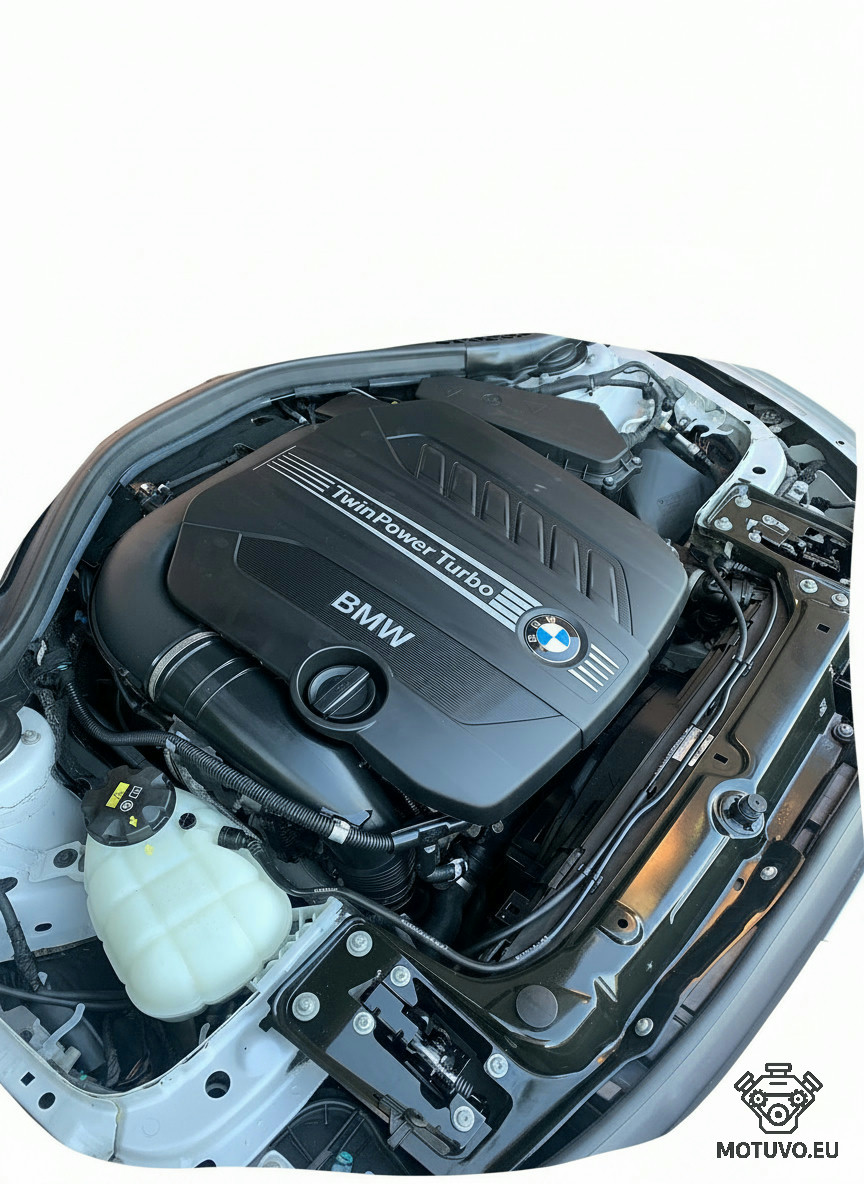
BMW N57D30U0 Engine: 150 kW Specs, Faults and Replacement
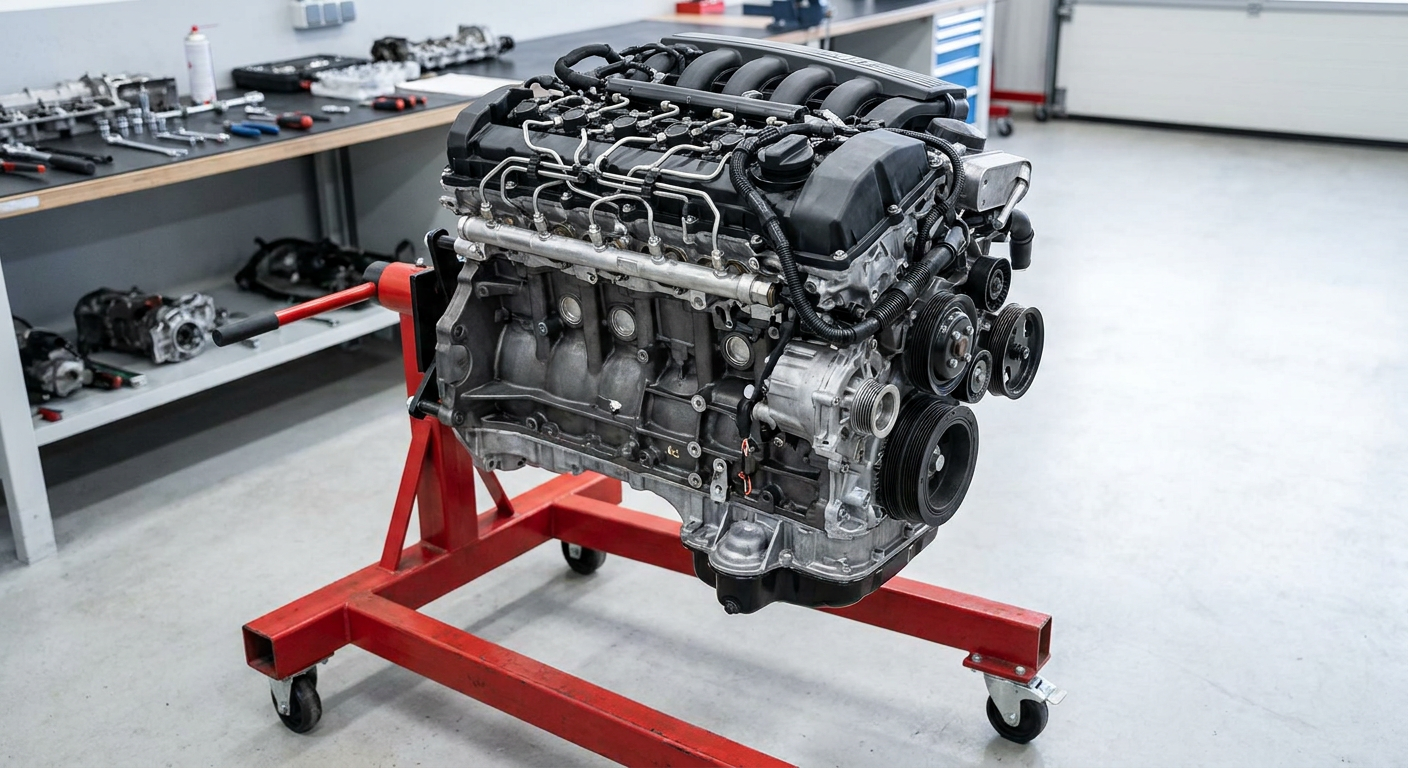
Introduction to the BMW N57D30U0 engine
The N57D30U0 is a BMW 3.0-litre diesel engine rated at 150 kW, equivalent to approximately 204 metric horsepower. The Motuvo.eu catalogue identifies its engine name as N57D30A and lists applications in specific BMW 325d and 525d models. These identifiers should be considered together when searching for a replacement: a broad engine designation alone does not establish compatibility.
Part of BMW’s N57 family, this engine uses an inline-six layout, common-rail direct injection and turbocharging. It combines the smoothness of a six-cylinder engine with the low-speed pulling power expected from a large diesel. For buyers, the important questions are not simply displacement and output, but the condition of the replacement unit, its exact specification and the components included with it.
How popular and widely used is this engine?
The N57 family is well established among European BMW diesel specialists. Its use in mainstream executive and premium passenger cars means that workshops are generally familiar with its servicing requirements, diagnostic procedures and replacement work. However, the family contains several substantially different versions, so familiarity with an N57 does not make every N57 interchangeable.
For this particular 150 kW N57D30U0, the supplied catalogue covers the BMW 3 Series and 5 Series applications detailed below. That gives it relevance across saloon, estate, coupé and convertible body styles within the listed chassis ranges. No production-volume figures are supplied, so its exact prevalence cannot be quantified from the catalogue.
When searching for stock, using the complete engine code is more reliable than searching only for “BMW 3.0 diesel”. Even model badges can span different engine specifications over their production life.
Other part numbers and variants
N57D30U0 is the catalogue part number, while N57D30A is the listed engine name. BMW engine-family designations, output-variant identifiers and supplier stock descriptions do not always convey the same level of detail. Neither identifier should be treated as a substitute for checking the vehicle identification number and the original engine’s markings.
The related catalogue entries include the following BMW diesel engines:
- N57D30O1, 3.0L, 190 kW: another N57 variant, not an automatically compatible replacement for the 150 kW engine.
- N57D30T1 and N57D30B, 3.0L, 230 kW: higher-output N57-related entries requiring their own specification and compatibility checks.
- M57D30TÜ, 3.0L, 160 kW, and M57D30TÜ2, 3.0L, 173 kW: entries from the earlier M57 family, rather than direct equivalents.
The catalogue also lists 4JJ1-TC, DHXC/DHX, CAP and CCW engines as related products. Their appearance alongside this engine does not establish any fitment relationship. Matching displacement or fuel type is not evidence that an engine can replace the N57D30U0.
Model applications listed in the catalogue
The supplied application information identifies these specific vehicles:
- 2010–2011 BMW 5 Series F10/F11 525d: saloon and Touring body styles.
- 2010–2013 BMW 3 Series E90/E91/E92/E93 325d: saloon, Touring, coupé and convertible body styles.
These are catalogue application ranges, not a guarantee that every vehicle registered during those years uses this exact engine. Registration dates can differ from production dates, and vehicle specifications can vary by market. Confirm the build information and original engine identification before ordering.
Do not extend this application list to other BMW models simply because they use an N57-family diesel. A compatible installation also depends on the vehicle’s ancillary equipment, electronics and emissions configuration.
Strong points of the N57D30U0
Smooth six-cylinder operation
The inline-six arrangement has inherently favourable balance characteristics, helping deliver refined operation. In the listed 3 Series and 5 Series applications, this supports relaxed cruising without sacrificing useful acceleration.
Flexible diesel performance
Turbocharging and common-rail injection provide strong everyday response without requiring high engine speeds. The 150 kW rating offers useful performance for these vehicles, while diesel efficiency can be an advantage on sustained journeys. Actual consumption depends on the vehicle, transmission, operating conditions and mechanical health.
Established specialist knowledge
The N57’s established presence means experienced independent workshops can assess fuel-pressure behaviour, injector correction values, boost control and exhaust-treatment operation using suitable diagnostic equipment. That technical familiarity is valuable when diagnosing a fault before replacement or evaluating a used engine.
Weak points and common failures
Timing-chain wear
Timing-chain wear is an important inspection concern on N57 engines. The timing drive is located at the transmission end, which makes access labour-intensive. Metallic rattling, particularly during starting, warrants investigation, although noise alone cannot confirm the source. Chain failure can cause extensive internal damage. Service history and any documented timing-drive work should be reviewed carefully.
EGR and intake contamination
Exhaust gas recirculation introduces soot into the intake system, where it can combine with oil mist to form deposits. Contamination can impair airflow and affect EGR or intake-flap operation. BMW has also conducted EGR-cooler campaigns affecting certain diesel vehicles; applicability must be checked by VIN rather than assumed from the engine code.
DPF and operating-temperature problems
Repeated short journeys, unsuccessful regeneration and faults preventing normal operating temperature can contribute to diesel particulate filter loading. A restricted exhaust system may remain a problem after an engine swap. Diagnose DPF pressure readings, relevant sensors and temperature control rather than treating a replacement engine as a cure for every diesel-system fault.
Fuel-system, turbocharger and lubrication issues
Injectors, high-pressure fuel equipment and turbocharger components require assessment on a high-mileage unit. Hard starting, uneven running, smoke or reduced power can have several causes. Poor lubrication, contamination and neglected oil changes can also damage bearings and turbocharger hardware. These are inspection priorities, not evidence that every N57D30U0 will suffer the same failures.
What to consider when replacing it
Establish why the original engine failed before fitting another one. Oil starvation, overheating, fuel contamination or turbocharger damage can leave problems elsewhere in the vehicle that threaten the replacement.
- Confirm identification: provide the VIN, production date, original engine markings and 150 kW specification.
- Check installation details: compare the sump, mounting interfaces, transmission connection, wiring, sensors and emissions equipment.
- Clarify the supply scope: establish whether the offer includes injectors, turbocharger, manifolds, pumps and other ancillaries, or only the engine assembly.
- Request condition evidence: ask about mileage documentation, available test results, inspection records and any repair history.
- Understand rebuilt specifications: where applicable, request details of machining, renewed components and testing rather than relying on the word “rebuilt”.
- Review purchase terms: confirm warranty conditions, installation requirements and any exchange-engine obligations before payment.
Installation should include suitable fresh fluids and filters, inspection of the cooling and lubrication systems, and checks for debris in any reused intake or charge-air components. Follow the appropriate workshop procedures for lubrication priming and first start. Depending on the components transferred or replaced, injector coding, adaptations and electronic checks may also be necessary.
Buy the N57D30U0 engine at Motuvo.eu
If you need a replacement for a listed BMW 325d or 525d, explore the N57D30U0 150 kW engine at Motuvo.eu. Before buying, confirm availability, condition, included components and compatibility with your VIN. Choosing the correct specification and resolving the original fault gives your replacement engine the best foundation for reliable service.