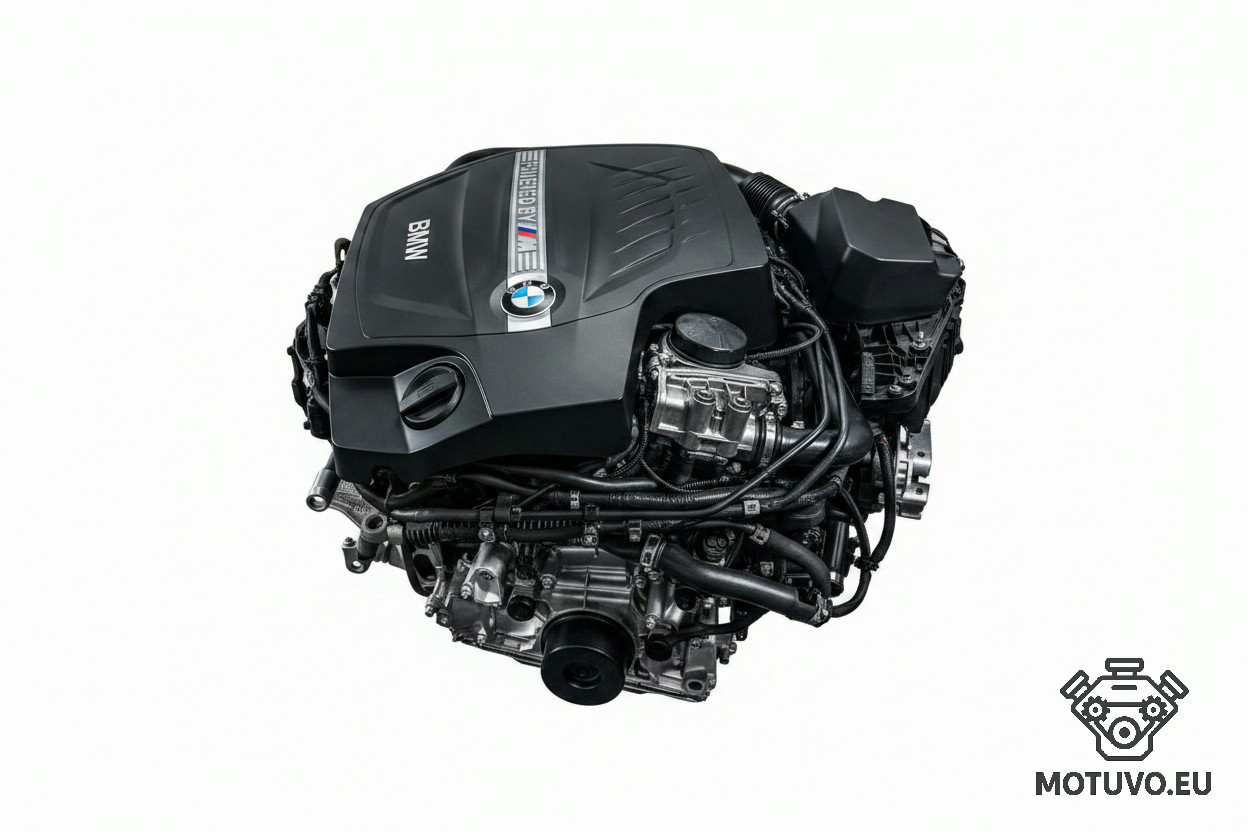
BMW N55B30O0 240 kW Engine: Applications and Buying Guide
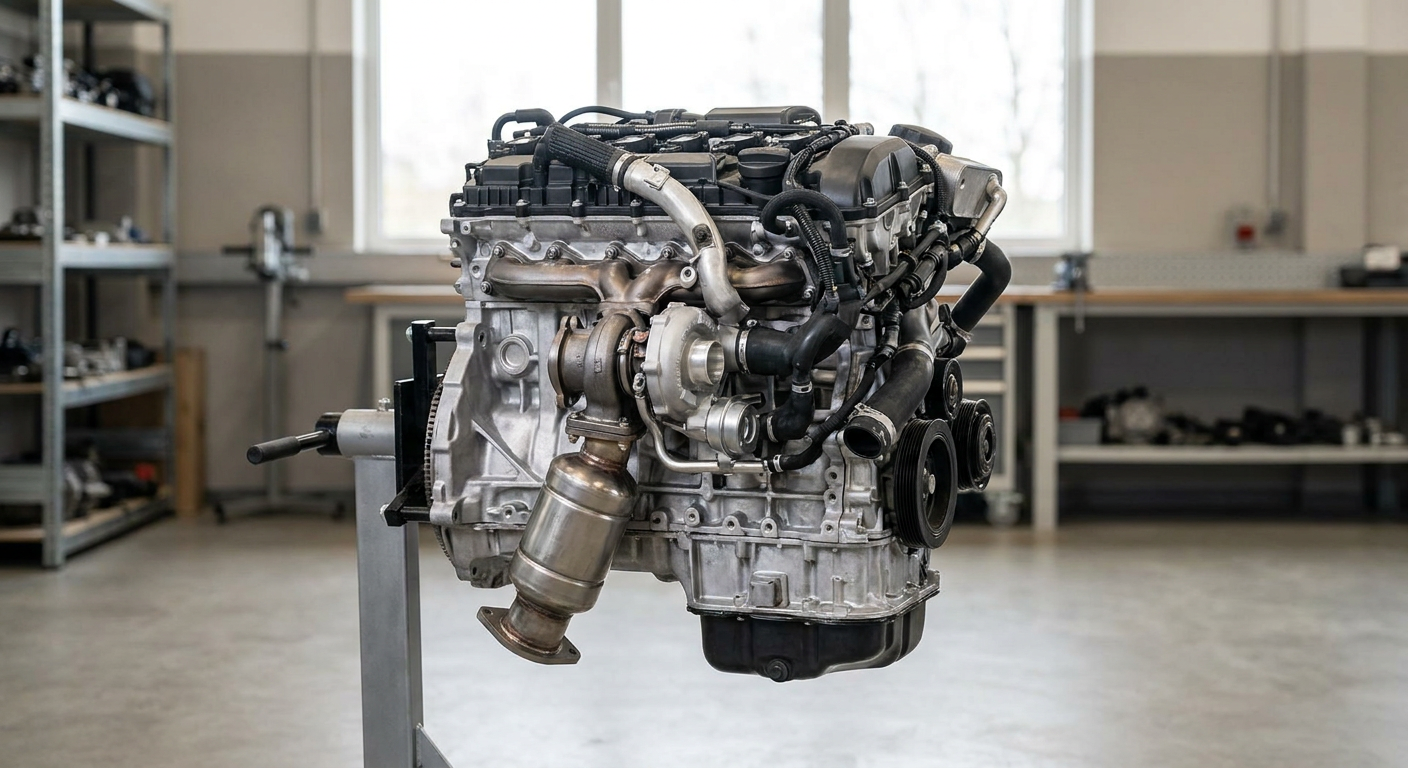
Introduction to the BMW N55B30O0 engine
The N55B30O0 is listed in the Motuvo.eu catalogue as a 3.0-litre petrol engine producing 240 kW, under the engine name N55B30. Its listed applications cover selected BMW 1 Series and 2 Series performance models. For owners replacing a damaged engine, it offers the opportunity to retain the original character of a turbocharged BMW straight-six, provided the replacement specification matches the vehicle.
The N55 family combines an aluminium engine structure, direct petrol injection, variable camshaft timing and Valvetronic variable intake-valve lift. It uses a single twin-scroll turbocharger rather than two separate turbochargers. These technologies deliver strong mid-range torque and responsive performance, but they also make cooling, lubrication, fuel delivery and electronic compatibility important when selecting a replacement.
How popular and widely used is the N55?
The N55 became one of BMW’s widely used turbocharged six-cylinder engine families during the 2010s. Its broad adoption means that independent BMW specialists are generally familiar with its servicing requirements, diagnostic routines and recurring faults. Maintenance components and technical knowledge are also well established, which can make long-term ownership more manageable than with a rare engine.
However, the popularity of the N55 family does not make every N55 assembly interchangeable. Production revisions, output levels, turbocharger controls and vehicle-specific equipment can differ. The 240 kW engine offered under N55B30O0 should therefore be assessed against the original vehicle’s identification and hardware, not simply purchased because another engine carries an N55 designation.
Other part numbers and engine variants
In this listing, N55B30 identifies the engine family designation, while N55B30O0 is the catalogue part number. Neither should be treated as a substitute for checking the vehicle’s VIN, original engine identification and relevant BMW assembly references. Similar-looking suffixes in advertisements or parts databases are not sufficient proof of matching specification.
Within the wider N55 family, differences can include turbocharger wastegate actuation, ancillary components, wiring and management calibration. A complete engine from one production period may require different supporting equipment from another. Establish exactly which components accompany the replacement before comparing prices.
Motuvo.eu also lists engines such as the B58B30M1, a 3.0-litre petrol unit rated at 250 kW, and the S58B30T0, a 3.0-litre petrol unit rated at 353 kW. These belong to different engine families and are not direct replacements for this N55. Likewise, other 3.0-litre petrol engines in the catalogue are not compatible merely because their displacement or power is similar.
Model applications listed in the catalogue
The supplied catalogue identifies the following applications for this engine:
- BMW 2 Series F22/F23 M235i: catalogue coverage stated as 2013–2016.
- BMW 1 Series F20/F21 M135i LCI: catalogue coverage stated as 2015–2016.
These are catalogue application ranges, not a guarantee that every vehicle within those dates uses an identical engine assembly. The range covering F22 and F23 should not be interpreted as meaning both body styles were available throughout every listed year. Build date, market specification and the original powertrain configuration still require verification.
For a reliable fitment decision, provide the supplier with the VIN and details of the engine being removed. Confirm the mounting arrangement, sump, transmission interface, wiring connections and ancillary equipment. This is particularly important when purchasing an engine without its original intake, exhaust-side equipment or electrical harness.
Strong points of the N55B30
Smooth six-cylinder operation
The inline-six layout provides excellent inherent balance. In a correctly maintained engine, this contributes to smooth running and progressive power delivery. Combined with turbocharging, it gives the listed performance models useful acceleration without requiring high engine speeds for every overtaking manoeuvre.
Effective turbocharging and valve control
The twin-scroll turbocharger separates exhaust pulse groups on their way to the turbine, helping make effective use of exhaust energy. Double VANOS camshaft adjustment and Valvetronic further support flexible operation across different loads. These systems help the engine combine everyday usability with the performance expected from a 240 kW petrol unit.
Established servicing knowledge
A major practical advantage is the depth of specialist experience with the N55. A workshop familiar with the family can investigate oil leaks, boost faults and cooling problems systematically. A documented, standard-specification engine with consistent maintenance is generally a more reassuring purchase than one with unknown tuning or an unclear repair history.
Weak points and common failures
Oil leaks and crankcase ventilation
Valve-cover and oil-filter-housing gasket leaks are recognised N55 service issues. The plastic valve cover and its integrated crankcase ventilation system can also deteriorate, potentially causing whistling, abnormal crankcase pressure or rough running. Oil near the auxiliary belt deserves prompt attention: belt contamination can lead to belt failure, and on affected BMW engines belt debris can potentially enter through the front crankshaft seal.
Cooling-system deterioration
The electric coolant pump, thermostat, hoses and plastic cooling connections require attention as the engine ages. Pump faults can cause overheating, while smaller leaks may initially appear only under pressure. A replacement engine should not be installed into a vehicle with an unresolved cooling fault that could damage it again.
Boost leaks and turbocharger faults
Plastic charge-air pipes can crack, allowing pressurised air to escape and causing reduced performance or boost-related fault codes. Turbocharger wear, wastegate problems and leaking connections may produce similar symptoms. Diagnose the complete air and boost-control system before assuming the engine’s internal components have failed.
Ignition, injection and lubrication concerns
Worn spark plugs and failing ignition coils can cause misfires, especially under load. Fuel-pressure or injector faults also require proper testing rather than speculative replacement. Intake-valve deposits are possible because direct injection does not wash the backs of the intake valves. Low oil pressure, oil starvation or severe overheating can cause major internal damage, so service history and the circumstances of any previous failure matter.
What to consider when replacing this engine
Identify the original failure before installation. If the old engine suffered bearing damage, overheating or a turbocharger failure, investigate all connected systems. Contaminated oil circuits, restricted lines or debris in intake components must not be allowed to compromise the replacement.
- Confirm fitment: compare VIN-based information, engine identification, production specification and the supplied assembly’s hardware.
- Clarify the package: establish whether the turbocharger, injectors, fuel pump, manifolds, wiring and accessories are included.
- Request condition evidence: ask about provenance, recorded mileage where available, running tests and relevant inspection results.
- Understand rebuilt specifications: if buying a rebuilt unit, request details of machining, replaced parts, measurements and testing.
- Review purchase terms: check warranty coverage, installation requirements, delivery arrangements and any exchange-core conditions.
Before fitting, inspect accessible seals, cooling components, engine mounts and the auxiliary drive. Follow the appropriate BMW procedures for lubrication priming, cooling-system bleeding and electronic commissioning. Depending on which components are retained or replaced, injector calibration, adaptations or coding may require attention. Finish with fault-code checks, leak inspection and a monitored road test.
Buy the N55B30O0 engine at Motuvo.eu
Looking for a replacement for your listed M235i or M135i LCI application? Buy the N55B30O0 240 kW engine at Motuvo.eu. Before ordering, confirm VIN compatibility, current availability, engine condition and included components with the supplier so your workshop can plan a dependable installation.