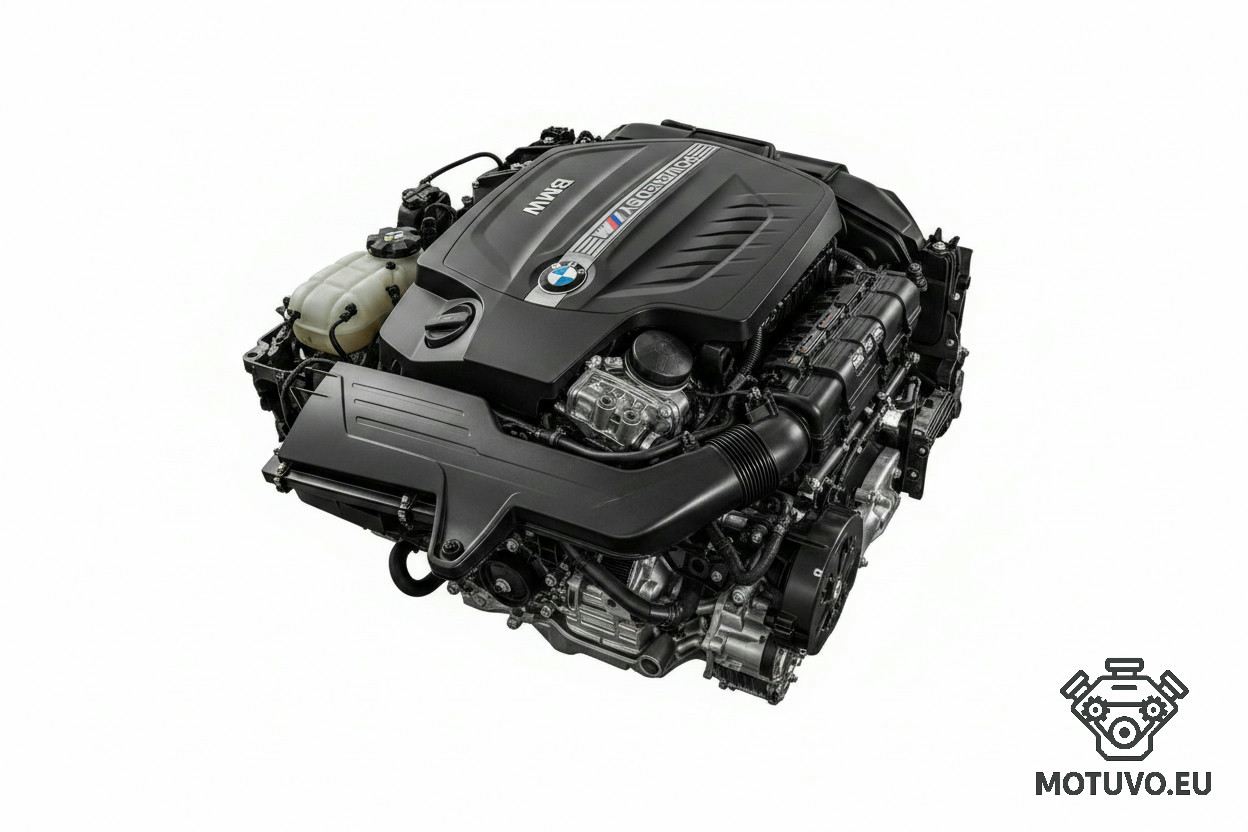
BMW N55B30M0 225 kW Engine: Applications and Buying Guide
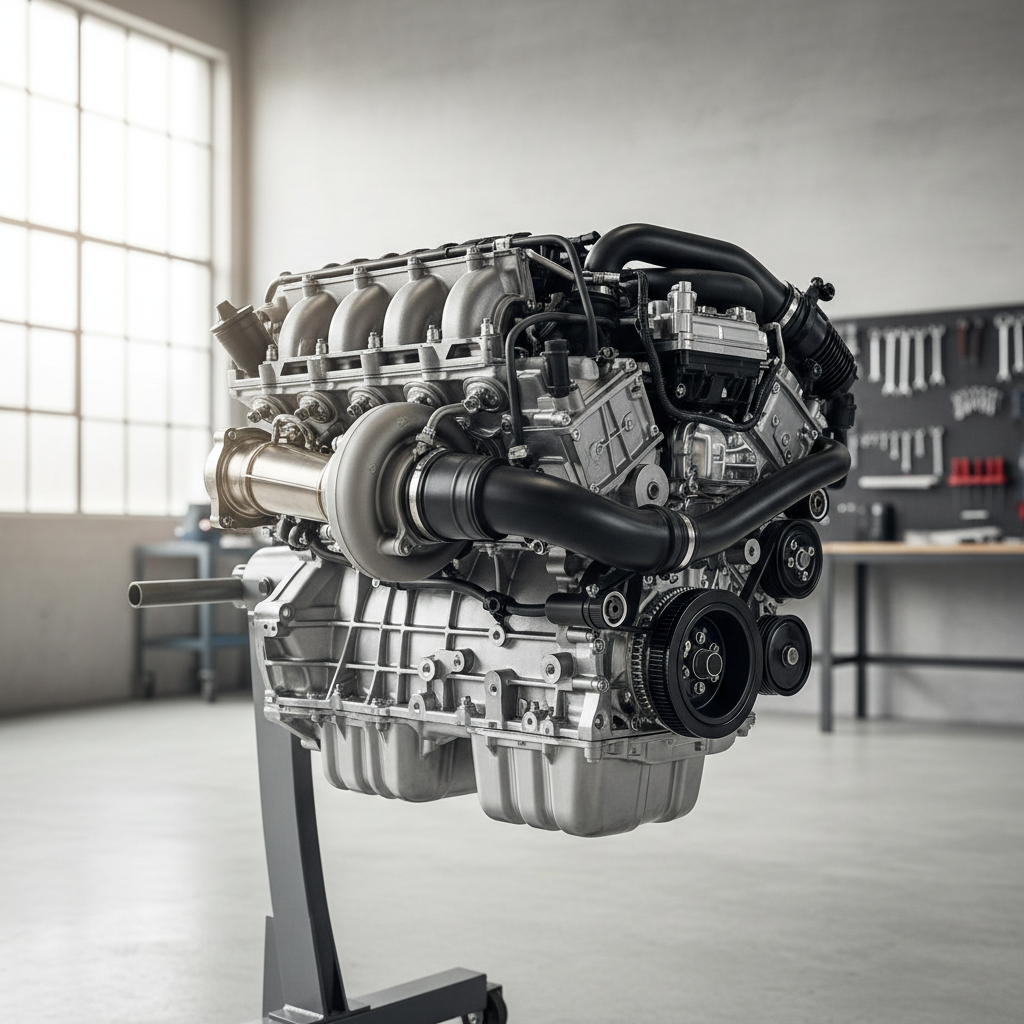
Introduction to the BMW N55B30M0 engine
The N55B30M0 is a BMW 3.0-litre petrol engine listed in the Motuvo.eu catalogue at 225 kW, approximately 306 metric horsepower. It belongs to the N55 family of turbocharged inline-six engines, known for combining smooth power delivery with strong mid-range performance. For buyers replacing a damaged engine, the full engine designation matters more than displacement or a vehicle’s boot badge.
The N55 uses direct petrol injection, Valvetronic variable intake valve lift and Double-VANOS variable camshaft timing. Its characteristic turbocharging arrangement is a single twin-scroll turbocharger, not two separate turbochargers. These technologies support responsive road performance, but they also make correct diagnosis, servicing and replacement-engine matching particularly important.
How popular and widely used is the N55B30?
The N55 became a widely used BMW six-cylinder petrol engine during the 2010s. The supplied catalogue associates this engine with compact models, executive cars, coupés, convertibles and several SUV ranges. That breadth makes it relevant to both independent BMW workshops and owners seeking to keep an otherwise serviceable vehicle on the road.
Its wide use means that specialist knowledge, service components and diagnostic experience are generally well established. However, widespread availability does not mean every N55 engine is interchangeable. Production revisions, vehicle layouts and installation-specific equipment can affect whether a replacement fits directly or requires compatible components to be transferred.
Other part numbers and engine variants
N55B30 is the broader engine designation supplied in the catalogue, while N55B30M0 identifies the listed 225 kW version more specifically. Neither should be confused with a complete BMW replacement assembly number. When ordering, check the engine identification alongside the vehicle VIN and any applicable assembly references.
Across the N55 family, production changes include differences in turbocharger wastegate control and associated hardware. Engine management, ancillaries and installation details can also vary. A seller describing an engine simply as “N55 3.0 petrol” has not provided enough information to establish compatibility.
The catalogue also includes B58B30M1 and S58B30T0 engines. These belong to different BMW engine families and are not alternative part numbers for the N55B30M0. Likewise, the other 3.0-litre petrol engines listed as related catalogue products must not be treated as substitutes merely because their displacement or output is similar.
Catalogue model applications
The supplied catalogue description lists the following applications. These are useful starting points for identification, but the stated years are catalogue ranges rather than a guarantee of fitment for every market, production date or drivetrain configuration.
- BMW 535i, F10/F11/F07: 2009–2017.
- BMW 335i, E90/E91/E92/E93: 2010–2013.
- BMW 135i, E82/E88: 2010–2013.
- BMW X3 xDrive35i, F25: 2010–2017.
- BMW X5 xDrive35i, E70: 2011–2013.
- BMW 335i, F30/F34/F31: 2011–2015.
- BMW X6 xDrive35i, E71: 2011–2014.
- BMW X1 xDrive35i, E84: 2012–2015.
- BMW 435i, F32/F33/F36: 2013–2016.
- BMW X5 xDrive35i, F15: 2014–2018.
- BMW X6 xDrive35i, F16: 2014–2019.
- BMW X4 xDrive35i, F26: 2014–2016.
Before purchase, confirm the original engine code and installation requirements with a VIN-based parts check. A shared badge or chassis family alone is insufficient, especially where production spans engine updates.
Strong points of the N55B30M0
Smooth performance and flexible torque delivery
The inline-six layout provides inherently good mechanical balance. Combined with turbocharging, this gives the N55 the smoothness expected of a BMW six-cylinder while delivering useful pulling power without needing consistently high engine speeds. The 225 kW rating makes this version a capable road engine across the listed vehicle categories.
Effective air management
The twin-scroll turbocharger separates exhaust pulses through paired flow paths to improve turbine operation. Valvetronic and variable camshaft timing help manage cylinder filling across different operating conditions. Together, these systems support flexibility and efficiency, although actual fuel consumption depends heavily on the vehicle and driving style.
Established servicing knowledge
Experienced BMW specialists are familiar with N55 diagnostics and recurring maintenance issues. This is valuable when distinguishing an external component fault from internal engine damage. A boost leak, ignition problem or failed coolant pump does not automatically justify replacing the complete engine.
Weak points and common failures
Oil leaks and crankcase ventilation
Valve cover and oil filter housing gasket leaks are recognised N55 maintenance concerns. The valve cover also incorporates crankcase ventilation components; faults can cause whistling, abnormal crankcase pressure, rough running or increased oil consumption. Oil contamination around the auxiliary belt deserves prompt attention because belt deterioration and displacement can lead to serious secondary damage.
Cooling-system problems
The electric coolant pump and thermostat are important inspection points. A failing pump can cause temperature warnings or overheating, sometimes without a conventional belt-driven pump symptom. Any replacement-engine assessment should include the cooling system and evidence of previous overheating, rather than focusing only on whether the engine starts.
Boost leaks and turbocharger controls
Ageing plastic charge-air components can crack, producing reduced power and boost-pressure faults. Wastegate wear or control problems can also affect performance. Test the charge-air system and identify the fitted wastegate arrangement before condemning the turbocharger or ordering replacement hardware.
Fuel, ignition and internal condition
Worn spark plugs, failing ignition coils and injector or high-pressure fuel-system faults can cause misfires and poor starting. Direct injection also allows intake-valve deposits to develop, although their severity varies. Internal wear or bearing damage is a more serious possibility where lubrication has been compromised; it should be investigated through appropriate testing rather than inferred from mileage alone.
What to consider when replacing an N55B30M0
Establish why the original engine failed. Overheating, lubrication problems, fuel contamination or turbocharger damage can compromise a replacement if the underlying cause remains. Inspect connected systems and follow the relevant repair procedures for cleaning, replacing contaminated components and restoring proper oil and coolant circulation.
- Confirm compatibility: match the VIN, engine designation, production revision and vehicle-specific installation hardware.
- Clarify the supply scope: ask whether the engine includes the turbocharger, injectors, wiring, manifolds, sensors and ancillaries.
- Check installation differences: compare the sump, mounting arrangements and drivetrain-related clearances, particularly for xDrive vehicles.
- Request condition evidence: ask for documented mileage where available, test results, inspection findings and warranty terms.
- Understand the engine category: for a rebuilt unit, request the actual machining, replacement-parts and testing specification rather than relying on the description alone.
Before installation, assess accessible seals, cooling components, belts and hoses. Follow BMW procedures for lubrication-system priming and initial start-up. Diagnostic commissioning may include injector calibration, adaptations and checks of retained engine-management components, depending on what has been replaced. Finish with leak checks, temperature monitoring and a controlled road test.
Buy your N55B30M0 engine at Motuvo.eu
Looking for a replacement BMW N55B30M0 225 kW engine? Visit the N55B30M0 engine product page at Motuvo.eu to enquire about availability and buy the correct unit for your vehicle. Provide your VIN and original engine details, and confirm condition, included equipment and warranty terms before ordering.