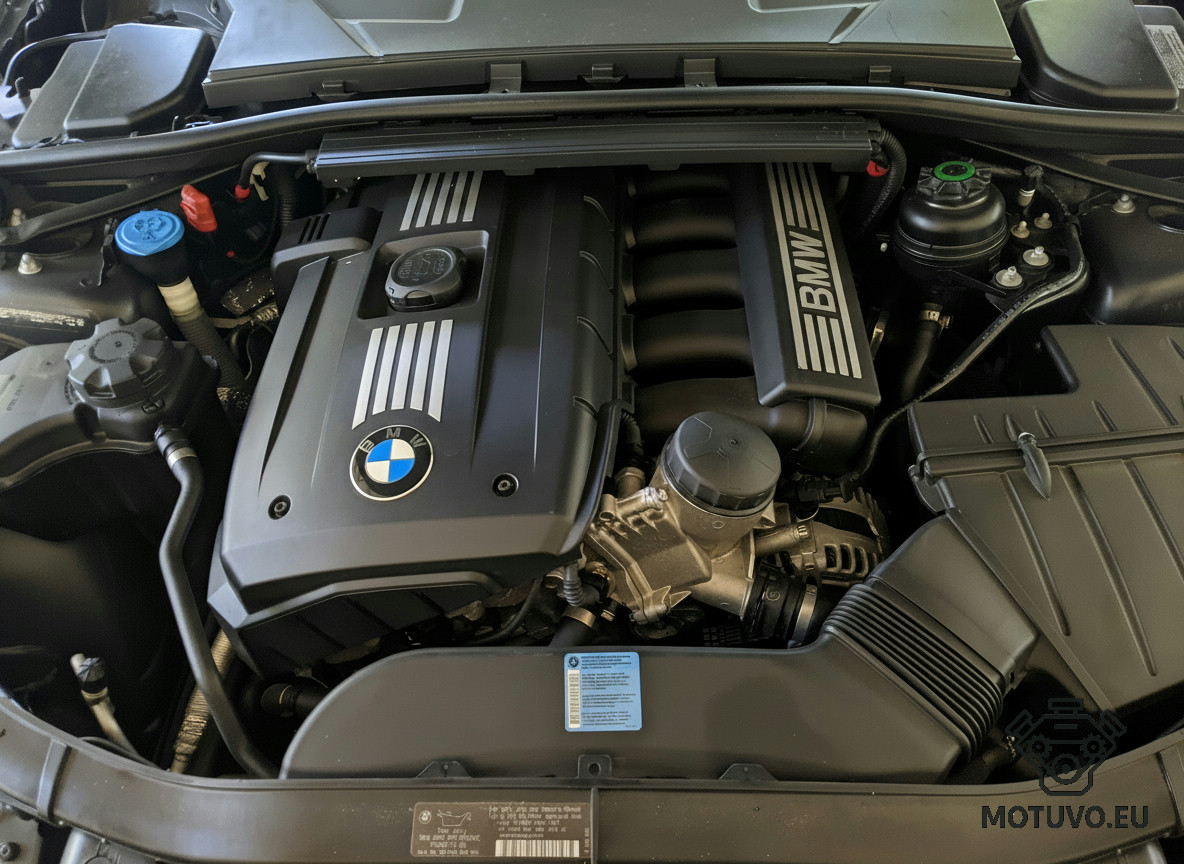
BMW N52B25A 2.5L 160 kW Engine: Applications and Buying Guide
Introduction to the BMW N52B25A engine
The N52B25A is a 2.5-litre petrol engine from BMW’s N52 straight-six family. The Motuvo.eu listing specifies 160 kW, equivalent to approximately 218 metric horsepower. With naturally aspirated induction, a smooth inline-six layout and BMW’s variable valve-control technology, it offers progressive power delivery rather than turbocharged torque characteristics.
The N52 family uses port fuel injection, Double VANOS variable camshaft timing and Valvetronic variable intake-valve lift. Its lightweight magnesium-aluminium crankcase construction also distinguishes it from earlier BMW six-cylinder designs. For replacement buyers, however, the engine code is only the starting point: vehicle specification, production date, installed equipment and the scope of the supplied assembly must also match.
How popular and widely used is the N52B25A?
The N52 family was widely used across BMW’s petrol range during the transition from earlier naturally aspirated engines to newer direct-injection and turbocharged designs. The supplied catalogue associates the N52B25A with the 3 Series, 5 Series and Z4, while its detailed description also includes the E83 X3. This spread covers saloons, estates, coupés, convertibles, roadsters and an SUV.
That breadth makes the engine familiar to BMW specialists and supports an established market for replacement engines and service components. It does not mean every N52 installation is interchangeable. Different outputs, emissions specifications, intake arrangements and installation hardware were used within the family, and registration year alone cannot identify the correct replacement.
Other part numbers and engine variants
N52B25A is an engine designation, not a complete compatibility specification. BMW replacement-engine and component part numbers should be checked against the vehicle identification number. A broader reference such as N52 or N52B25 can help identify the engine family or displacement, but does not establish that a particular assembly will fit without changes.
The N52 range also includes 3.0-litre versions, which should not be confused with this 2.5-litre unit. Within the 2.5-litre range, output and equipment can differ. The catalogue’s 160 kW rating describes this product listing; it should not be applied automatically to every model and year mentioned in the application description.
The related catalogue entry BMW N53B25A, 2.5 litres and 140 kW, is a different engine, using direct petrol injection rather than the N52’s port-injection system. It is not a straightforward substitute. Other related listings, including BGDA, 4GR-FSE, EJ25, MA2.22 (DDNC) and 2AR, are catalogue associations rather than evidence of mechanical or electronic compatibility.
Model applications listed in the catalogue
The following applications reproduce the supplied catalogue description. Treat them as a shortlist for verification, not a guarantee of fitment. BMW model badges can cover different engine specifications across markets and production periods, and some listed versions have different factory power ratings.
BMW 3 Series
- 2007–2011 E90 323i.
- 2004–2013 E90/E91/E92/E93 325i and 325xi.
BMW 5 Series
- 2004–2007 E60/E61 523i.
- 2005–2010 E60/E61 525i and 525xi.
- 2010–2011 F10 523i.
BMW Z4
- 2006–2008 E85 Z4 2.5i.
- 2005–2008 E85 Z4 2.5si.
- 2009–2011 E89 Z4 sDrive23i.
BMW X3
- 2005–2010 E83 X3 2.5si and xDrive25i.
Before ordering, compare the VIN-derived engine specification with the original engine identification and the offered replacement. This is particularly important where a model changed engine family during production or used different engines in different markets.
Strong points of the N52B25A
Smooth operation is a defining advantage. The inline-six configuration has inherently good primary and secondary balance, making it well suited to both everyday driving and sustained motorway use. Naturally aspirated response also makes the engine’s power delivery predictable.
Port injection avoids the high-pressure petrol injection equipment used by the N53. It also delivers fuel upstream of the intake valves, reducing the particular intake-valve deposit mechanism associated with direct-injection-only engines. This does not eliminate all deposits or fuelling faults, but it is a meaningful technical distinction.
Valvetronic reduces the need for conventional throttle restriction during much of normal operation, helping limit pumping losses. Double VANOS adjusts camshaft timing to suit operating conditions. Combined with lightweight construction, these systems give the N52 a useful balance of refinement, responsiveness and efficiency when properly maintained.
Weak points and common failures
Cooling-system faults
The N52 uses an electric coolant pump. Pump or thermostat faults can compromise temperature control and lead to overheating. Diagnostic fault codes, operating-temperature data and cooling-system pressure testing are useful checks. Any replacement engine with a known overheating history deserves careful investigation for consequential damage.
Oil leaks and oil consumption
Valve-cover sealing, oil-filter housing gaskets and sump sealing are common inspection areas. Oil near the auxiliary belt needs prompt attention because contamination can damage the belt. Severe belt failure can create further problems if debris reaches the front crankshaft seal.
Some N52B25 engines develop elevated oil consumption. Possible causes include external leaks, crankcase ventilation faults, valve-stem seals and piston-ring condition. A clean exterior is not proof of healthy internals. Ask about measured consumption, smoke during operation, spark-plug condition and available compression or leak-down results.
VANOS, Valvetronic and running faults
Contaminated or faulty VANOS solenoids can contribute to sluggish response, unstable running and timing-related fault codes. Valvetronic motor or eccentric-shaft sensor faults may also cause starting or drivability problems. Diagnosis should distinguish electrical, oil-supply and mechanical causes before condemning the complete engine.
Hydraulic valve-adjuster ticking is another known N52-family concern, especially on some earlier examples. Ignition coils, plugs, intake leaks and variable intake-manifold components, where fitted, also warrant inspection. Not every ticking noise or misfire indicates that an engine replacement is necessary.
What to consider when replacing an N52B25A
Confirm compatibility before comparing prices. Supply the seller with the VIN, original engine designation, production date, transmission type and drivetrain configuration. Rear-wheel-drive and all-wheel-drive installations can require different sump or mounting arrangements. Intake, exhaust, wiring and ancillary equipment should be compared directly.
- Clarify what is included: establish whether the offer is a bare assembly, long engine or engine supplied with selected accessories.
- Request condition evidence: ask for documented mileage where available, test results, running videos and information about the donor vehicle.
- Review the terms: confirm warranty coverage, installation requirements, returns and any exchange-engine conditions.
- Plan electronics correctly: replacing the mechanical engine does not automatically require replacing the original engine control unit. Check any coding, adaptation or immobiliser work with the installer.
Identify why the original engine failed before installation. Reusing a faulty cooling component or contaminated lubrication component can damage the replacement. Follow BMW procedures for fluids, cooling-system bleeding and initial start-up. Observe specified tightening sequences and replace one-time-use fasteners where required, particularly the aluminium fasteners used in relevant N52 assemblies.
Buy your N52B25A engine at Motuvo.eu
Looking for a replacement BMW N52B25A 2.5L 160 kW petrol engine? Visit the N52B25A engine product page at Motuvo.eu to buy or enquire about the available unit. Confirm its condition, included components, warranty terms and VIN compatibility before ordering, so your workshop receives an engine suited to the planned installation.