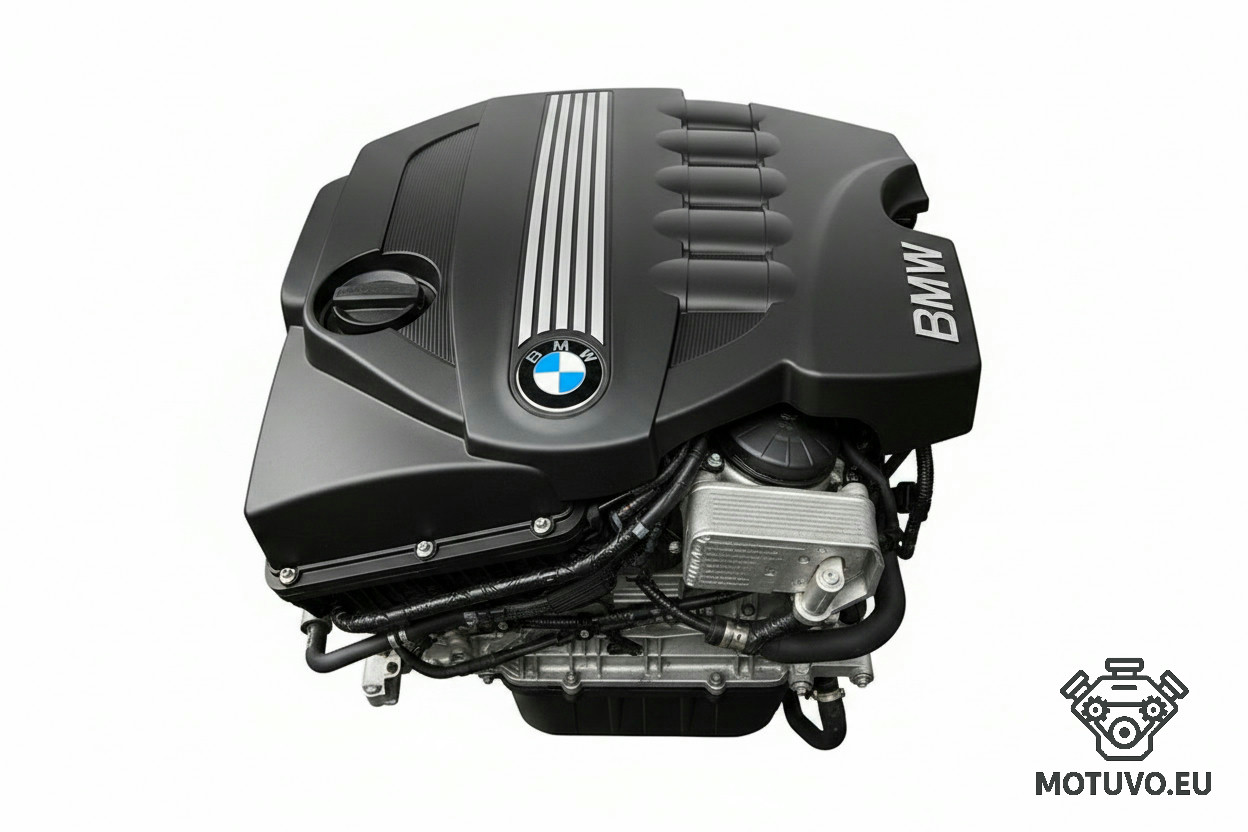
BMW N47D20B 150 kW Engine: Applications and Buying Guide
Introduction to the BMW N47D20B Engine
The N47D20B listed by Motuvo.eu is a 2.0-litre diesel engine rated at 150 kW, equivalent to approximately 204 metric horsepower. The catalogue identifies applications in the BMW 123d and BMW X1 xDrive23d. It is a high-output member of BMW’s N47 four-cylinder diesel family, combining compact dimensions with substantial performance for its displacement.
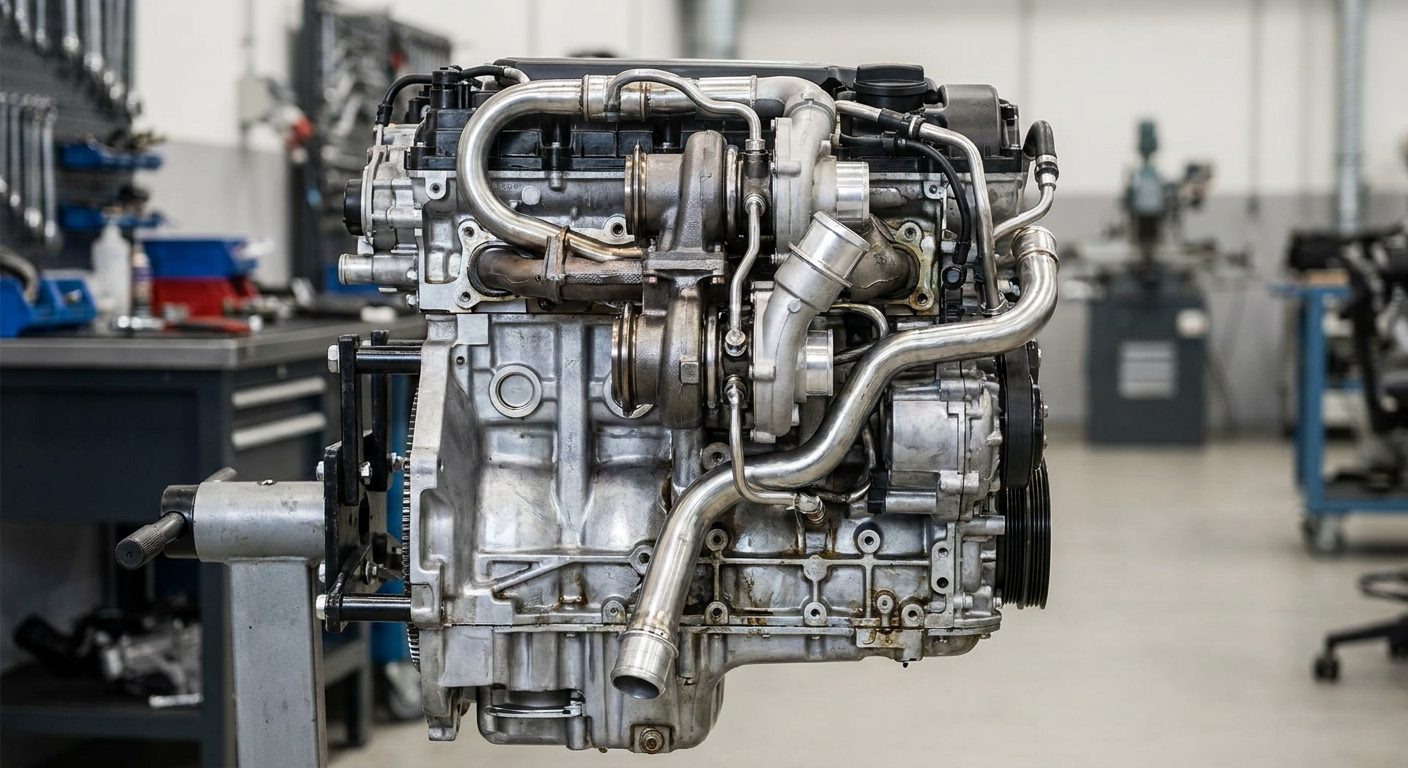
The N47 family uses common-rail direct injection and a turbocharged, four-cylinder layout. The 150 kW configuration associated with these applications features two-stage turbocharging, giving it a different air-management system from lower-output, single-turbo versions. When purchasing a replacement, matching the advertised engine code is an important starting point, but vehicle identity, component specification and the supplied engine’s scope must also be checked.
How Popular and Widely Used Is the N47D20B?
BMW used the N47 family extensively across its diesel range. Its combination of fuel economy, torque and compact packaging made it an important engine family in the European market. Consequently, many independent BMW specialists are familiar with its service requirements, diagnostic procedures and characteristic faults.
However, the 150 kW N47D20B should not be treated as identical to every 2.0-litre N47. This higher-output configuration is more specialised than the family’s lower-powered versions. Its turbocharging arrangement and associated controls create additional considerations when sourcing replacement components or a complete engine.
For buyers, the family’s broad presence is useful because repair knowledge is widely available. It does not mean that any N47 assembly will fit a 123d or X1 xDrive23d without changes. Engine identification and vehicle-specific compatibility remain essential.
Other Part Numbers and Engine Variants
N47D20B is the engine designation supplied in this catalogue entry. Engine designations, casting marks and BMW service assembly numbers serve different purposes; they should not automatically be treated as interchangeable references. A casting number alone cannot establish the exact specification of a complete replacement engine.
The catalogue also contains N47C20A, a 2.0-litre diesel rated at 82 kW, and N47D20D, a 2.0-litre diesel rated at 155 kW. These are separate listings, not verified alternative part numbers for the N47D20B. Differences in installation, hardware and calibration must be assessed before considering any substitution.
Other catalogue engines include A20DT, UFBA, M9RL782, BYL, M9RP814, M9RC833, G6DB and M9R855. Their presence among related products does not establish compatibility. Shared displacement and diesel fuel type are insufficient grounds for selecting a replacement.
- Confirm the identification on the original engine and the offered replacement.
- Use the vehicle VIN to check the applicable BMW service assembly references.
- Verify any claimed supersession through reliable parts information.
- Check the actual hardware rather than relying solely on a listing title.
Model Applications Listed in the Catalogue
BMW 1 Series 123d
The catalogue identifies E81, E82, E87 and E88 123d applications. These chassis designations cover the relevant three-door hatchback, coupé, five-door hatchback and convertible versions of that 1 Series generation. The listing does not imply compatibility with every diesel 1 Series or every production specification within those body styles.
BMW X1 xDrive23d
The second listed application is the E84 BMW X1 xDrive23d. Its all-wheel-drive installation makes checking the sump arrangement, mounting components and drivetrain interfaces particularly important. An engine advertised for both the 123d and X1 may still require vehicle-specific external parts to be retained or transferred.
No additional model applications are confirmed by the supplied catalogue. For either listed model, compatibility should be checked against the VIN, production specification, transmission and original engine details before ordering.
Strong Points of the N47D20B
High output from a compact diesel is a central advantage. A 150 kW rating gives this 2.0-litre engine strong performance potential without the size and weight of a larger-capacity engine. Its four-cylinder format also suits the relatively compact vehicles listed.
Two-stage turbocharging helps deliver useful response across a broader operating range. The smaller and larger turbochargers work through a controlled staged arrangement rather than simply operating as two identical units. When the system is healthy, it supports low-speed response while maintaining airflow at higher engine loads.
Common-rail injection provides precise control over fuel delivery, supporting combustion efficiency and refinement. Actual fuel consumption depends on vehicle condition, driving pattern and emissions-system health, so a replacement engine should not be selected on promised economy figures alone.
Another practical benefit is established specialist knowledge. Workshops experienced with N47 engines can assess timing-drive condition, injection behaviour and boost control using a combination of physical inspection and diagnostic data.
Weak Points and Common Failures
Timing Chain and Rear-Mounted Timing Drive
The N47 family is well known for timing-chain wear concerns. Its timing drive is positioned at the transmission end of the engine, making access labour-intensive. Metallic rattling or scraping from this area warrants prompt investigation, although sound alone cannot establish the condition of every chain component.
Severe wear can allow timing to jump or the chain to fail, potentially causing internal damage. Ask for documented timing-system work and the parts replaced. Neither a quiet start nor an undocumented claim that the chain was changed is a complete guarantee of condition.
Turbocharging and Air-System Faults
The two-stage boost system adds complexity. Worn turbocharger bearings, control faults, leaking charge-air connections and restricted lubrication can cause poor performance, smoke or abnormal noise. A low-boost fault does not automatically mean a turbocharger has failed; the complete intake and control system needs testing.
EGR, DPF and Injection Issues
Exhaust gas recirculation can contribute to intake deposits, while repeated short trips may prevent effective diesel particulate filter regeneration. Excessive exhaust backpressure can affect performance and turbocharger operation. Check any applicable manufacturer campaigns by VIN rather than assuming campaign coverage from the engine code.
Injector wear or fuel-pressure faults can cause difficult starting, uneven running and smoke. Diagnostic correction values are useful screening information, but leak-off testing or specialist assessment may be necessary. Coolant loss, oil leaks and crankcase ventilation problems also require attention before installation.
What to Consider When Replacing the Engine
Establish why the original engine failed first. Oil starvation, contaminated fuel, overheating, intake debris or a defective turbocharger can damage a replacement if the underlying cause remains. Inspect connected systems and clean or replace contaminated components as appropriate.
- Confirm supply scope: establish whether the offer is a bare assembly, long block or engine with ancillaries. Request an itemised list.
- Check included equipment: do not assume turbochargers, injectors, fuel pump, wiring, sensors or emissions components are supplied.
- Request condition evidence: ask about available mileage records, test results, timing-system history and warranty terms.
- Compare installation hardware: verify mounts, sump, brackets, flywheel or flexplate, and transmission interfaces.
- Plan electronic work: confirm injector coding, adaptations and any control-system requirements with the installing workshop.
Before fitting, assess accessible seals and service components while access is easier. Follow the appropriate BMW installation and lubrication-priming procedures, using oil and coolant approved for the specific vehicle. After installation, verify oil pressure, coolant temperature, rail pressure, boost operation and fault memory before sustained load testing.
Buy the N47D20B Engine at Motuvo.eu
If you need a N47D20B 2.0L 150 kW diesel engine for a listed BMW 123d or E84 X1 xDrive23d application, visit the N47D20B engine product page at Motuvo.eu. Provide your VIN and original engine details before buying, and confirm availability, condition, included components and warranty terms so your workshop can plan the replacement correctly.