BMW N47 2.0 Diesel Engine Guide: Common Problems, Compatibility and Buying Advice
BMW N47 2.0 Diesel Engine Guide: Common Problems, Compatibility and Buying Advice
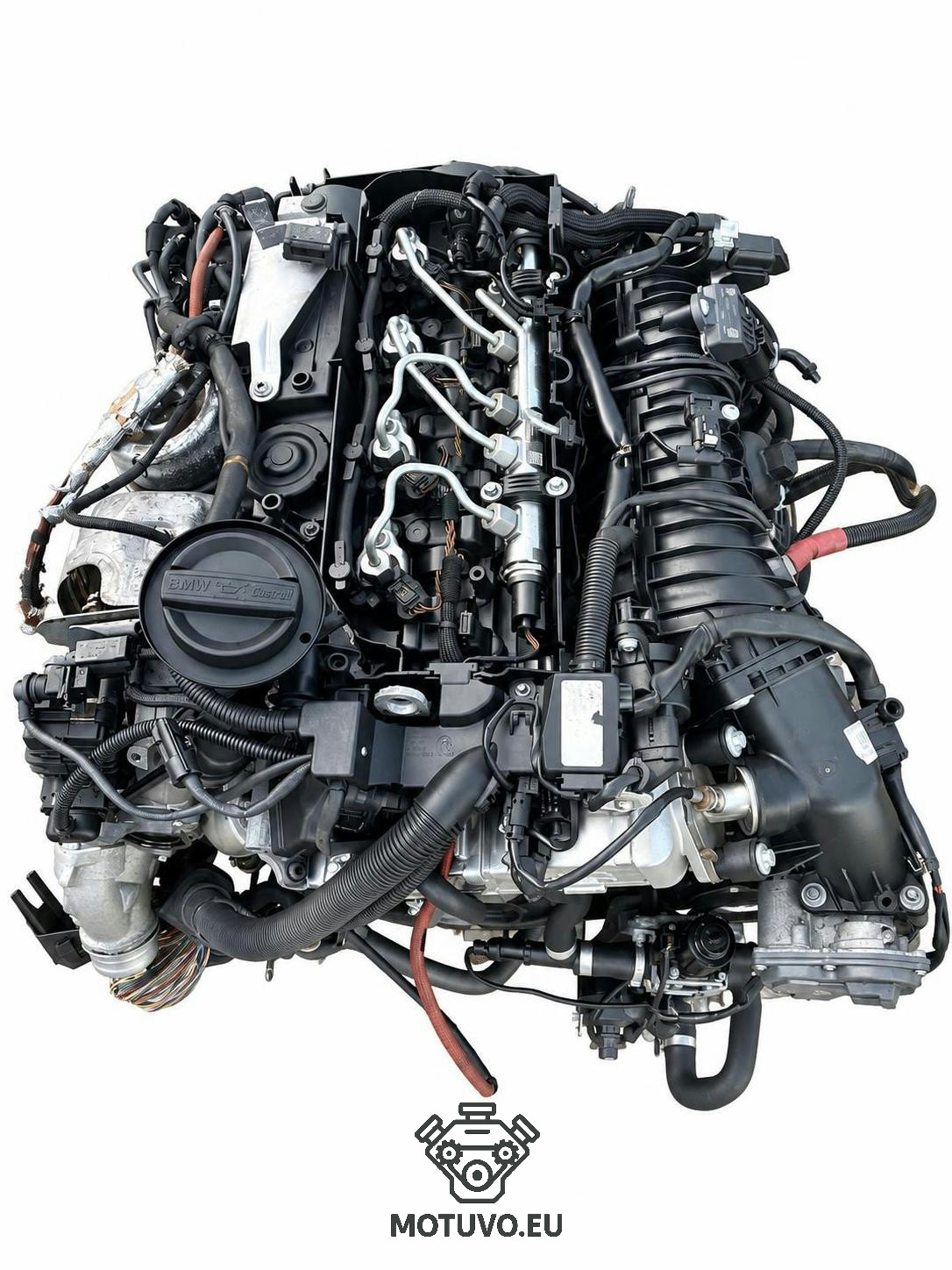
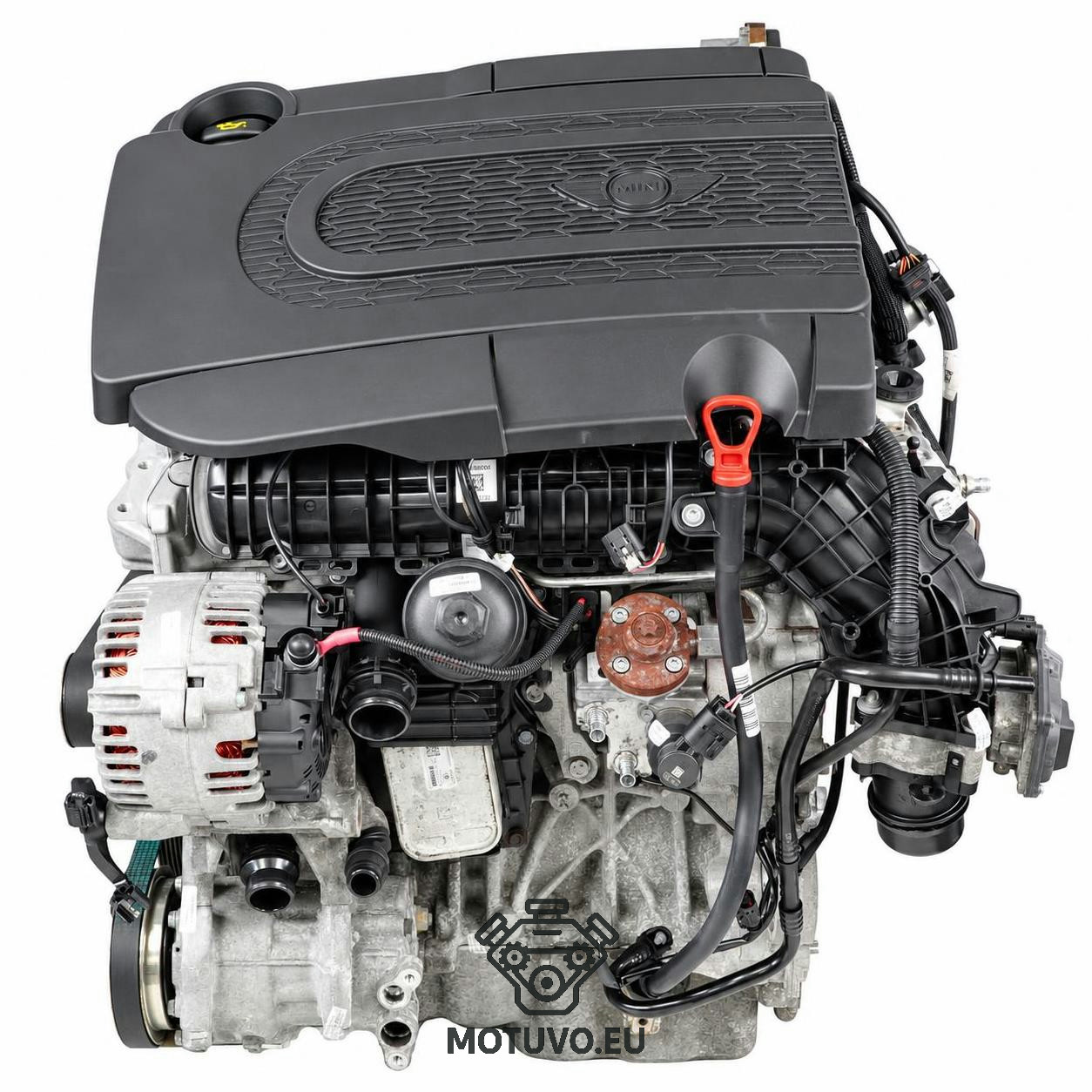
The BMW N47 2.0 diesel engine is one of the most common BMW diesel engines in Europe. It was used in many BMW 1 Series, 3 Series, 5 Series, X1, X3 and other models, especially between the late 2000s and mid-2010s.
It is popular because it offers good fuel economy, strong torque and relatively low running costs. However, it is also well known for timing chain problems, compatibility issues and confusion between different versions of the same engine code.
For anyone looking to replace a BMW N47 engine, it is very important not to rely only on the engine code. The same code can sometimes be found on engines that are not directly interchangeable.
What is the BMW N47 engine?
The BMW N47 is a 4-cylinder common-rail diesel engine. The most common version is the 2.0-litre N47D20 engine, although there were also smaller 1.6-litre versions in some models.
Depending on the model and year, the N47 2.0 diesel was available in different power outputs, including approximately:
- 85 kW
- 105 kW
- 120 kW
- 130 kW
- 135 kW
- 150 kW
- 160 kW
The engine was used in both BMW E series and BMW F series cars. This is one of the reasons why many buyers become confused when searching for a replacement engine.
Common BMW models with the N47 engine
The N47 2.0 diesel engine can be found in many BMW models, including:
- BMW 1 Series E81, E82, E87, E88
- BMW 1 Series F20, F21
- BMW 3 Series E90, E91, E92, E93
- BMW 3 Series F30, F31, F34
- BMW 5 Series E60, E61
- BMW 5 Series F10, F11
- BMW X1 E84
- BMW X3 E83 and F25
- BMW 2 Series F22
- BMW 4 Series F32, F33, F36
Because the N47 was used across so many models, it is a very common engine on the used engine market. However, “common” does not always mean “easy to match”.
Common problems with the BMW N47 engine
The BMW N47 is best known for timing chain wear and timing chain failure. Unlike many older engines, the timing chain is located at the rear of the engine, close to the gearbox. This makes replacement more complicated and more expensive.
Common BMW N47 problems include:
- Timing chain rattle
- Timing chain stretch
- Timing chain failure
- Turbocharger wear
- EGR valve problems
- DPF blockage
- Injector issues
- Oil leaks
- Crankshaft or bearing damage after oil starvation
- Engine knocking or low compression
A light timing chain noise can sometimes be repaired before the engine fails. However, if the chain breaks or jumps timing, the engine may suffer serious internal damage. In many cases, replacing the complete engine is more cost-effective than rebuilding the damaged unit.
Timing chain symptoms on BMW N47
Typical symptoms of timing chain problems include:
- Rattling noise from the rear of the engine
- Metallic noise during cold start
- Uneven idle
- Engine warning light
- Poor starting
- Loss of power
- Sudden engine stop
- No compression after chain failure
If your BMW N47 has a strong chain rattle, it should not be ignored. Continued driving can lead to complete engine failure.
Important compatibility warning: engine code alone is not enough
Many customers search for an engine using only the code, for example:
- N47D20A
- N47D20C
- N47D20D
This is a good starting point, but it is not enough to guarantee compatibility.
BMW used many variations of the N47 engine. Differences can include:
- Engine block version
- Cylinder head
- Turbocharger setup
- Injectors
- High-pressure fuel pump
- Oil sump
- Engine mounts
- Sensors
- EGR system
- DPF and emissions equipment
- Manual or automatic gearbox fitment
- ECU and wiring compatibility
- Euro 4, Euro 5 or Euro 6 emissions version
For this reason, the safest way to match a replacement engine is by using the VIN number, original engine code, power output, production year and sometimes photos of the old engine.
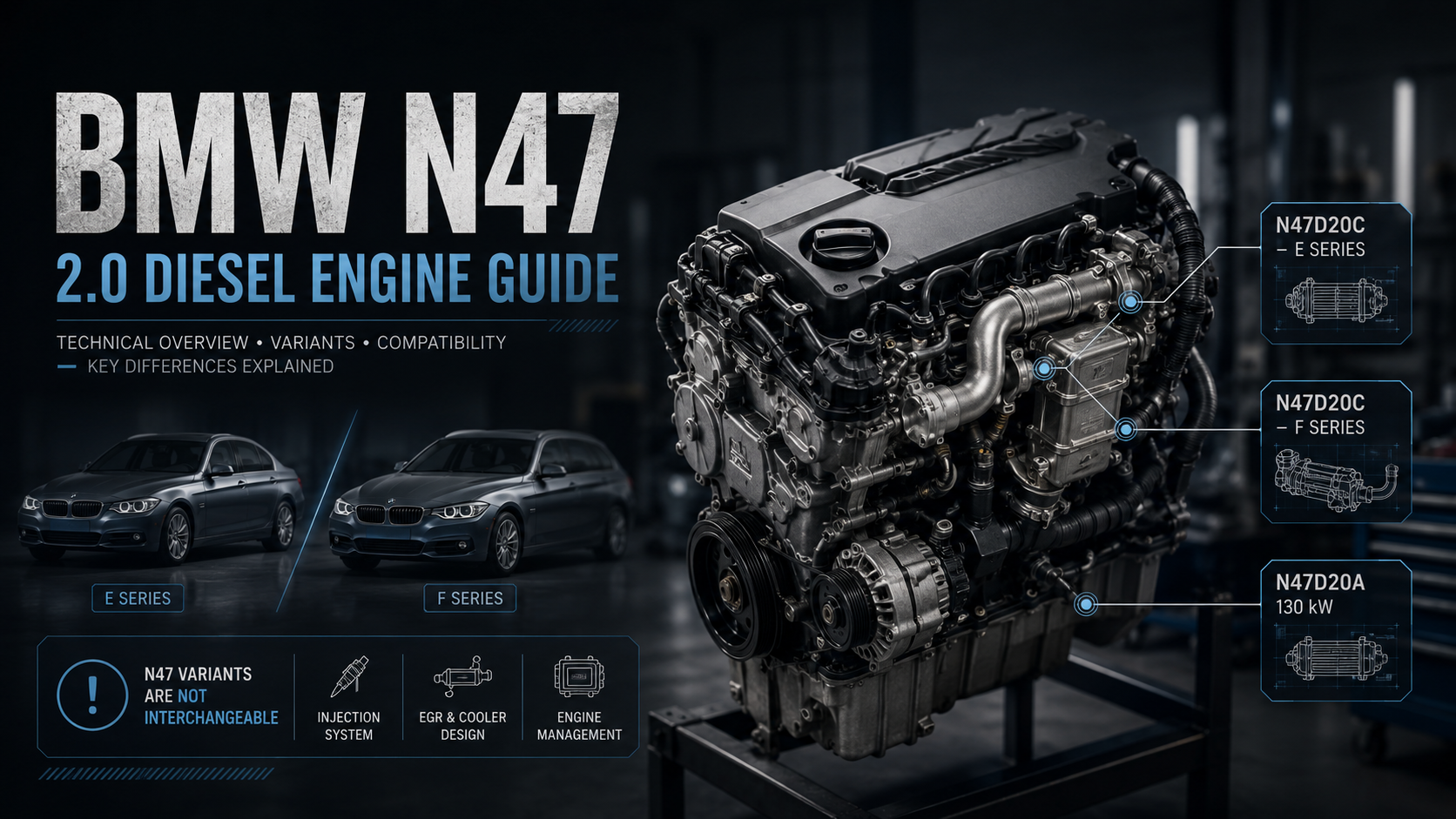
N47D20C: E series and F series engines are not the same
One of the most important things to understand is that BMW N47D20C engines for BMW E series and BMW F series vehicles can be different engines, even though they share the same N47D20C engine code.
For example, an N47D20C from an E90 320d and an N47D20C from an F30 320d should not automatically be treated as the same engine.
They may differ in important areas such as:
- Mounting points
- Oil sump design
- Ancillaries
- Turbocharger and exhaust layout
- Emissions system
- Sensors
- Wiring connections
- ECU compatibility
- Gearbox compatibility
This means that if your BMW has an N47D20C engine, you should not buy the first N47D20C you find. You need to check whether it comes from the correct BMW generation and whether it matches your vehicle specification.
At MOTUVO, we recommend checking compatibility before purchase, especially when replacing engines between E series and F series BMW models.
N47D20A 130 kW: also a different engine version
Another important version is the BMW N47D20A 130 kW engine.
This engine is often found in earlier BMW models and is not the same as later N47D20C versions. Even if the displacement is the same and the power output looks similar, the engine may have different components and may not be directly interchangeable.
The N47D20A 130 kW engine can be found in models such as earlier BMW 120d, 320d and 520d versions, depending on market and production year.
When replacing an N47D20A 130 kW engine, it is important to match the correct variant. A later N47D20C engine may not be a simple plug-and-play replacement.
Can you replace N47D20A with N47D20C?
In some cases, conversions may be possible, but this is not usually recommended for a normal replacement job.
Replacing an N47D20A with an N47D20C may require changing additional parts such as:
- Turbocharger
- Injectors
- Wiring loom
- ECU
- Sensors
- Exhaust components
- Engine mounts
- Oil sump
- Ancillaries
For most customers and repair garages, the best option is to replace the engine with the correct matching version. This saves time, reduces installation risk and helps avoid warranty problems.
Single turbo and twin turbo N47 engines
Some N47 engines use a single turbocharger, while higher-output versions use a twin-turbo setup.
This is another reason why power output is important. A 105 kW, 120 kW or 130 kW engine is not the same as a 150 kW or 160 kW version.
Twin-turbo versions usually have different:
- Turbocharger system
- Exhaust manifold
- Intake system
- ECU calibration
- Cooling requirements
- Ancillaries
If your BMW originally had a twin-turbo N47 engine, you should replace it with the correct twin-turbo version unless a specialist is carrying out a full conversion.
What to check before buying a used BMW N47 engine
Before buying a replacement BMW N47 engine, check the following:
- Engine code: Confirm whether your engine is N47D20A, N47D20C, N47D20D or another variant.
- Vehicle VIN: The VIN helps identify the exact factory engine specification.
- Power output: Check whether the engine is 105 kW, 120 kW, 130 kW, 135 kW, 150 kW or another version.
- BMW generation: E series and F series engines may be different, even with the same engine code.
- Gearbox type: Manual and automatic versions can have differences.
- Drive type: Rear-wheel drive and xDrive models may use different oil sumps or mounting parts.
- Emissions standard: Euro 4, Euro 5 and Euro 6 versions may have different sensors and emissions systems.
- Included parts: Ask whether the engine is bare, complete or supplied with turbo, injectors and ancillaries.
- Warranty terms: Check what is covered and what installation conditions apply.
- Mileage and testing: Ask whether the engine has been tested and whether mileage information is available.
Bare engine or complete engine?
When buying a BMW N47 replacement engine, you may see different descriptions:
- Bare engine
- Long block
- Complete engine
- Engine with turbo
- Engine with injectors
- Engine with ancillaries
A bare engine usually means the main engine unit without many external parts. A complete engine may include more components, but the exact definition can vary between sellers.
Always confirm what is included before buying. This is especially important with BMW N47 engines because turbochargers, injectors, EGR components and sensors can be expensive.
What should be replaced before installing a used N47 engine?
When installing a used BMW N47 engine, it is usually recommended to replace service parts before installation.
Common parts to check or replace include:
- Engine oil and filter
- Fuel filter
- Air filter
- Coolant
- Thermostat
- Water pump
- Timing chain kit, if condition is unknown
- Crankshaft pulley
- Glow plugs
- Gaskets and seals
- Turbo oil feed pipe
- EGR and DPF condition
Is the BMW N47 a good engine?
The BMW N47 can be a good engine when it is maintained properly and matched correctly. It offers strong fuel economy and good performance, especially in the 120d, 320d and 520d models.
However, buyers should be careful with timing chain history and engine compatibility. Many problems happen because the wrong engine version is purchased or because early signs of timing chain failure are ignored.
If you are replacing a failed N47 engine, correct identification is the most important step.
Need a BMW N47 replacement engine?
MOTUVO can help you find the correct BMW N47 engine for your car.
We can offer different BMW N47 engine versions, including:
- BMW N47D20A
- BMW N47D20C for BMW E series
- BMW N47D20C for BMW F series
- BMW N47D20A 130 kW
- Other BMW N47 2.0 diesel variants
If you are not sure which engine fits your BMW, send us your VIN, engine code, power output or vehicle details. MOTUVO.eu can help you find a compatible used, rebuilt or replacement BMW N47 engine with delivery across Europe.
Before buying, always check compatibility. The same engine code does not always mean the same engine.