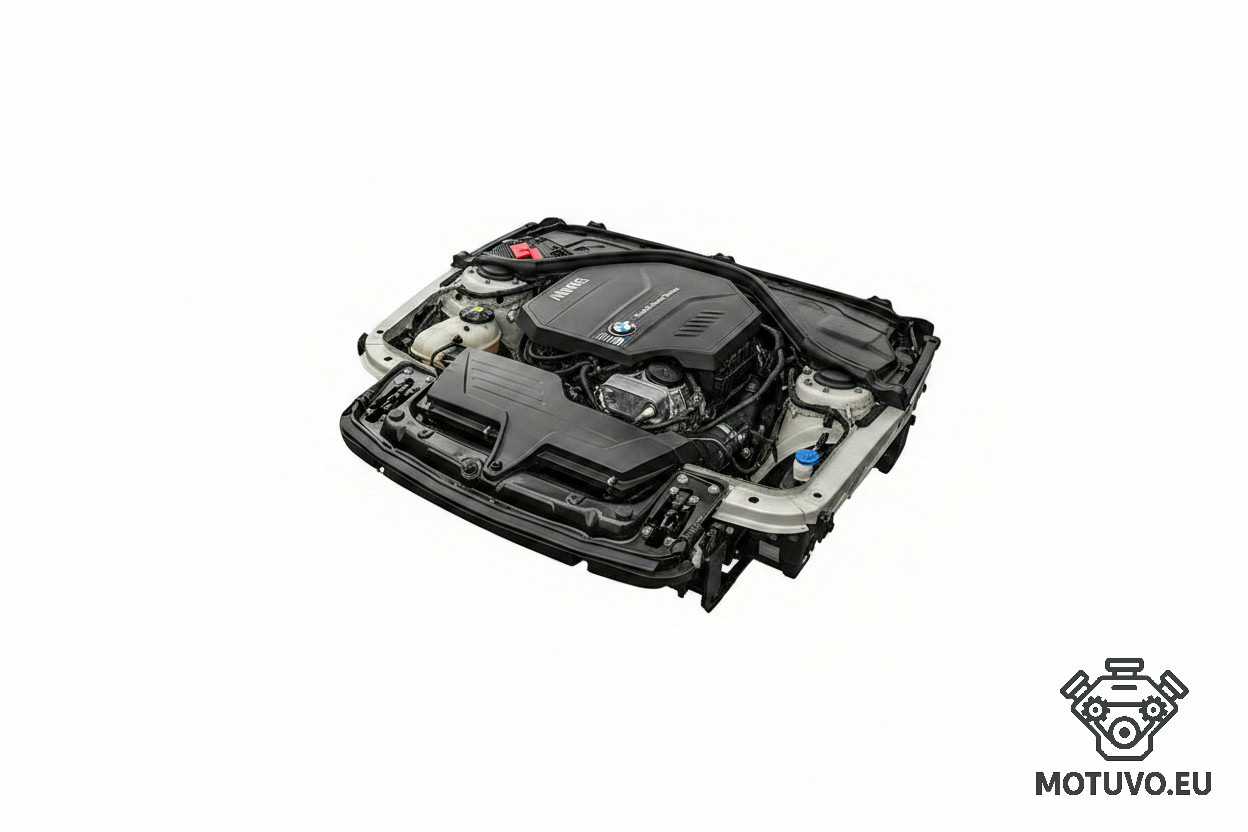
B48A20M 131 kW Engine: MINI Applications and Buying Guide
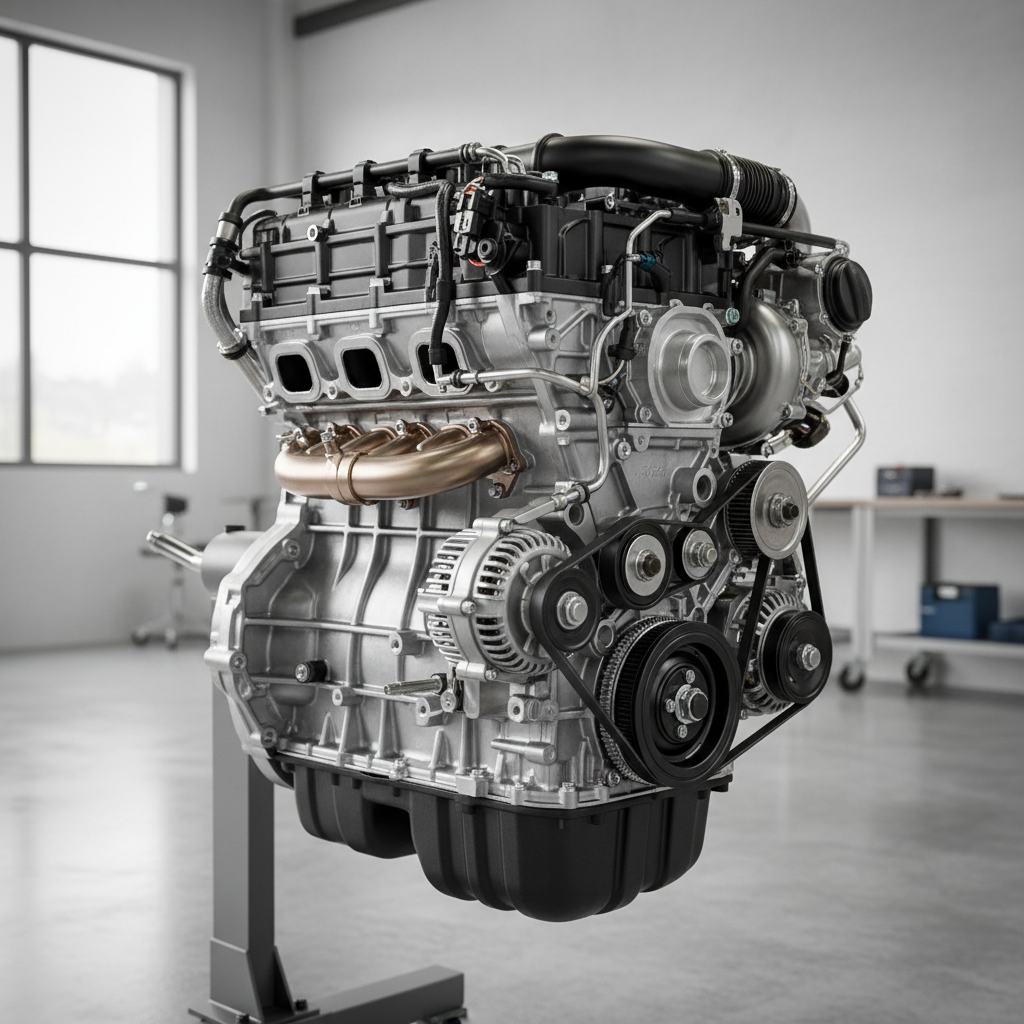
Introduction to the B48A20M engine
The B48A20M is a 2.0-litre petrol engine listed by Motuvo.eu with an output of 131 kW, equivalent to approximately 178 metric horsepower. It belongs to BMW Group’s B48 modular engine family, which uses turbocharging and direct petrol injection to combine useful low-speed torque with compact dimensions and modern emissions control.
For a replacement purchase, the engine code matters more than displacement alone. Two 2.0-litre B48 engines can differ in installation layout, ancillaries, electronics and emissions equipment. This guide explains the supplied catalogue application, the distinction between related engines and genuine replacements, and the checks that help avoid an unsuitable purchase.
How popular and widely used is the B48A20M?
The wider B48 family is extensively used across BMW Group petrol vehicles. Its modular design shares engineering principles across multiple outputs and vehicle configurations. That broad adoption supports workshop familiarity and a developed parts market, although availability of an exact assembly still depends on its variant and production specification.
The B48A20M designation should not be treated as covering every B48 installation. The supplied catalogue identifies a MINI application rather than a complete cross-brand fitment list. Family popularity is helpful for servicing, but it does not establish that another B48 engine will fit without modifications.
For owners, the practical benefit is access to technicians familiar with turbocharged direct-injection petrol engines and BMW Group diagnostic procedures. Nevertheless, engine-specific repair instructions, tightening specifications and parts identification remain essential.
Other part numbers and engine variants
B48A20M is an engine designation, not a complete list of interchangeable assembly part numbers. The supplied information contains no verified supersession numbers or alternative original-equipment assembly references. Any proposed substitute therefore needs checking against the vehicle identification number, original engine markings and relevant parts documentation.
Related B48 engine
Motuvo.eu also lists the B48B20, 2.0L petrol, 180 kW. It belongs to the same broad family, but its different designation and output are reasons to investigate compatibility, not assume it. Installation orientation, mounting interfaces, turbocharger arrangement, cooling connections and control calibration can differ between B48 versions.
Other engines in the catalogue
The related catalogue entries also include the following units:
- N26B20A and N20B20A: 2.0L petrol engines listed at 180 kW, from different BMW engine families.
- BGB and BPY: 2.0L petrol engines listed at 147 kW.
- BUL: a 2.0L petrol engine listed at 162 kW.
- BWA: a 2.0L petrol engine listed at 147 kW.
- G4KD: a 2.0L petrol engine listed at 121 kW.
- MR20DE: a 2.0L petrol engine listed at 104 kW.
- G4ND: a 2.0L petrol engine listed at 121 kW.
These are catalogue comparisons, not confirmed B48A20M replacements. Similar capacity, fuel type or power does not establish mechanical or electronic interchangeability.
Model applications
The supplied application list names Mini Cooper. The more specific catalogue description reads “2021–present F54 MINI Cooper S Clubman (B48A20M)”. This identifies the intended catalogue application, but the wording should not be interpreted as proof that F54 production continues today or that every vehicle registered from 2021 uses this engine.
For the listed F54 Cooper S Clubman application, check the VIN, build date, original engine identification and factory output before ordering. Market specification and emissions requirements can affect the engine assembly and attached equipment. A broad model name such as MINI Cooper is not sufficient on its own to approve fitment.
No additional model applications are confirmed by the supplied information. Where a vehicle has previously received an engine replacement, compare its current installation with the factory record as well.
Strong points of the B48A20M
Useful turbocharged performance
The B48 family’s turbocharged four-cylinder layout provides useful torque without requiring a larger engine. At the catalogue-rated 131 kW, the B48A20M offers a practical balance of performance and displacement for its listed MINI application. Actual response depends on the transmission, vehicle calibration and condition of the induction system.
Modern combustion and valve control
Direct injection, variable camshaft timing and BMW Group’s Valvetronic variable valve-lift technology are established B48 family features. Together, these systems support flexible engine control and efficiency across varying loads. Their benefits depend on correct lubrication, sound sensors and properly functioning actuators.
Established service knowledge
The B48 family’s widespread use means many specialist workshops understand its diagnostic requirements. This is valuable when distinguishing an internal engine problem from a fault in ignition, fuelling, boost control or cooling. Accurate diagnosis can prevent an unnecessary engine replacement.
Weak points and common failure checks
The catalogue does not provide failure statistics for this exact variant. The following are relevant B48-family inspection areas, rather than claims that every B48A20M will develop the same faults.
Cooling-system leaks
Inspect coolant connections, plastic housings, the water-pump area and thermostat-related components for leakage or dried residue. Check the oil-filter housing and associated coolant passages where applicable to the installed version. Unexplained coolant loss requires pressure testing; repeated topping-up can conceal a fault that eventually causes overheating.
Oil leaks and crankcase ventilation
Check the camshaft-cover area, housing seals and crankcase ventilation system. Ventilation faults can contribute to whistling, irregular idle, abnormal crankcase pressure or oil consumption. Oil around the engine should be traced to its source rather than automatically attributed to worn internal components.
Ignition, injection and intake deposits
Spark plugs and ignition coils are routine suspects when investigating misfires. Injectors and fuel-pressure control also require checking when symptoms persist. Direct-injection engines can accumulate intake-valve deposits because fuel does not normally wash the valve backs. Confirm deposits by inspection before recommending cleaning.
Turbocharger and mechanical condition
Boost leaks, control faults and turbocharger wear can produce low power or smoke without requiring replacement of the complete engine. Investigate persistent cold-start rattles, timing-related fault codes and abnormal oil pressure separately. A timing chain is not a guarantee of unlimited service life, but noise alone does not prove chain failure.
What to consider when replacing the engine
Identify why the original engine failed before installing another. An unresolved cooling fault, lubrication problem or defective injector can damage the replacement. If the failure released debris or oil into connected systems, inspect and clean the relevant intake, charge-air and lubrication components as required.
- Confirm identity: compare B48A20M markings, VIN-based specification, output and emissions configuration.
- Define the supply scope: establish whether the purchase covers a bare engine, long block or assembly with ancillaries.
- Check attached equipment: confirm inclusion and compatibility of the turbocharger, injectors, wiring, sensors, manifolds and flywheel or drive plate.
- Review condition evidence: request available mileage records, test results, donor information or rebuild documentation.
- Clarify terms: obtain warranty conditions, installation requirements and any exchange-unit obligations in writing.
Before installation, inspect accessible seals and service items, then use the specified fluids, filters, fasteners and tightening procedures. Prime the lubrication system and bleed the cooling system according to the applicable repair instructions. Electronic adaptations or coding may be necessary depending on which components are retained or replaced.
Commissioning should include diagnostic checks, leak inspection, temperature monitoring and a controlled road test. Confirm the total installed cost, including labour, fluids, transferred components and any remedial work, rather than comparing engine prices alone.
Buy a B48A20M engine at Motuvo.eu
Looking for a replacement B48A20M 2.0L 131 kW petrol engine? Visit the B48A20M engine product page at Motuvo.eu to buy the engine and confirm current availability, supply scope and purchase terms. Provide your VIN and original engine details before ordering so the proposed unit can be checked against your MINI’s specification.