
B38A12A 1.2L 55 kW Engine for Mini One: Buyer’s Guide
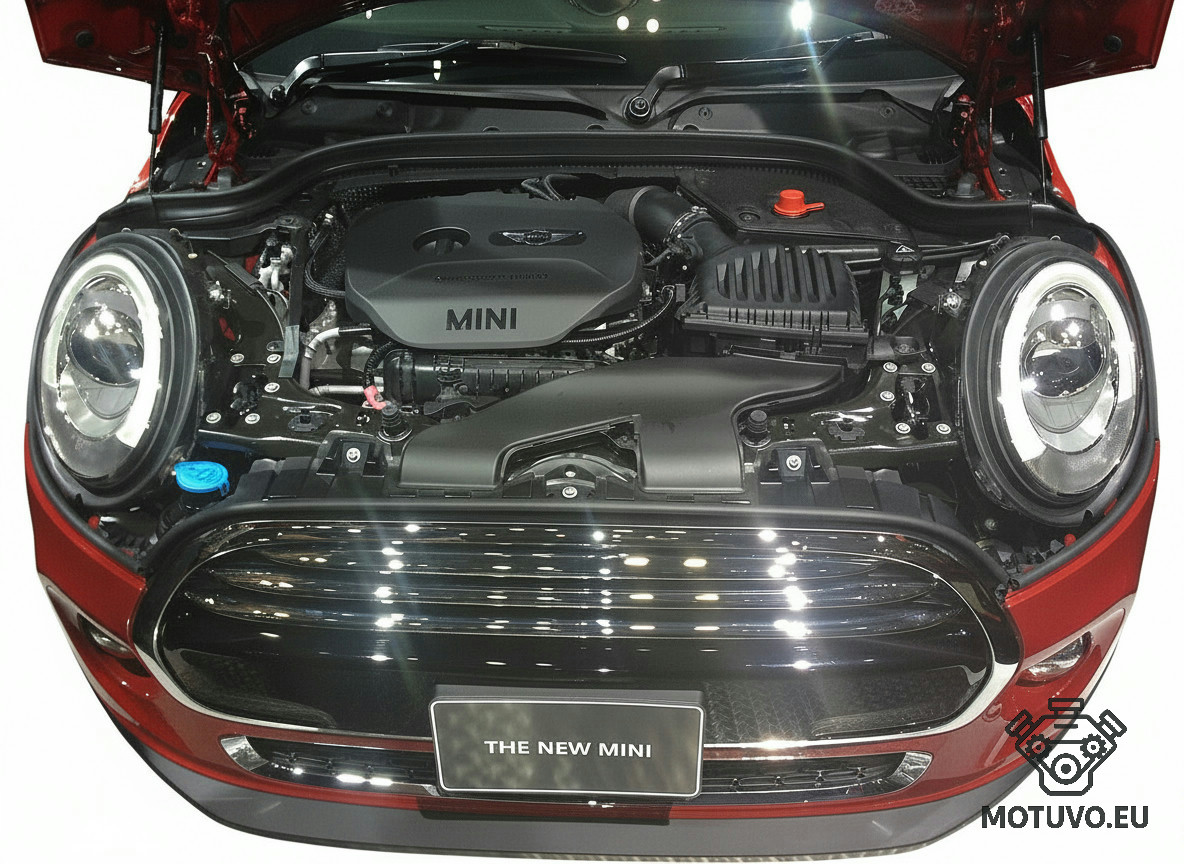
Introduction to the B38A12A Engine
The B38A12A is a 1.2-litre petrol engine associated with the Mini One range. The Motuvo.eu listing specifies an output of 55 kW, equivalent to approximately 75 metric horsepower. It belongs to BMW’s B38 modular engine family and uses a turbocharged, three-cylinder layout with direct petrol injection.
For buyers seeking a replacement engine, the important distinction is between identifying the engine family and confirming the exact assembly required. A matching displacement or B38 family designation is not sufficient on its own. Engine code, power specification, production date and the original vehicle configuration all need checking before purchase.
How Popular and Widely Used Is This Engine?
The broader B38 family is a well-established part of BMW and MINI’s petrol engine range. Its modular design combines compact dimensions with turbocharging, allowing a relatively small engine to deliver useful torque for everyday driving. The 1.2-litre B38A12A is a more specific version within that larger family, rather than a universal replacement for every B38-powered vehicle.
In the supplied catalogue, its applications are concentrated on the F55 and F56 Mini One range. These are the five-door and three-door hatchback body styles respectively. This makes the engine particularly relevant to owners repairing an entry-level MINI hatchback while retaining its original engine specification.
No production totals or availability figures are supplied. Its connection to a widely used engine family can help with technical familiarity, but it does not establish how readily any particular replacement assembly or accessory is available.
Other Part Numbers and Variants
B38A12A is the engine identification given for this product. The catalogue does not provide alternative manufacturer assembly numbers, superseded part numbers or confirmed interchangeable engine codes. Those details should be established through VIN-based parts information and comparison with the original engine.
The B38 family includes different capacities, outputs and installation configurations. Even engines sharing a basic code may require comparison of ancillary equipment, wiring, sensors, emissions components and control-system compatibility. The 55 kW listing should therefore not be treated as confirmation that every B38A12A assembly is supplied in an identical configuration.
Related Catalogue Engines Are Not Substitutes
The catalogue also lists other 1.2-litre petrol engines: H5F404 at 92 and 97 kW, CGP at 51 kW, H5F408 at 97 kW, HM01 at 60 kW, HN05 at 96 kW, Z12XEP at 59 kW, AZQ at 47 kW, B12D1 at 60 kW and HR12 at 59 kW. These are related catalogue entries, not alternative part numbers for the B38A12A. Similar capacity and fuel type do not imply mechanical or electronic interchangeability.
Model Applications
The supplied application information identifies the following Mini One derivatives:
- Mini One First, F55/F56: described in the catalogue as 2014–current.
- Mini One, F55/F56: described in the catalogue as 2014–2018.
These date ranges reproduce the catalogue description rather than establish universal fitment. In particular, “current” is open-ended catalogue wording and should not be read as confirmation that the engine fits every later model year.
The listing’s 55 kW output is especially important when checking a vehicle described simply as Mini One. Trim names and broad production ranges do not identify every engine specification. Confirm the VIN, original engine marking and rated output before approving a replacement; do not assume that both application lines describe identical power versions.
Strong Points of the B38A12A
Compact Turbocharged Design
The three-cylinder layout gives the engine a compact package suited to the MINI’s transverse installation. Turbocharging helps provide useful torque without requiring a larger naturally aspirated engine. In the 55 kW specification, the emphasis is on everyday usability rather than outright performance.
Modern Combustion and Engine Management
Direct injection and electronically managed boost allow precise control of fuel delivery and engine load. BMW’s B38 architecture also uses variable valve control to support efficiency and drivability. These systems work best when the ignition, fuel, intake and lubrication systems remain in good condition.
Established Family Architecture
The B38’s established design gives experienced BMW and MINI workshops a familiar diagnostic framework. A correctly matched replacement can preserve the vehicle’s original operating characteristics without the complications of an engine conversion. That benefit depends on choosing the appropriate assembly and transferring only compatible, serviceable components.
Weak Points and Common Failures
The catalogue supplies no failure statistics or service history for an individual engine. The following are practical inspection priorities for a used turbocharged, direct-injection B38, rather than a claim that every B38A12A will suffer these faults.
Cooling-System and Oil-Leak Checks
Inspect the cooling circuit for leaks, dried coolant deposits and evidence of overheating. Hoses, housings and sealing interfaces deserve attention as the vehicle ages. Pressure testing is more useful than relying on the expansion-tank level alone. Check oil-sealing areas and crankcase ventilation operation as well, since ventilation faults can contribute to poor running, oil consumption or leakage.
Ignition, Injection and Intake Deposits
Worn spark plugs or failing ignition coils can cause misfires, especially under load. Fuel-pressure or injector problems can produce similar symptoms, so diagnostic testing should precede parts replacement. Direct injection also means fuel does not wash over the backs of the intake valves; deposits can become an inspection consideration when rough running remains unexplained.
Turbocharging, Timing and Vibration
Loss of boost can result from charge-air leaks, control faults or turbocharger wear. Check the complete air path before condemning the turbocharger. Persistent timing-chain-area noise, particularly alongside camshaft correlation faults, needs specialist investigation rather than dismissal as normal three-cylinder sound.
Some characteristic vibration is expected from a three-cylinder engine, but excessive movement can indicate worn mounts or a running fault. Separately, some early B38 production has been associated with crankshaft thrust-bearing concerns. Applicability and any completed service action must be checked by VIN; this is not evidence that every B38A12A is affected.
What to Consider When Replacing It
First establish why the original engine failed. Overheating, inadequate lubrication, fuel contamination or defective ancillary equipment can damage a replacement if the underlying cause remains unresolved.
- Confirm compatibility: compare VIN-based requirements, engine markings, output, production details and transmission interfaces.
- Clarify supply scope: establish whether the offer covers a bare assembly, long engine or engine with ancillaries. Confirm whether the turbocharger, injectors, pumps, wiring and sensors are included.
- Check condition evidence: request available mileage, inspection records, test results and warranty terms. Establish whether the offered unit is used, rebuilt or new.
- Inspect transferred components: check the cooling system, intake tract, mounts and relevant lubrication components before reuse. Remove contamination left by the previous failure.
- Plan commissioning: use the specified fluids, filters, seals and installation procedures. Follow the applicable lubrication-priming procedure and complete diagnostic checks after installation.
Retaining the original control unit does not automatically eliminate all setup requirements. Depending on which components are changed, adaptations, coding or other manufacturer-directed procedures may be necessary. Finish with leak checks, temperature monitoring and a controlled road test.
Buy the B38A12A Engine at Motuvo.eu
Looking for a replacement B38A12A 1.2L 55 kW petrol engine for your Mini One? Visit the B38A12A engine product page at Motuvo.eu to buy this engine and confirm the available specification. Provide your VIN and original engine details before ordering so compatibility, condition and included components can be checked.